
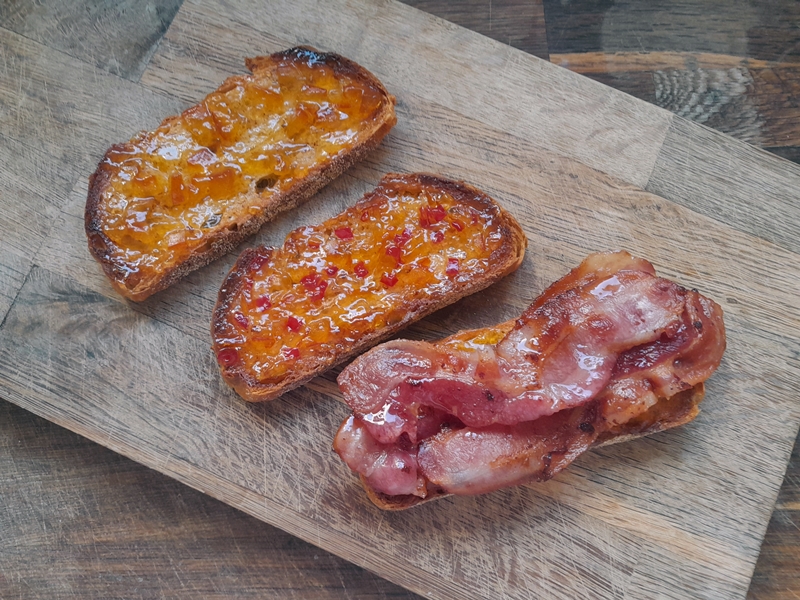
In the old days, when religious observance was a greater part of daily lives, as Lent approached, efforts were made to use up larder items in preparation for the coming period of abstemiousness. Bacon and eggs were eaten on Collop Monday, Pancakes (using the resulting bacon grease) were enjoyed on Shrove Tuesday, and Lent itself began on Ash Wednesday.
In the past few weeks I have been looking through various manuscript sources in order to find a shiny, new old pancake recipe for you to try, but, alas, my efforts have been thwarted at every turn due to the adorable (!) British quirk of different regions giving a specific dish their own local name.
I scrolled through the thousands of recipes in my spreadsheets and compiled the following list to look at in more detail:
- Court pancakes
- Million pancakes
- Pancake pudding
- Pancake wafers
- Paper pancakes
- Temple pancakes
- Creeping pancakes
In Every. Single. Case. they turned out to be variations of the recipe most popularly known as A Quire of Pancakes: lots of small, thin, rich, cream-based pancakes stacked in a pile, with sugar strewn between each layer, and served like a cake slice (see image below).

So I’ve decided to go in a completely different direction and bringing you a recipe for Collop Monday, or alternately Shrove Tuesday breakfast, and in doing so, recording for posterity a dish I know my mother ate in her childhood: Fried bread and Marmalade.
When I first heard of this as a child myself, I thought it sounded awful, but as an adult, I have come to appreciate the delicious interplay of salty, sweet, bitter and smoke.
Slices of bread were added to the pan after bacon was fried and mopped up the remaining fat and in the process become toasted from the heat of the pan. They were fishes out and spread with marmalade and handed to my mother and her siblings.
Many modern packs of bacon, especially at the lower prices, are injected with water to artificially plump up the weight. When fried, it splutters and spits and seeps a milky liquid that is visually very unappealing. Back in the day – we ‘re talking 1930s here – the bacon would have been purchased from the butcher by the slice, possibly even home-cured by the butcher himself, and the dry-brining method employed drew out moisture from, rather than injecting it into, the slabs of belly pork used for bacon. In the pan the fat would render down into a clear liquid, filled with the smoky, salty flavour of the bacon. When cold, the fat would solidify and could be kept for use, but if this were impractical (it not yet being the age of ubiquitous refrigeration in the home) to use it up at once, it was easy to mop up the fat with slices of bread, which then became imbued with this flavour bomb as an alternative to the (more expensive) butter. It is easy to overdo the bacon fat, and it doesn’t take much for the bread to become overly greasy, so marmalade was a perfect foil to combat this: the bitterness of the Seville oranges and the sweetness of the jelly providing delicious contrasts to the hot, crunchy, salty, smoky bacon fat.
Back then, this snack was born from frugal-by-necessity living. My mother grew up in a one-income household. Nothing was left to waste. But that’s not a reason not to enjoy it today. And additionally, the level at which you enjoy it is completely adaptable – from simple to complex, the components are almost infinitely customisable according to what you have in the cupboard/fridge.
- The Bread: Whatever you have to hand, or prefer: brown, white, pre-sliced, hand-sliced, doorstep, gluten-free, rye, sourdough… you get the idea.
- The Bacon Fat: Kinda non-negotiable. I learned recently that Bacon grease is available to buy by the tub in the USA, and in checking online for this post I am slightly horrified to find a 9lb bucket now available to buy in the UK. If you’re a fan, then go for it, but my approach here is to be much smaller in scale – get your bacon fat from cooking bacon. Dry-cure bacon will render pure bacon fat without any white residue.
- The Marmalade: Regular listeners will be aware of my keenness at the moment to find ways to use the various marmalades I have on hand after entering The Marmalade Awards this year. I have an embarrassment of riches on that score, but any marmalade will suffice. Use whatever you have and like. In the photographs I’ve gone with the Chilli Marmalade I made this year – classic Seville marmalade with fresh red chillies – it looks so pretty with the red flecks of chilli pepper, and the spiciness pairs well with the bacon.
- The Bacon: Optional. If you want a more substantial snack, tuck in a few slices of your favourite. Smoke, unsmoked, back bacon, streaky bacon, gammon, ham… it’s all delicious.
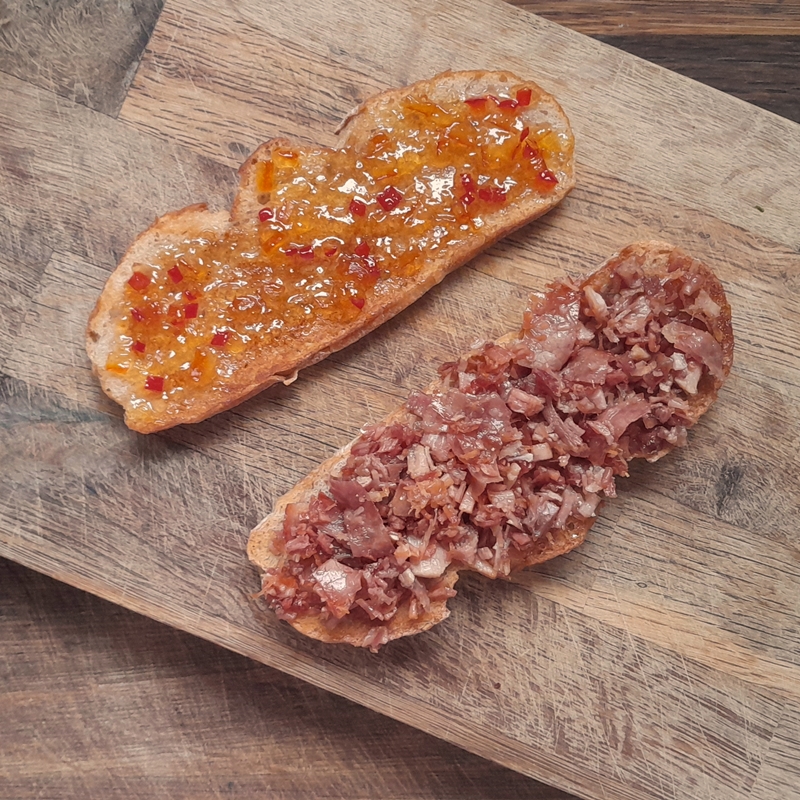
Fried Bread and Marmalade
Slices of bread
Bacon fat (from dry-cure bacon/gammon)
Marmalade of choice
Bacon (optional)
- I’m going to stray a little from the traditional preparation method. As mentioned above, the traditional method is to turn the slices of bread over in the fat in the pan, until they have both absorbed the fat and become toasted. Which is fine. Except it’s difficult to get an even colour on the bread – at least so I find. Also, I dislike having greasy fingers from the bread being fried on both sides, so I’m going to suggest the following:
- Toast the bread in a toaster/under a grill, then spread the solidified bacon fat onto the hot toast with a knife, like butter. This way the toasting of the bread is even, it stays dry on the outside for cleaner eating, and you can easily control the amount of bacon fat used. If your bacon fat is still hot in the pan, use a pastry brush to dip in and then brush over the surface of your toast.
- Spread your choice of marmalade onto the non-dry sides of the toast.
- Add your bacon – or not – and enjoy.
 Deja Food