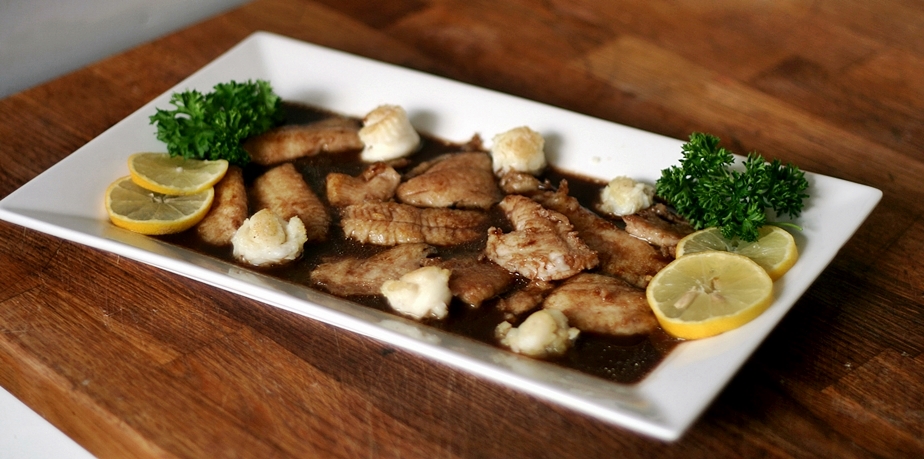
Oh, I do love a bit of alliteration! Straight away I’m going to own up to changing this title from the original (Sole Fricassee) in order to stress the ease with which it can be used with a number of different fish, including sole, plaice and halibut.
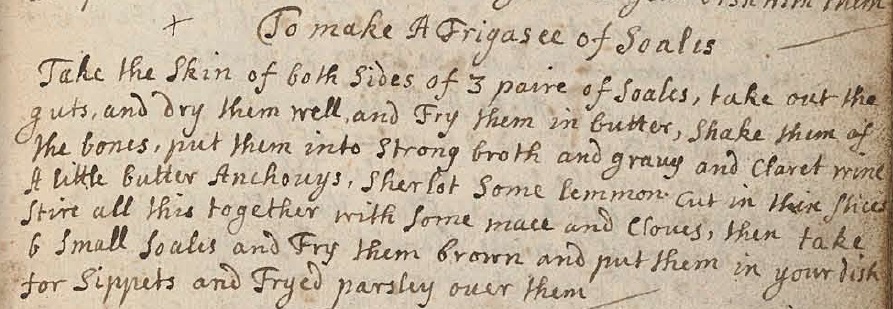
Source: MS3009, Wellcome Library Collection
I also chose this recipe for the way it brazenly ignores all the conventions of fish cooking that we in the 21st century have become so wrapped up in, and suggests a mixture of beef stock and red wine for the cooking liquid. I can picture the cognoscenti of gastronomy clutching their chests and gasping in horror at this unorthodox approach, but, as I have found in so many of these old recipes, this rule-breaking works. The contrast between the strong braise and the delicate fish is a delight.
Flatfish Fricassee
Serves 4
8 sole fillets
50g unsalted butter
250ml strong beef stock – use a stock cube and just half the quantiy of water
250ml red wine,
4 anchovy fillets, rinsed and chopped fine
2 shallots – chopped fine
4 lemon slices
2 whole blades of mace
10 cloves
20g butter for the trimmings
parsley & lemon to garnish
Trim the edges from the fillets.
Cut the fillets into pieces about 10cm long.
Roll the trimmings into coils and secure with a wooden cocktail stick.
Put the stock, red wine, anchovies, shallots, lemon and spices in a pan and simmer for 10 minutes.
Melt the butter in a frying pan and quickly fry the fillet pieces for 15-20 seconds each side.
Add the stock mixture to the fish and simmer for 5 minutes.
Melt the remaining butter in a pan and quickly fry the coils of trimmings for garnishing.
Transfer the fish to a warmed serving dish and keep warm.
Strain the sauce, return to the pan and taste. Add salt and pepper as liked.
Pour the sauce over the fish and garnish with the coiled trimmings, freshly sliced lemon and parsley sprigs.
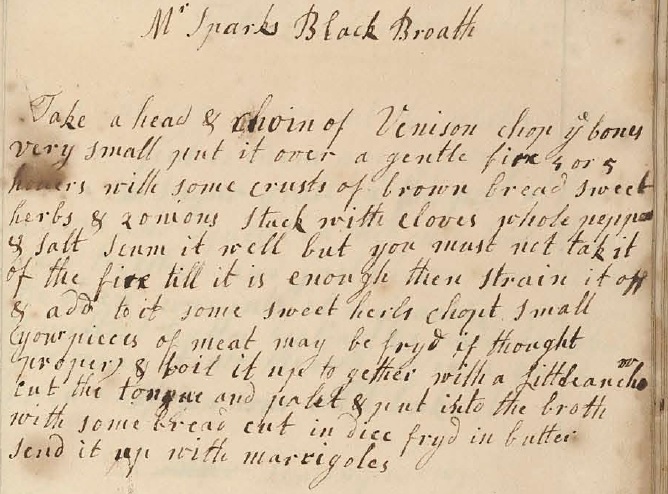
I have no idea who Mr Sparks was, but he obviously made an impression on at least one of the many ladies through whose hands one particular manuscript¹ passed, for there are no fewer than nine of his recipes included over the course of ten pages.
I have been unable to find any printed cookery book with a Mr Sparks as author, so must assume that these recipes were copied from one handwritten source into another as a result of having tasted the dishes in question. I almost have more confidence in a handwritten recipe with a name attached that is otherwise untraceable, because it hints at genuine originality: someone created it, someone ate it, that someone liked it so much, they asked for the recipe.
Source: MS7851, Wellcome Library Collection
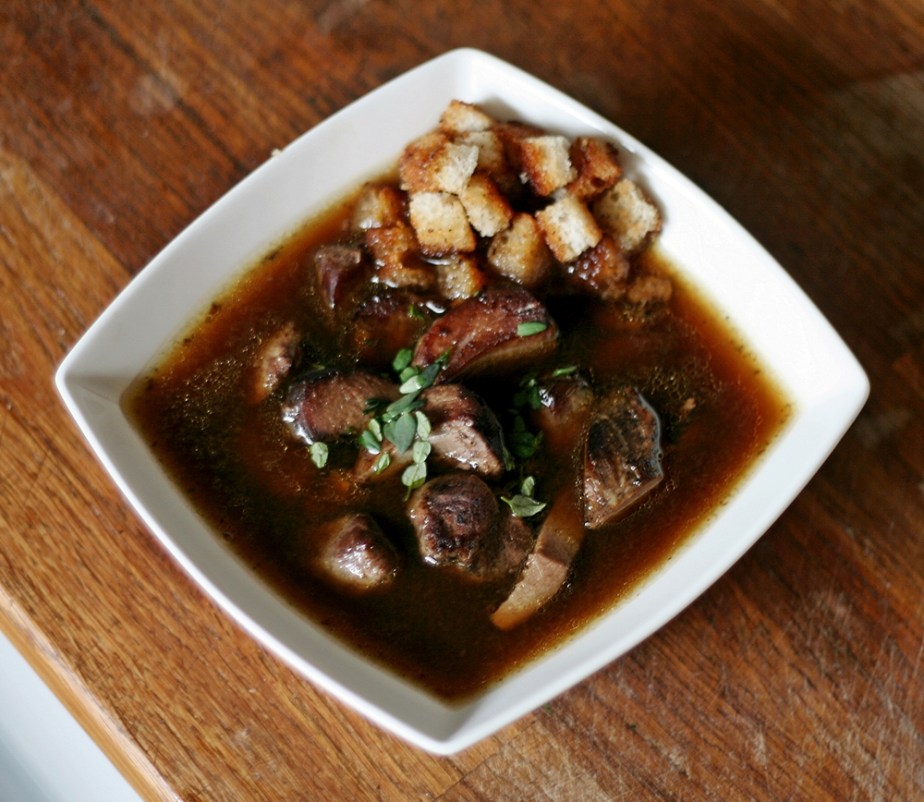
This black broth is made with venison. Venison is beautifully lean meat, which also means that it can be prone to toughness on the less prime cuts such as shoulder, or the ‘helpfully’ diced meat (that gives no hint as to which part of the animal it came from) available in packs in the supermarket.
Long, slow poaching in a flavoursome broth makes for fall-apart tender meat, perfect for a warming winter soup. This recipe uses a method gleaned from old manuscripts that is the opposite of what we do today, namely frying the meat after it has been cooked. I’ve used it with ragoos and fricassees and have been delighted with the added richness it gives both to the flavour of the meat and to the dish as a whole. The butter might seem extravagant, but it is a sumptuous
complement to the leanness of the venison.
A slow-cooker is ideal for this largely set-it-and-forget-it hearty soup, but you can also cook it on the stove top on a very low heat, or covered in the oven at 140°C/120°C fan/gas 1.
Black Broth
1kg venison shoulder, in one piece if possible, otherwise cut into large cubes.
3 slices wholemeal bread
3 onions
9 cloves
1 bunch parsley
1 bunch mixed herbs
1tbs peppercorns
1tsp salt
1.5 litres beef stock
50g unsalted butter
3-4tbs chopped, mixed herbs
gravy browning (optional)
2-3 slices of white bread, crusts removed, cut into 1cm cubes
marigold petals to garnish
Toast the bread as dark as possible without turning black.
Peel the onions and stick 3 cloves into each one.
Add all of the ingredients down to the stock to the slow cooker and cook on low for 8 hours.
Remove the meat from the cooking liquid and trim all fat, skin and connective tissue. Cut into suitably-sized pieces if not already cubed.
Strain the cooking liquid and discard the solids. Remove all fat from the broth, either with a separator jug or by chilling the liquid in the fridge and allowing the fat to solidify on top, then lifting off. Taste and decide if the broth requires any embellishment. You can improve the flavour of the broth, if necessary, with various flavouring sauces such as, but not limited to, mushroom ketchup, walnut ketchup, anchovy essence, Henderson’s Relish, Worcestershire Sauce, Marmite, Bovril, soy sauce.
Melt the butter in a large pan and add the pieces of cooked venison.
Braise the meat over a medium-low heat, turning often but carefully, to avoid breaking it apart further, until the meat is richly browned.
Return the meat to the broth and heat through. Add the chopped herbs and taste to check the seasoning. Add pepper, salt and more of the flavourings as required. If you’d like your broth darker, use a drop or two of gravy browning.
Add the cubed bread to the remaining butter and toss over medium heat until crisped and browned.
Serve sippets (for that is what you have just made) and marigold petals (if available) sprinkled into the broth.
¹ MS7851, Wellcome Library Collection. Various marks of ownership are written in the book, in a number of hands. ‘Elizabeth Browne 1697’, ‘Penelope Humphreys’, ‘Sarah Studman’, ‘D Milward’ and ‘Mary Dawes Jan 18 1791’.
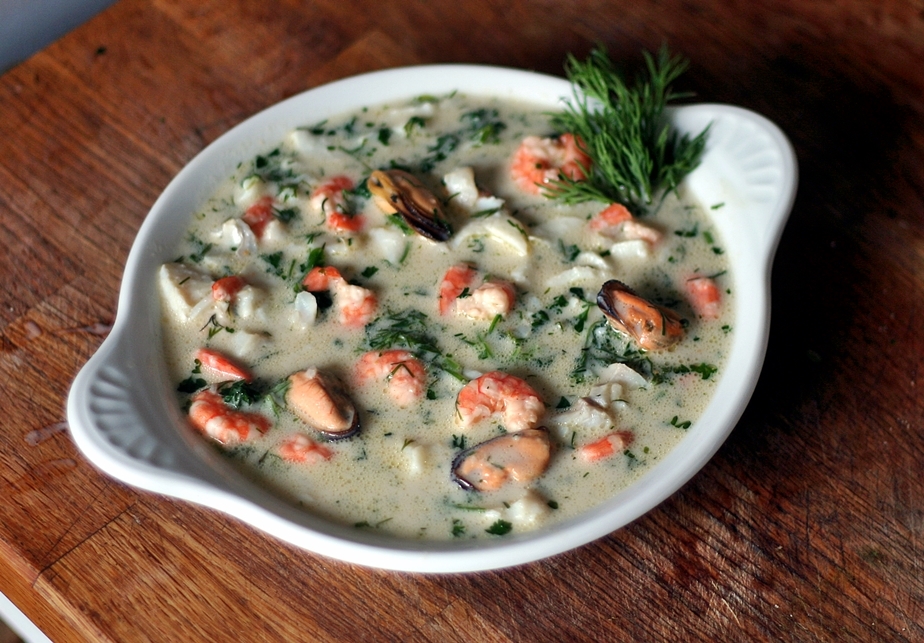
This recipe is an attempt to recreate a dish served at the legendary Pontack’s Head tavern in Abchurch Lane, which reigned supreme as London’s foremost eatery at the close of the seventeenth century.
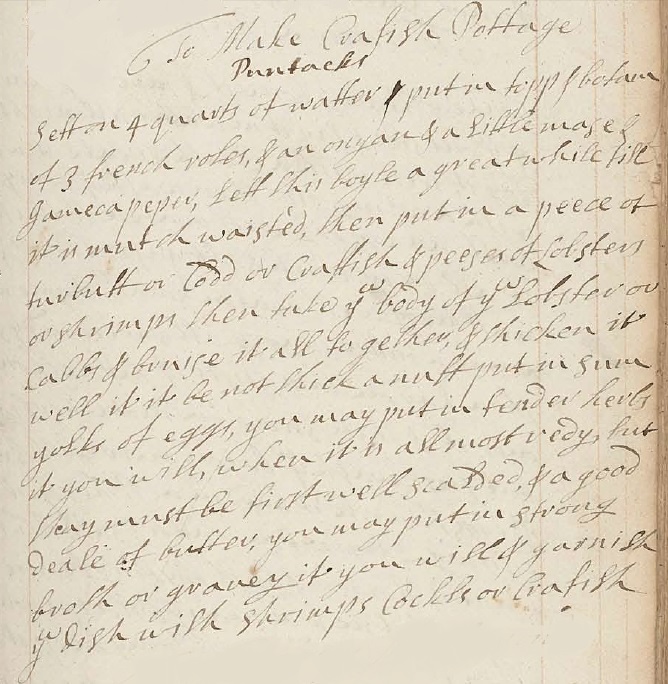
It is listed in the Johnson Family Receipts manuscript as Crayfish Pottage, but the instructions give so much leeway in terms of ingredients, it’s more appropriate to call it a seafood pottage. It would appear that the Johnson Family, or whomever composed the recipes in the manuscript, was a great admirer of the fare at Pontack’s, as there are no fewer than four entries ascribed to that establishment. Whether they were frequent visitors or merely collected the receipts from others, it gives a glimpse into the type of food served and enjoyed there by Pepys, Swift, Defoe and London’s society elite.
Although luxurious, with ready-prepared seafood and good quality fish stock, it is ready in mere moments.
Source: MS3082, Wellcome Library Collection
Seafood Pottage
Serves 4
1 litre fish stock
250g soft white breadcrumbs
4 spring onions, finely chopped
½ tsp ground mace
½ tsp ground allspice
400g prepared crayfish tails, prawns, lobster, cockles, mussels, shrimp
1 handful fresh parsley
8 sprigs dill
2 large yolks
150ml double cream
salt and pepper to taste
Put the fish stock, breadcrumbs, onion, mace and allspice into a pan and simmer for 10 minutes
until slightly reduced.
Whisk the yolks with the cream and mix into the soup, stirring as the mixture thickens.
Add the prepared seafood and allow to warm through.
Strip the fresh herbs from the stalks, chop finely and stir into the soup.
Taste, and season with salt and pepper.
Serve with crusty bread and toast sippets.
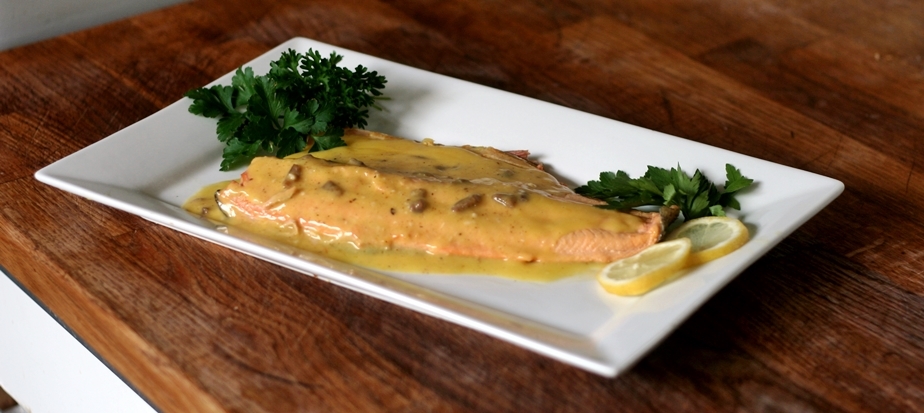
Trout has a glorious, rich, coral-orange colour when raw, and a delicate poaching for a few minutes is all that is required to cook it to perfection. Alas, even this gentle treatment causes some of that fantastic colour to fade to a rather less interesting pastel pink.
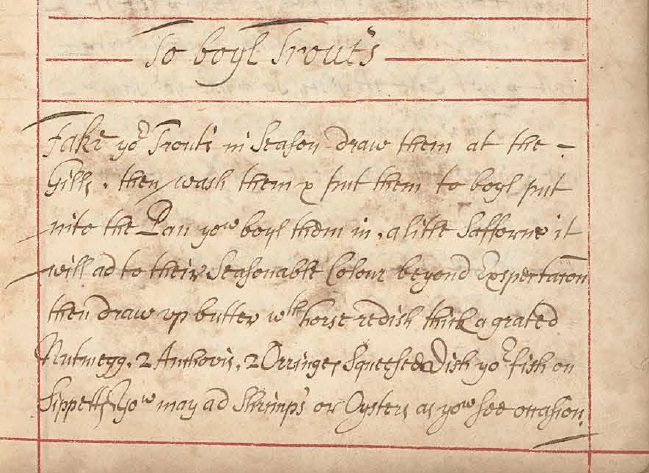
Jane Newton’s recipe, taken from her colourfully laid out manuscript book (MS1325, Wellcome Library) suggests introducing a touch of saffron to the poaching liquid which, she assures us, “will add to the seasonal colour beyond expectation.”
Source: MS1325, Wellcome Library Collection
Saffron Trout
Serves 4
600g boneless trout fillets
Poaching liquid
4 spring onions, sliced
1tbs black peppercorns
2 bay leaves
12 stalks of parsley
a few sprigs of fresh herbs
4 slices lemon
1tsp horseradish
1tsp salt
pinch of saffron
English Butter Sauce
Standard Butter Sauce – see recipe here – made with 60ml freshly squeezed orange juice instead of water, and the following additions stirred in:
1tsp grated horseradish
½ nutmeg, grated
2-4 anchovy fillets, rinsed and chopped fine
4 slices white bread, crusts removed, toasted
Put all of the ingredients for the poaching liquid into a wide pan and add 500ml water.
Bring to the boil, turn the heat down, cover and simmer for 30 minutes.
Prepare the butter sauce.
When the poaching liquid has simmered for 30 minutes, slide the fish in and allow to gently poach for 5-6 minutes, depending on the thickness of your fillets.
Lay the trimmed toast into a serving dish and place the trout fillets on top.
Spoon over a little of the butter sauce and serve the rest on the side.
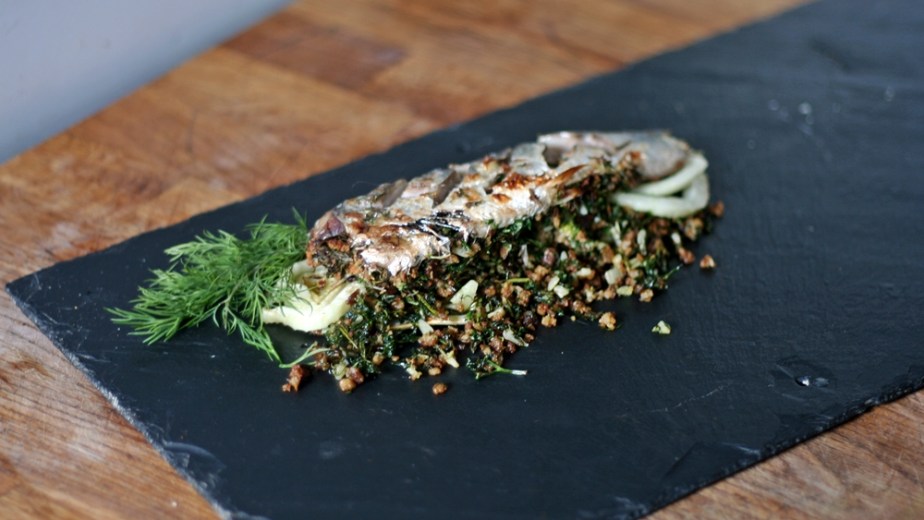
Mackerel is an oily fish, rich in omega-3 fatty acids. They have been an important food source for thousands of years, and are especially important to the fishing communities of coastal Scotland.
Once in danger from overfishing, mackerel are now available through thoughtful and sustainable farming methods. They are beautiful to behold, with their dark blue tiger stripes over a pale blue, sometimes green, background and dazzlingly white undersides.
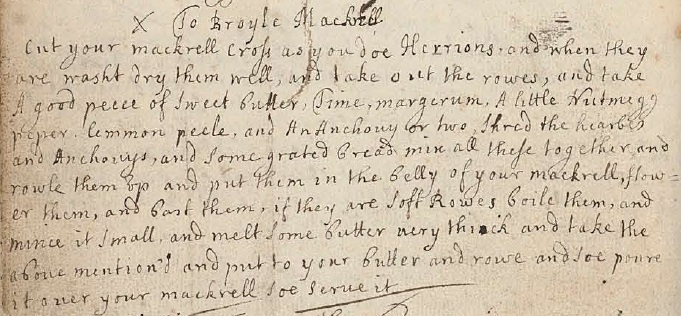
This recipe, with it’s simple stuffing and garnish allows both the beauty and flavour of the mackerel to shine, in addition to being speedy to both prepare and cook.
Source: MS3009, Wellcome Library Collection
Broiled Mackerel with Butter Sauce
4 fresh mackerel, gutted
2 bulbs of fennel, cut into thin slices
For the stuffing
2 slices of fresh wholemeal bread made into breadcrumbs
2tbs each of chopped fresh dill, parsley, fennel, thyme, rosemary
¼ tsp pepper
¼ tsp salt
Butter Sauce – see recipe here To Add
2-3tbs capers
a little caper pickle liquid
Make the butter sauce:
Add the capers and a little of the pickle liquid to taste.
Wash and dry the fish.
Scotch the outside of the mackerel in diamond shapes with a sharp knife.
Mix the stuffing ingredients together and fill the insides of the mackerel. Don’t worry if there’s stuffing left over.
Sprinkle the fish with salt and lay thin slices of butter over them.
Lay slices of fennel on an oiled rack over a grillpan.
Lay on some flakes of butter.
Add the fish and cover with more butter.
Lay over more fennel. Dot a little butter over the fennel, or brush lightly with oil, to prevent it burning.
Grill under high heat for 5-6 minutes then turn the fish and grill the other side.
To turn the fish, lay a wire rack over the top and hold the grill and the wire rack like the bread of a sandwich. Turn the whole over, so the underside of the fish is now uppermost, with the fennel on top.
Grill for a further 5-6 minutes.
While the fish is cooking, melt a little butter in a an and quickly stir fry any excess herb stuffing, until the breadcrumbs crisp up.
Serve the fish on a bed of the fennel, sprinkled with the toasted crumbs, and butter sauce with capers on the side.
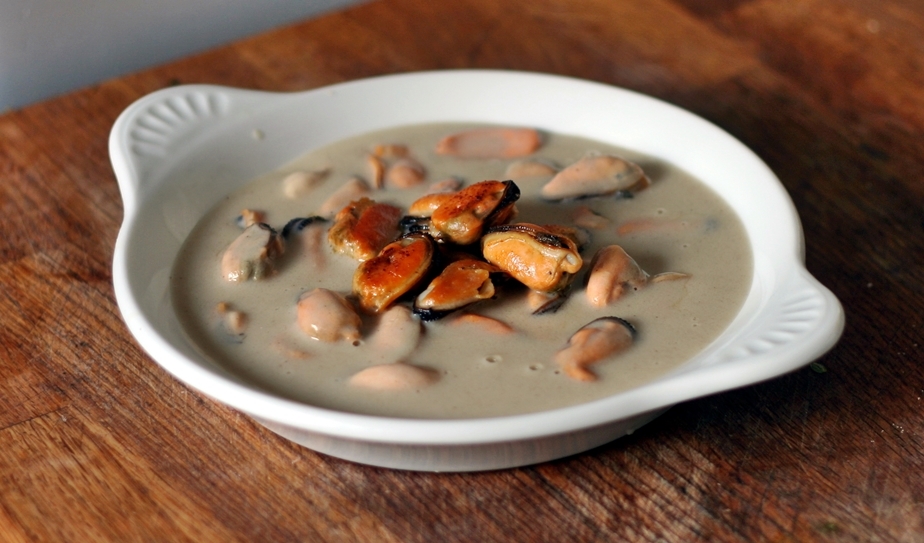
A pottage is a thickened, substantial cross between a soup and a stew. I was drawn to this recipe by the lazy cook in me that is always looking for a simpler, easier way to achieve tasty food.
When this recipe was jotted down three hundred years ago, it would have been quite hard work to prepare: collecting the mussels, cleaning them, steaming them, straining the sand from the broth, etc.
Luckily for us, we have the luxury of buying what someone else has collected and cleaned, and also cooked. Whilst you can certainly buy fresh mussels in their shells and prepare them yourself, cooked mussels and prepared fish stock can bring this dish together in just minutes. I’ve been rather specific with the number of mussels, however you should feel free to increase this quantity with abandon, if so inclined.
Mussel Pottage
Serves 4
500ml fish stock
250ml water
4 slices of white bread, crusts removed
2 blades mace
½ tsp ground allspice
150ml cream
3 large yolks
1tbs anchovy sauce
32 cooked mussels
30g butter
2tbs chopped parsley to serve
Put the stock, water, bread, spices and anchovy sauce into a pan and bring to a boil.
Turn the heat down and allow to simmer for 10 minutes.
Remove from the heat, fish out the mace and purée with a stick blender.
Mix the cream, anchovy sauce and the yolks together and whisk into the soup.
Set aside 12 mussels for garnish and add the remainder to the soup. Warm gently.
When ready to serve, melt the butter in a pan and when hot, quickly toss the mussels set aside for garnish in the hot butter for about a minute, to heat through .
Serve garnished with the fried mussels and a sprinkle of chopped parsley.
Jane Parker, 1651 adapted from A New Booke of Cookerie, 1615
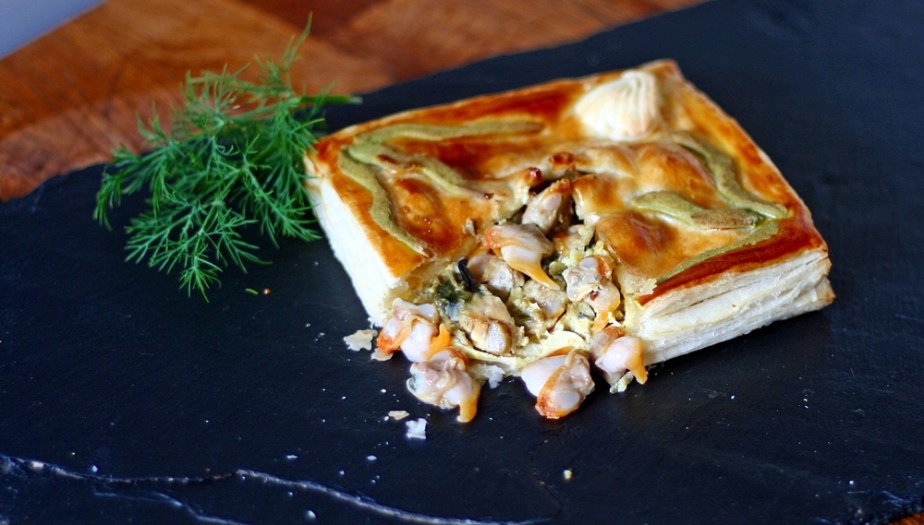
The availability of British seafood has increased dramatically with the introduction by the major supermarkets of dedicated fish counters staffed by professional fish mongers. No longer do we have to live close to our coastline in order to enjoy fresh seafood. Ideally, you would create this dish from scratch, and if you have the time and the inclination, it will no-doubt be superb. However, for those with limited time, by taking full advantage of pre-prepared seafood and ready-rolled puff pastry, this can come together in less than 30 minutes.
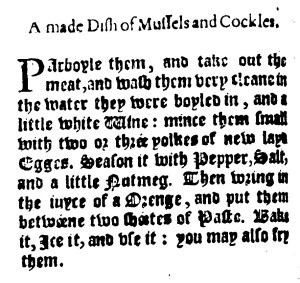
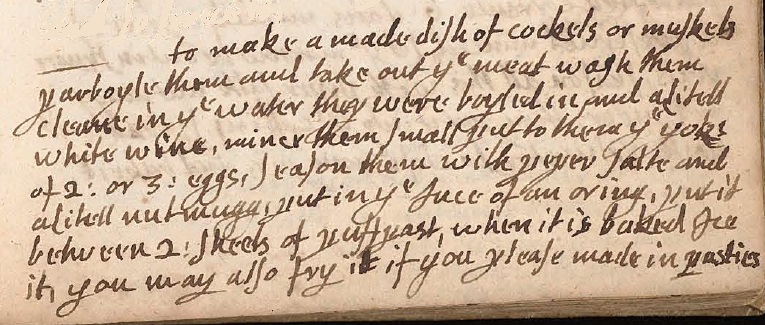
I first came across this recipe in the household manuscript book of Jane Parker (MS3769 at the Welcome Library). I subsequently discovered that she had copied it from John Murrell’s 1615 A New Booke of Cookerie, rephrasing it slightly and adding a little note to herself about changing the shape if frying them instead of baking. As noted elsewhere, Mistress Parker was not reticent about embellishing and improving the recipes she cherry-picked from the scant number of cookbooks of the day to suit her own style and preferences.
From John Murrell’s A New Booke of Cookerie, 1615, p20From the manuscript book of Jane Parker, MS3769 at the Welcome Library
I have refrained from chopping the seafood as finely as suggested, much preferring to allow the constituent parts to be both distinguishable and identifiable omce the crisp pastry reveals it’s contents. I have added only pastry decoration to the original recipe.
Cockle and Mussel Puffs
200g cooked cockles
200g cooked mussels
4 large yolks
¼ tsp pepper
pinch of salt
a little grated nutmeg
60ml white wine
60ml orange juice
2 sheets puff pastry
1 large egg for glazing
Preheat the oven to 220°C/200°C fan/gas 7.
Mix the cockles and mussels in a bowl.
Season with salt, pepper and nutmeg.
Mix 2 tablespoons of the orange juice with the yolks and stir to combine.
Pour over the cockles and mussels and toss gently.
Taste and add more orange juice if liked, but beware of making the mixture too wet.
Roll the pastry sheets lightly to smooth, then cut four strips of 1cm width across the shorter side of each pastry sheet. Leave one sheet for the bases, and roll the second sheet thinner (tops), to fit overthe filling easily without stretching.
Moisten the edges of the bases and use the strips to build up a border around the edges.
Divide the solid part mixture evenly between the four bases and spread out. Don’t worry about adding the liquid at this stage, wait until the pies are sealed.
Moisten the pastry strips with a little water and lay over the lids.
Brush the border with water, then lay over the lids, pressing around the filling firmly to seal.
Trim the edges to neaten. Use a pastry or pizza wheel, or a neat, vertical cut with a sharp, unserrated knife. The cleaner the cut, the better and more puffed the edges will become.
With the back of a knife, press down all around the pie, 5mm from the edge, to seal.
Brush the tops of the pies with beaten egg, making sure none drips down the sides, as this will stick the pastry layers together and stop them from puffing up. Cut a vent hole to let out steam during cooking.
Divide any leftover liquid between the pies, pouring it through the vent hole.
Use pastry offcuts to shape some decorations. Leaving these pieces unglazed will make them stand out more against the glazed pastry.
Transfer the pies to a baking sheet lined with parchment.
Bake for 12 minutes, turning the baking sheet around 180 degrees after 6 minutes to ensure even colouring.
Battalia Pie is a classic, double-crust pie from times past, the filling for which filling could be made from any of a number of ingredients. It’s origins are thought to come from the French béatilles, meaning titbits, and originally comprised of all the little odds and ends that are too small to use by themselves: cockscombs, lamb stones, sweetbreads, ox palates, etc.
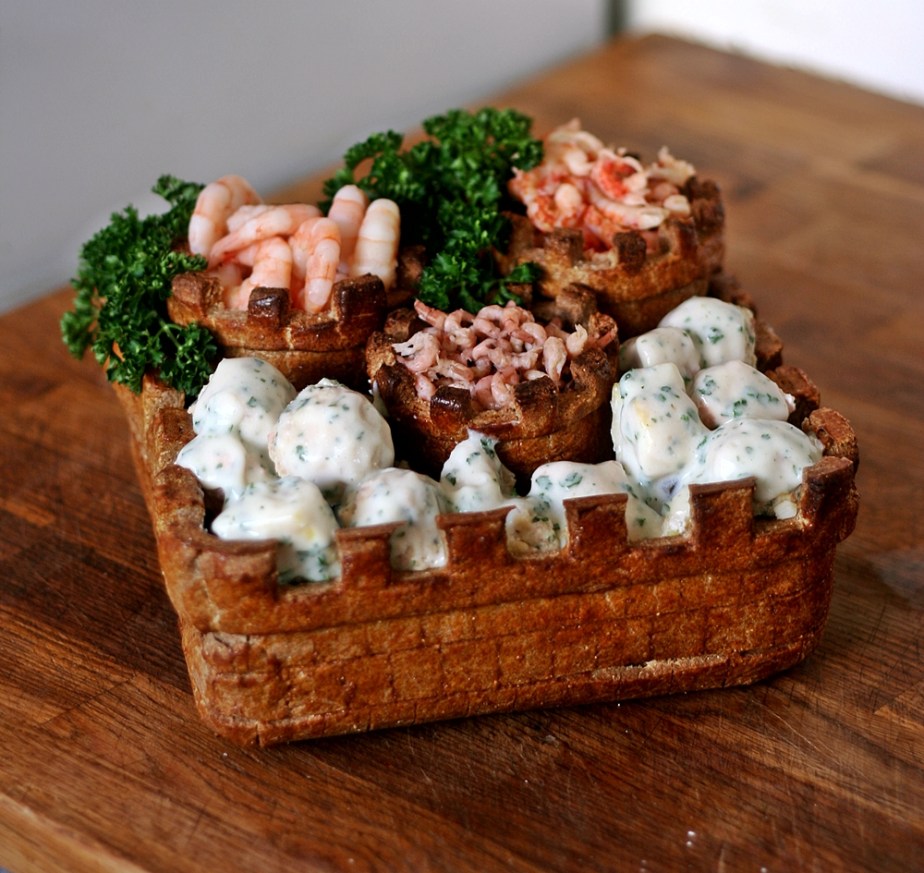
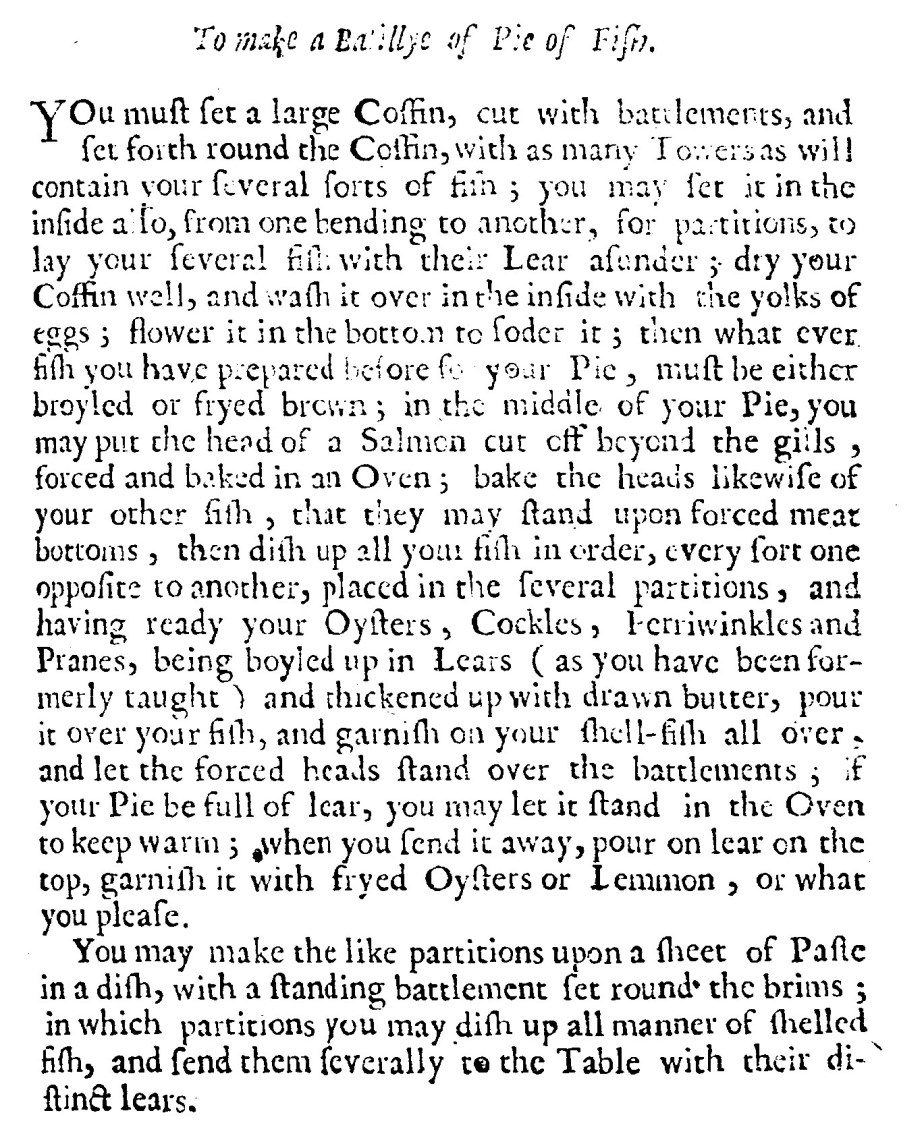
By the 18th century, the spelling had settled onto Battalia, but in the 16th and 17th centuries it was a much more ad hoc affair (beatille, beatilla, beatilia), although the French origin can still be seen. To the ear, however, it sounded closer to ‘battle’ and William Rabisha embraced this interpretation with gusto, styling his fish pie in a pastry castle, complete with crenellated battlements, which I think is a fabulous concept as well as being visually stunning for a special occasion or centrepiece.
This design works especially well with the mixture of ingredients called for in his filling, as he suggests that each tower hold a different kind of fish and sauce. Then again, he also suggests that the decapitated heads of the various fish and seafood creatures be stuffed and propped on the battlements like some macabre seafood re-enactment of the siege in Beau Geste, thus illustrating the importance of being selective when choosing which aspects of historical recipes to revive.
From The Whole Body of Cookery Dissected (1661) William Rabisha
Another presentation idea is to utilize the castle and battlement elements for a cold, seafood buffet, as in the picture above. Each tower is filled with a different seafood, and the main body of the ‘castle’ can incorporate garnishes, salads and seafood items better suited to being laid out, such as smoked salmon and/or trout and oysters on the half shell.
Instructions are given below for how to construct and bake your crenellated pastry castle. Do not be constrained by the picture – only by the dimensions of the tin that will fit inside your oven: a large roasting tin will give you ample space in which to lay out your centrpiece.
Neither should you think only in terms of rectangular shapes for your ‘castle’. Use whatever baking tins you have to hand and create your own fortified masterpiece. A variety of heights will add interest as well as flexibility to your display.
Happy castling!
Batalia Fish Pie
William Rabisha, 1661
Game Pie Pastry made with wholemeal flour instead of white
2 large eggs for glazing.
To make the castle pie shell
Select a pie tin suitable for serving; round of rectangular, either is fine. It should be at least 10cm deep in order to form the walls and crenellations.
Select tins to shape your towers. These can be ordinary tins from soup or vegetables; remove the labels by soaking, and cut off both ends, leaving a tube. Cover all of the tins with foil or baking parchment, leaving one end open on each of the smaller ‘tower’ tins. The pastry will be baked on the outsides of the tins, to ensure a neat appearance.
Turn all of your tins upside down. Grease well.
Preheat your oven to 200°C/180°C fan/gas 6.
Roll out the pastry to about 1cm and use to cover all of the tins with a smooth layer. Trim any excess pastry.
Re-roll the scraps of pastry and cut into 3cm strips. Brush the top edges – which are currently the bases of the tins – with beaten egg and attach the strips of pastry. Press firmly.
Using a sharp knife, cut out the crenellations on the towers and the castle. Make them 1.5cm deep and 1.5cm wide.
Brush the pastry with the beaten egg.
Using the tip of a sharp knife, lightly score the pastry into a brickwork pattern.
Set your tins, still upside-down, onto a baking sheet and bake for 15-20 minutes until browned and firm.
Remove from the oven and CAREFULLY turn the tins the right way up.
Ease the foil/parchment away from the tins and lift out. Remove the foil/parchment, leaving the pastry shell. Brush the insides of the pastry with beaten egg and return to the oven for 5-10 minutes until fully cooked.
The surfeted Groomes doe mock their charge With Snores.
I have drugg’d their Possets.
Macbeth, Act II, scene II
The broadest description of a posset that I can think of is that of a hot syllabub: a thickened drink of either milk or cream, sweetened and flavoured with any of a number of alcoholic drinks and/or fruit, served warm.
In the Middle Ages it was seen as a winter warmer and it’s ability to make one feel good meant that over the years it segued into becoming borderline medicinal. It was recommended for insomnia, indigestion, as a purgative and of benefit when fasting.
Recipes abound, and the styles are as numerous as their intended uses: custard posset, cold posset, apple posset, whipped posset, froth posset, sack posset, soap sud posset, posset without milk, posset without wine, posset without milk wine or beer.
Thus far, Joseph Cooper is the only person I have found that turns posset into a dessert. Twenty years later Hannah Woolley would include this same recipe in her own book, adding a few of her own details to the method.
Apples are the recommended fruit, but this would work well with almost any fleshy fruit pulp; apricots in summer, for example, and dark, sharp damsons in autumn.
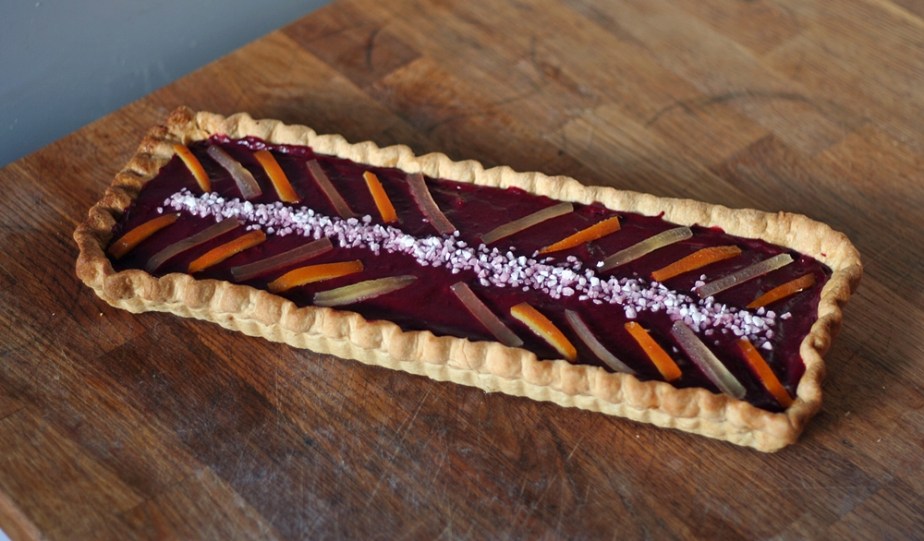
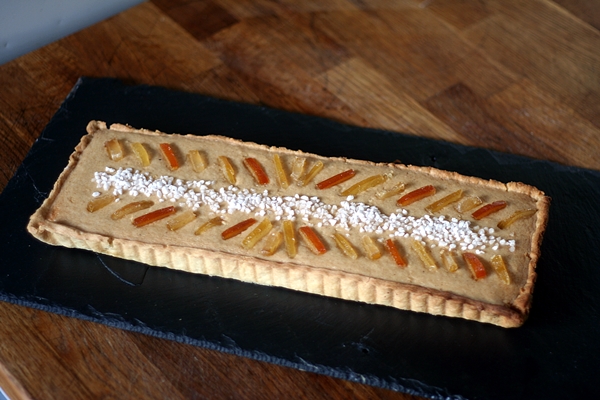
Posset Pie
Sweet shortcrust pastry
Eggwhite for glazing
500g fruit puree
2 large yolks
200ml double cream
50ml cream sherry
1tsp ginger
1/2tsp cinnamon
1-2tbs icing sugar
4 heaped tablespoons dried white breadcrumbs
To decorate
2cm matchsticks of candied orange, lemon and citron peel
sugar nibs
Preheat the oven to 200°C/180°C fan/gas 6.
Roll out the pastry and line a greased shallow tart tin. My favourite shape is long and rectangular (36 x 12 x 3cm).
Prick the bottom with the tines of a fork to prevent blistering and line with parchment paper and baking beads.
Bake for 10 minutes, then remove the parchment and baking beads and bake for a further five minutes.
Brush the insides of the tart with beaten egg white and bake for a further 3 minutes.
Turn the oven heat to 160°C/140°C fan/gas 3.
Mix the filling ingredients until smooth. Taste and add more sugar if liked.
Pour into the pastry case and smooth over.
Bake for 20-25 minutes until the filling is almost set. It will firm up while it cools.
Arrange your candied peel and sugar nibs on the pie as decoratively as you like.
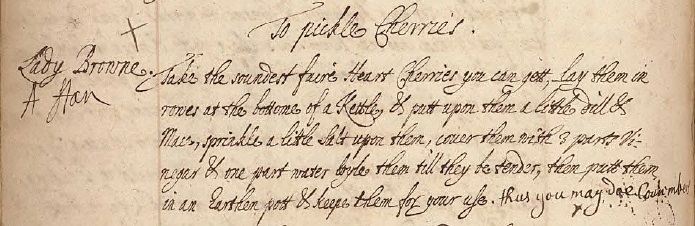
This recipe comes from the manuscript receipt book of Lady Ann Fanshawe at The Wellcome Library – page 292 by Lady Ann’s numbering. It is very quick and straightforward and not that different to the other pickled cherry recipes around, except for the seasonings.
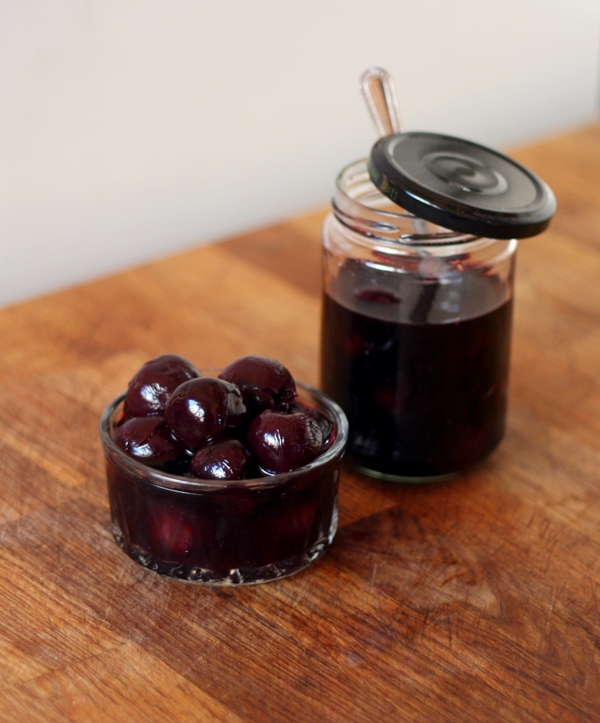
Lady Ann favours mace and dill which were unusual enough to tempt me to try. The recipe also calls for the very best heart cherries, which are cherries that have a soft and rounded heart shape. A bit of research into old varieties reveals that heart cherries could be both dark or pale. I’ve gone with dark, and used a little red wine in place of the original water, in order to help preserve the colour of the fruit. If you can get pale dessert cherries, then swap the red wine for white.
The original recipe contained no sugar, which was a bit much even for a vinegar-lover like myself, so I have tweaked the recipe and added a little brown sugar to soften the flavour.
Source: MS7113, Wellcome Library Collections
Pickled Cherries
2kg dark purple cherries
540ml light fruit vinegar – I used home-made gooseberry, but you could use whatever you like, as long as it doesn’t overpower the flavour of the fruit. A white balsamic, for example
180ml red wine
6tbs dark muscovado sugar
3 blades of mace
1 tbs dried dill
½ tsp salt
Stone the cherries and arrange them neatly in concentric circles in the bottom of a preserving pan. There should be enough to make a full single layer covering the bottom of the pan.
Add the sugar, mace, dill and salt.
Gently pour in the vinegar and red wine. This should just cover the cherries. If you need more liquid add it in the proportion of 3 parts vinegar, 1 part wine.
Put the pan on medium heat and bring to a gentle simmer.
Cook for 10 minutes, until the cherries are just tender but still holding their shape.
Gently spoon the cherries into sterilised jars. Pour in the cooking liquid to cover and seal.
Can be enjoyed immediately with ham and terrines, as well as fatty meats such as roast lamb, duck and pork.

 Deja Food