Dundee Cake

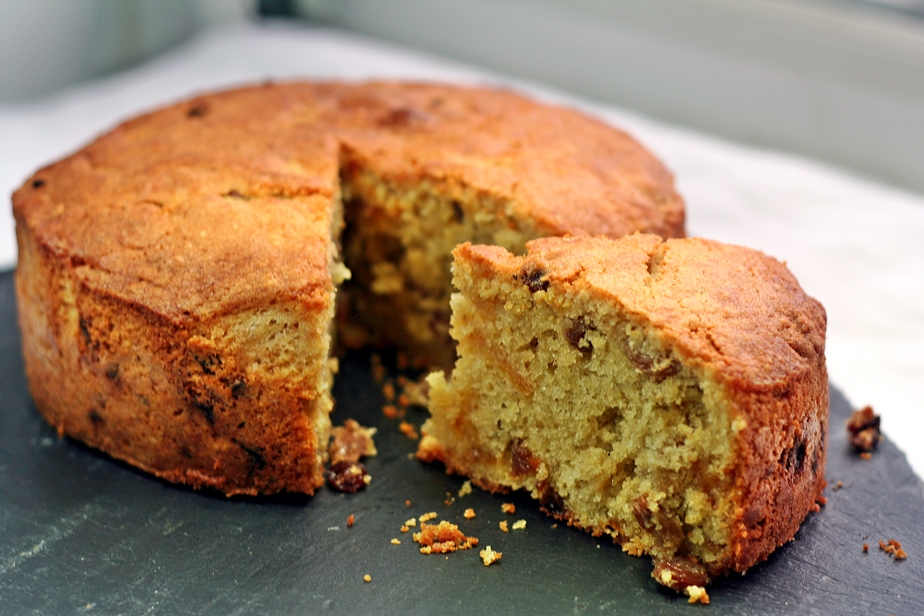
This recipe is fabulous – and this recommendation is coming from an until-recently Dundee-Cake-Disliker. The crust is crisp but delicately thin, the insides delicately moist and buttery, rich with the sweetness of sultanas and the tang of candied orange peel.

The modern Dundee Cake has an iconic appearance: the carefully laid-out pattern of whole, blanched almonds immediately distinguishes it from other fruit cakes. For many years I’ve not been a fan, based on the Dundee Cakes I’d been served as a child: dry, crumbly, tasteless, overly-fruited masses with burnt nuts on the top and, horror of horrors, glacé cherries studding their depths.

After a bit of digging around in the cake history books, it turns out that the Dundee Cake known today is quite a few steps removed from the original. So I had high hopes that with a little experimentation I could, as with other recipes I’ve managed to rehabilitate from childhood dislikes, bring Dundee Cake back to its former glory and once again make it a teatime favourite.

Dundee Cake was first made by the Dundee-based Keiller company, as an off-season sideline to their marmalade business, as a way of using up excess peel generated by the marmalade manufacturing process. By gentleman’s agreement, no other bakers in the city made the cake. Keiller’s were also responsible for popularising their creation under the name Dundee Cake, described by Alan Davidson in the Oxford Companion to Food as light, buttery delicacy stuffed with sultanas, almonds and candied orange peel.

Quite when the cake was first made is a bit of a mystery, but it is mentioned in stories and novels of the mid-nineteenth century. An 1853 edition of The Lancet carries an advertisement for a Regent Street caterer, which includes Dundee Cake in its list of available cakes. This recipe is based on Madam Marie de Joncourt’s 1882 recipe, but tweaked to conform to the description of the original delicate and rich cake: more butter, almonds, sultanas and peel, no currants, no almonds on top. I’ve left off the distinguishing almonds, because they’re not mentioned in the original recipe, but you can make your own decision on that.

Dundee Cake

180g butter – softened
112g caster sugar
4 eggs
1tsp vanilla extract
180g flour
150g sultanas
2 tsp baking powder
1/3 grated nutmeg
100g ground almonds
125g candied peel, cut into thin, 2cm slivers

  • Preheat the oven to 170°C, 150°C Fan.
  • Grease a 20cm, deep (at least 10cm) loose-bottomed cake tin.
  • Line the base with a circle of parchment.
  • Tear off a long strip of parchment, long enough to wrap around the whole tin.
  • Fold the strip of parchment in half lengthwise.
  • Unfold, then fold in each long edge towards the centre fold.
  • Fold both halves together, making for four layers of parchment.
  • Line the tin with this 4-ply strip of parchment. Any fruit-filled cake needs protecting from the high temperatures that baking in a tin will generate.
    Grease the parchment on the sides and base of the tin.
  • Put the softened butter into a bowl and whisk until light and creamy.
  • Add the sugar and whisk until pale and fluffy.
  • Whisk in the eggs one at a time. Whisk for a good 3-4 minutes before adding the next egg.
  • Stir in the vanilla.
  • Gently stir the remaining ingredients together, then fold into the wet ingredients. Don’t over-mix, or you run the risk of deflating all the air you’ve just whisked into it.
  • Spread the mixture into the tin and level the top.
  • Bake for one hour, gently turning the tin around 180 degrees after 40 minutes.
  • Check for done-ness by inserting a wooden toothpick deep into the centre of the cake. If no liquid batter is clinging to it when removed, the cake is done.
    Cool for 10 minutes in the tin, then remove to a wire rack to cool completely.
  • Store, wrapped in foil, in an airtight tin.

Whitsun Cake

Wotchers!

Time was, we used to mark the passing of the year with festivals and their associated foods. The list of celebrations that have continued into the 21st century is a lot shorter than it used to be: pancakes on Shrove Tuesday, Simnel Cake on Mothering Sunday, Cross Buns on Good Friday are about all that remain in national consciousness.

Regionally, there are still pockets of celebration peculiar to that particular area. Whilst researching my book (shameless plug) Great British Bakes, I discovered two such celebrations with which I have a personal connection.

The first was that of Pax Cakes at King’s Capel, near Ross-on-Wye, where my father spend his final years and is now buried. Under the terms of the sixteenth century will of Lady Scudamore, cakes and ale were to be distributed to the parishioners of Hentland, Sellack and King’s Capel on Palm Sunday, to be consumed in church with the aim of fostering good will and letting the grievances of the past year be forgotten. The cakes became known as Pax Cakes and the toast/blessing was “Peace and good neighbourhood”.

The second was the celebration at Kidderminster, where I now live, held on Midsummer Eve, for all residents of Church Street. A bequest left by John Brecknell in 1778 added to an earlier bequest and provided cake for each child or unmarried woman born or living in the street. The men-folk were to gather together to oversee the distribution, and for this meeting both beer and tobacco were paid for by the bequest. Old quarrels had to be set aside in order for the meeting to proceed. Over the years, the celebration evolved into a Midsummer’s Even dinner for residents of the street, where the toast was “Peace and good neighbourhood”.

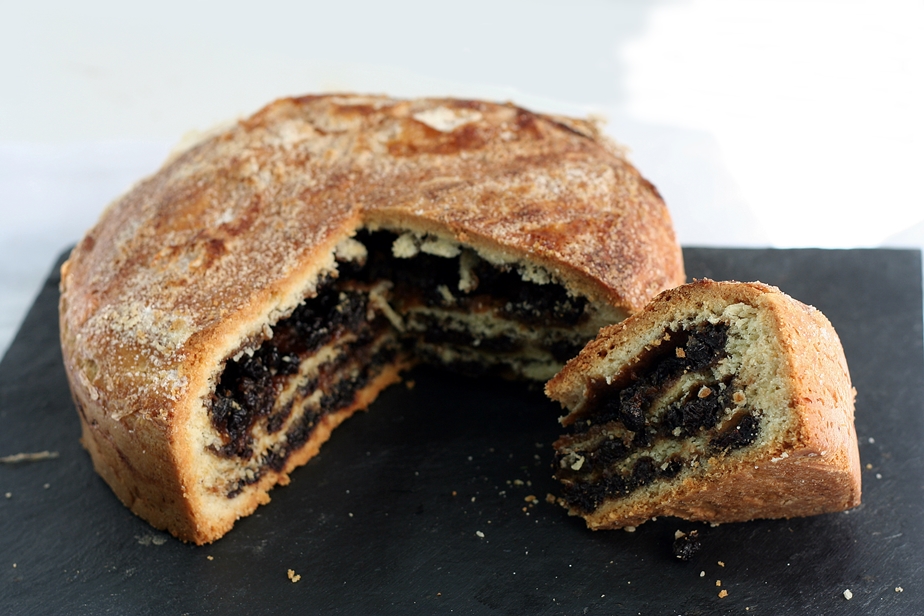
All of which leads me to this week’s recipe found in my grandmother’s cookery book. It’s for a cake to celebrate Whitsun, originating from Lincolnshire. The recipe was very insistent that, after baking, the cake be wrapped and carefully stored for “several days” in order for the flavours to mingle. The first time I made it, I dismissed this notion, as the aroma was so tantalising, and indeed, it was absolutely delicious, warm from the oven. This time I decided to follow the instructions as written, purely to compare taste. Long story short, although the cake I unwrapped this morning was nice, I still prefer the cake fresh and warm. The flavour is akin to an Eccles or Banbury cake, but with an enriched dough taking the place of pastry.

This recipe makes two, 20cm cakes. You can either do your own taste test, by eating one warm and trying the second several days later, or make just one cake by halving the recipe.

There’s no indication, other than the recipe title, what exactly this cake was meant to symbolise or celebrate, so whether you choose to make one cake or two, Peace and Good Neighbourhood to you!

Lincolnshire Whitsun Cake

Makes two 20cm diameter cakes.

170g unsalted butter
¼tsp salt
625g strong plain flour
2 sachets fast-action yeast

170g unsalted butter
300ml milk

450g currants
450g soft light brown sugar
60g butter
1 large egg yolk
2 tsp grated nutmeg
1 tsp allspice

1 large egg white for glazing
caster sugar

  • Grease and line with parchment paper two 20cm loose-bottom or spring-form cake tins. Tart tins are not suitable, as the sides need to be relatively high because of the cakes rising both before and during cooking.
  • Put the first four ingredients into the bowl of a food processor and blitz until the mixture resembles breadcrumbs.
  • Tip the mixture into a bowl.
  • Gently warm the butter and milk together until the butter has melted.
  • Allow to cool to blood temperature, then add to the flour mixture. It will form a very soft dough.
  • Knead for 10 minutes, then set aside to rise for 30 minutes.
  • Mix the fruit, sugar, yolk, butter and spices together in a saucepan and warm through until moist and the fruit soft.
  • After 30 minutes, divide the dough into two and then each half into four equal pieces.
  • Divide the fruit filling into six
  • Pat each piece of dough into a circle of diameter 20cm and place in the prepared tins, alternating with layers of the fruit mixture. The top layer will be of dough.
  • Set tins aside to rise for 30 minutes.
  • Preheat the oven to 180°C, 160°C Fan.
  • Bake the cakes for 30 minutes, then remove and quickly brush them with the beaten egg-white and sprinkle with caster sugar.
  • Return to the oven and bake for a further 25-30 minutes, until the top is browned and the cakes have shrunk away from the sides of the tin a little.
  • Cool in the tins for 10 minutes, then remove and cool on a wire rack.
  • Eat warm, or wait until completely cold before wrapping tightly in foil and storing in a tin, or wrap in plastic and freeze for later.

Radnor Cranberry Tart

If you have an extended social life in the run-up to Christmas, and sample nothing but mince pies throughout December, by the time you get to the 25th, what with the Christmas Cake and Christmas Pudding, you can be all mince-pied out.

Also, sometimes you find yourself fancying something a little savoury at the end of a meal, and this is why this recipe is perfect. It’s simple and straightforward – just two main ingredients of fresh cranberries and juicy raisins. The raisins take the edge off the sometimes eye-popping sharpness of the cranberries and the little dash of vanilla also gives the aroma of sweetness, so only the merest sprinkle of sugar is required. It’s festively reminiscent enough of a mince pie to deserve a place on the table, its fresh-tasting, palate-cleansing, sweet but not too sweet, can be served hot or cold, but ALWAYS with a slice of cheese. I’m thinking some vintage cheddar, crumbly white Cheshire or even one of the fruited cheeses – white Stilton and apricot anyone?

It is a traditional (Welsh) border tart, ideal for Christmas – just look at that glorious colour! The original 1930s recipe in Mrs Arthur Webb’s Farmhouse Cookery didn’t specify any particular pastry, so I’m taking the opportunity to offer for your delectation and amusement, a new pastry recipe! Yes, I know I love the cornflour pastry – and I really do, both sweet and savoury versions – but I can’t resist something that has the potential to add a new arrow to my pastry quiver, as it were, and in this case, I’m really glad that I did.

It’s Eliza Acton’s 1845 recipe for cream pastry and it has my seal of approval for several reasons:

  • Simplicity – in its basic form, it can be whisked together with just two ingredients.
  • Taste – when baked, it is crisp and dry, without any hint of greasiness or stodginess.
  • It can be enriched with butter, but at a ratio of just 1/4 fat-to-flour, it is not as indulgent as it tastes. When enriched with butter, the texture is moving towards the flakiness of flaky pastry, yet with the ‘dryness’ and crispness of the cornflour pastry – Nom!
  • And on the practical side, it handles and rolls really nicely.

You can, of course, use your own favourite pastry instead.

Radnor Cranberry Tart

Eliza Acton’s Cream Pastry
This quantity makes enough for a 20cm pie.

225g plain flour
0.5tsp salt
300-450ml double cream
56g butter

  • Put the flour and salt into the bowl of a food processor.
  • With the motor running, gradually add in the cream, a little at a time, until the mixture comes together.
  • Tip the mixture out and knead until smooth.
  • Roll out the pastry into a long rectangle.
  • Using the same method as for Flaky Pastry, dot over half the butter.
  • Fold the ends over, turn the pastry 90 degrees and repeat.
  • Roll out one last time, and fold the ends inwards.
  • Wrap in plastic and chill in the fridge for 30 minutes.
  • Make the filling (see below).
  • Remove the pastry from the fridge and cut into 2 pieces (2/3 + 1/3 is about right).
  • Roll out the large piece and use it to line a greased, 20cm loose bottomed tart tin. Ease the pastry into the sides, rather than just stretching it by pressing down too hard. Leave the excess hanging over the edge of the tin.
  • Roll out the smaller piece of pastry to make the lid, and lay it onto a cutting board.
  • Chill both pieces of pastry in the fridge for 20 minutes. This will make sure it is relaxed and less prone to shrinkage in the oven.
  • By this time, the filling should be cool enough to use.
  • Preheat the oven to 200°C, 180°C Fan.
  • Remove the two lots of pastry from the fridge.
  • Fill the lined tin with the cooled filling and smooth over.
  • Using a pastry brush, wet the edges of the pastry, then lay the lid across the top and press the edges together.
  • Trim off the excess using the back of a knife.
  • Crimp the edges to your liking – I used the tines of a fork to make for a good seal.
  • Brush the surface of the tart with milk and sprinkle with caster sugar.
  • Cut a steam vent in the middle of the pastry lid using a sharp knife.
  • Bake for 25-30 minutes until the pastry is crisp and golden brown.
  • Allow to cool for 10 minutes in the tin, then remove to a wire rack to cool, if not serving warm.
  • Serve with a nice wedge of cheese.

Filling
450g fresh cranberries
225g raisins
30g sugar
60ml cold water
0.5tsp vanilla extract

  • Rinse the cranberries and put them in a pan with the raisins, sugar and water.
  • Cover and warm on a low heat until the mixture comes to the boil and you can hear the cranberries starting to pop.
  • Simmer for just five minutes, then turn off the heat.
  • Taste to make sure of the sweetness, but remember, this is not supposed to be a really sweet tart, however, it shouldn’t be too sour either. If you think it needs a little more sugar, add it by all means.
  • Stir in the vanilla and leave to cool.

Mince Pies Royale

Here is a great recipe for stretching a small amount of mincemeat into 30+ rich and delicious seasonable bites.

It is adapted from a recipe by Eliza Acton, and I’ve taken the opportunity to pair it with another of her recipes which she refers to as “Superlative Mincemeat”. Taking as an example my adaptation of Hannah Glasse’s Lenten mincemeat, I decided to try making this recipe suet-free. Now I still absolutely love Hannah’s recipe, but I also love discovering new things as well.

The mincemeat recipe is a delight for anyone who loves citrus fruit. It’s also a delight for anyone who loves a healthy slug of booze in their mincemeat. I’ve actually toned down the quantity of brandy because the alcoholic haze rising from the first test batch made my eyes water. Unusually, this mincemeat includes two boiled lemons, chopped finely, which add a real zing to the overall flavour. Once the lemons have been prepared, the method is very similar to the original fat-free mincemeat.

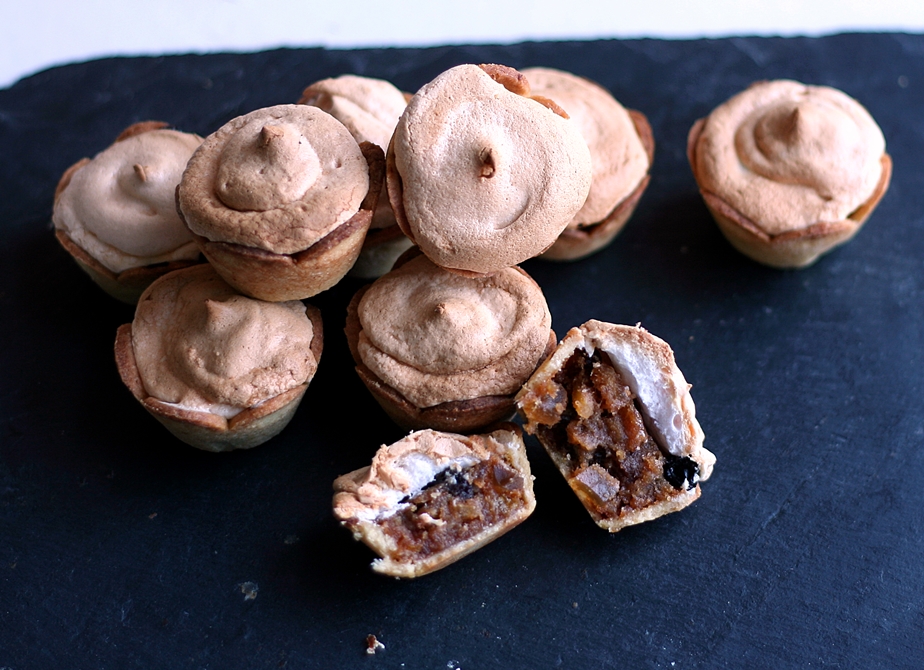
A portion of this mincemeat is then enriched and sweetened with sugar, fresh lemon, egg yolks and butter and used to fill pastry-lined mini tins. The pastry I’ve used is the sweet version of the cornflour shortcrust, flavoured with orange zest, and cut out using a flower cookie cutter. After an initial baking, the pies are topped with meringue and then baked for a further few minutes until nicely browned.

These little pies are extremely rich, which is why baking them in a mini muffin pan is ideal. The filling sets into a dense cross between Christmas pudding and Christmas cake and the crunchy meringue is a great contrast. This quantity makes about 30 mini pies, perfect as petites fours or to serve with coffee. You can keep them in a tin, but the meringues will go a little soft after 24 hours.

You can, of course, use any mincemeat and pastry you have to hand instead.

Citrus mincemeat

Makes about 1kg of mincemeat
2 small lemons (about 170g)
The weight of the lemons in raisins, currants and chopped dates
85g candied orange peel, chopped small
85g candied citron peel, chopped small
30-50g caster sugar
60ml  brandy
60ml apple juice
0.5tsp salt
1tsp grated nutmeg
0.5tsp ground mace
1tsp ground ginger

  • Put the lemons into a small saucepan and cover with cold water.
  • Bring to the boil and simmer for 15 minutes.
  • Drain the water and scrub the sides of the pan to remove the bitter lemon oil.
  • Rinse the lemons also.
  • Repeat 3 times, until the lemons are tender and a clove can be pushed through the skin.
  • Cut open the lemons and remove the pips.
  • Dice the pulp and rind finely.
  • Put the lemons and the rest of the ingredients into a small pan over a low heat.
  • Cover and allow the fruit to plump up. Stir occasionally.
  • If the fruit seems a little dry, add more liquid – your choice whether it’s alcoholic or not.
  • If the mixture seems too wet, uncover and allow the excess to evaporate.
  • Set aside to cool.

Orange Cornflour Pastry

225g plain flour
60g cornflour
140g unsalted butter
85g caster sugar
zest of 1 orange
1 large egg

  • Put everything except the egg into the bowl of a food processor and blitz until the mixture resembles breadcrumbs.
  • Whisk the egg and, with the motor running, gradually add to the mixture until it comes together in a ball. You might not require all the egg, or you might need additional liquid if the mix looks a little dry. If you have extra egg-white, tat would be ideal, otherwise use water.
  • Knead the pastry smooth and wrap in plastic.
  • Chill in the fridge for at least 30 minutes or until required.

Eliza Acton’s Mince Pies Royale

225g mincemeat
3 large eggs
30g clarified butter
juice and zest of 1 lemon
40g caster sugar
pinch of salt
caster sugar

  • Preheat the oven to 200°C, 180°C Fan.
  • Separate the eggs.
  • Mix together the mincemeat, egg yolks, lemon zest and juice and the sugar.
  • Warm the butter until just melted and stir in.
  • Grease a large (24 cup) mini muffin pan.
  • Roll out the pastry very thinly. It is easier to work with either 1/3 or 1/2 of the pastry at a time.
  • Cut out pastry and use it to line the mini muffin pan. For a lovely, neat edge to your pies, I recommend using a flower-shaped pastry cutter. The petals help to avoid the dreaded folds which can sometimes be an issue with the pastry for mini tarts.
  • Add a teaspoon of the enriched mincemeat mixture to each tartlet.
  • Bake for 7-8 minutes until the middle has set and the pastry is cooked.
  • If you’ve got filling and pastry left over (and you probably will), use them up first by making a second batch of tartlets before making the meringue. Arrange the cooked tartlets on a baking sheet, ready for the meringue.
  • While the tarts are baking, make the meringue.
    • You won’t need to use all of the egg white, so I suggest using just half.
    • Put a bowl onto your scales and set them to zero.
    • Pour in the amount of egg-white you will be using and make a note of the weight.
    • Measure out an equivalent amount of caster sugar.
    • Whisk the egg-whites with a pinch of salt until soft peaks.
    • Whisk in the sugar, a spoonful at a time until the meringue is firm and glossy.
    • Spoon the meringue into a piping bag. You choose what style of nozzle to fit.
  • When all the tarts are baked and arranged on a baking sheet, pipe the meringue on top. Make sure the meringue covers all of the filling and goes right to the edge of the pastry.
  • Return the tarts to the oven for 5-7 minutes until the meringue is nicely browned.
  • Cool the tartlets on a wire rack.

Sheets and Blankets

This is an unusual and wonderfully quirky recipe.

I’ve adapted it from a description found in John White’s “A Treatise on the Art of Baking” from 1828, free copy available here.

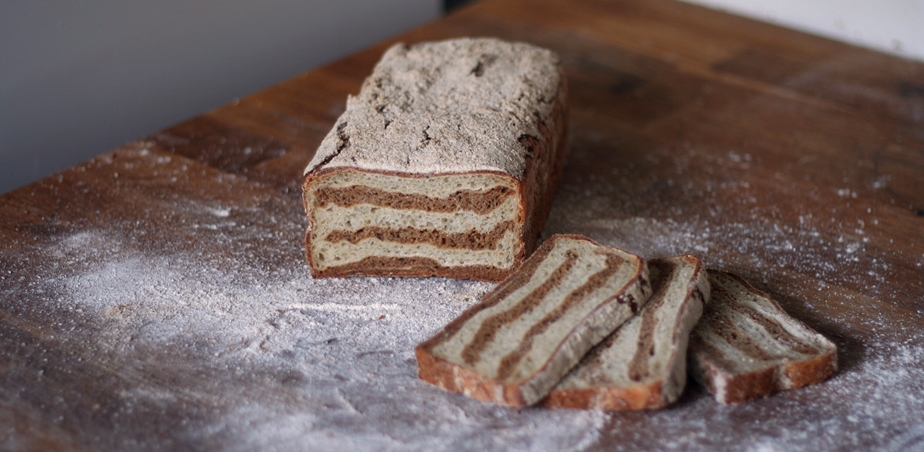
It is made from a mixture of both wheat and rye doughs, but instead of the more usual marbling effect, the doughs are laid on top of one another in layers, so that when the loaf is cut, the contrast between the two doughs is quite striking.  This striped effect gives the loaf it’s name of Sheets and Blankets, as it resembles a stack of folded bed-linen.

As a loaf, it was already fading from popularity in 1828, as tastes moved away from the dark rye breads and towards whiter loaves, but not only is it pretty to look at, it is also delicious to eat.

The rye layers are both darkened and slightly sweetened by the addition of a little treacle and delicately flavoured with caraway seeds. Neither is overpowering, and the addition of the white dough layers does much to lighten the crumb. Whilst sturdy, and having a fabulous crust, it is nowhere near as heavy or as dense as an all-rye loaf.

The challenge with this recipe is the proving times of the different flours. Rye is much slower and so reluctant to respond to the yeast, it requires a staggered start, and only when your rye dough is starting it’s main proofing should you start making your wheat dough. I used wholewheat flour as the starter for the rye, otherwise the proving time would have been a much more lengthy process.

I chose to bake this loaf in a tin to accentuate the layers, but you can leave it free-form on a baking sheet if liked. It’d probably be closer to how it was originally baked.

You can also bake this using brown bread flour instead of the white, for a sturdier loaf and a more subtle contrast between the layers. Stoneground wholemeal flour is do-able, but just that bit too heavy on the chew, in my opinion.

Sheets and Blankets

You need to start the rye dough at least 1 hour before your wheat dough. You can use your regular white dough recipe, or follow the method below.

For the rye sponge
100g brown bread flour
15g fresh yeast – crumbled
25g treacle – warmed
180ml warm water

150g rye flour
1tsp caraway seeds
1tsp salt

For the wheat sponge
100g strong white flour
15g fresh yeast – crumbled
200ml warm water

150g strong white flour
1tsp salt

  • Whisk together the ingredients for the rye sponge, making sure to get plenty of air into the batter.
  • Mix the other ingredients together and sprinkle onto the yeast mixture.
  • Cover the bowl with cling film and set aside to prove for 1 hour.
  • After 1 hour, the sponge will have broken through the dry flour on top, and bubbles should be visible.
  • Mix everything together into a soft dough and knead for 10 minutes. You may need to add a little extra warm water if it’s looking a bit dry.
  • Cover the bowl with cling film and set aside to rise.
  • Whisk together the ingredients for the wheat flour sponge.
  • Sprinkle the rest of the flour and the salt onto the yeast mixture.
  • Cover the bowl with cling film and set aside to prove. This will probably take less time than for the rye flour.
  • After 30-40 minutes, the sponge will have broken through the dry flour on top, and bubbles should be visible.
  • Mix everything together into a soft dough and knead for 10 minutes.
  • Cover the bowl with cling film and set aside to rise.
  • The two doughs should be fully proved at around the same time. Since the wheat dough is going to be more lively, you can deflate it and set it to rise again if the rye dough still needs some time.
  • When both doughs are risen you can shape them into your loaf.
  • Tip out each of the doughs and deflate.
  • Cut off 1/3 of the rye dough and set aside. Divide the remainder into 3 even pieces.
  • Cut 3 x 100g pieces of the white dough. You will have excess dough, so shape it into rolls or put it in the fridge to use later.
  • Shape the six pieces of dough into similar shapes, and stack them alternately one on top of the other, starting with a piece of the rye dough on the bottom.
  • Take the remaining rye dough and roll out thinly. The original recipe recommended having the final layer of the loaf of rye dough, and I chose to roll the remaining dough really thinly and wrapped the whole loaf in a thin layer of rye. This was extremely tricky. Since the bottom layer of the loaf is rye, a much easier approach would be to drape the rolled-out dough over the loaf and either join it to the bottom layer by pinching together, or tuck the edges underneath. I then transferred the loaf to the tin, but if you’re baking the loaf freeform, you can leave it on a baking sheet as is.
  • Sprinkle the top of the loaf with rye flour to prevent it from drying out and set aside to rise for about 1 hour.
  • Preheat the oven to 200°C/180°C Fan.
  • There’s not much oven-rise, so no urgent need to slash the top of the loaf, but it shows a nice contrast of the white dough beneath the rye if you like.
  • Bake for between 50 minutes and 1 hour, until the base sounds hollow when tapped.
  • Set aside to cool on a wire rack.
  • Do not slice until completely cold.

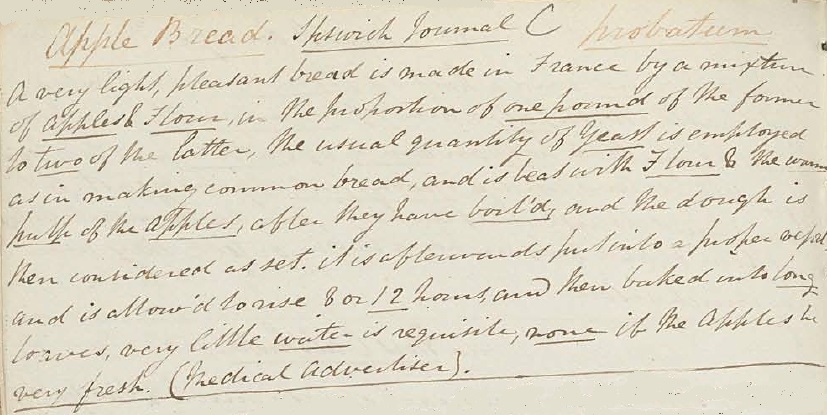
Apple Bread

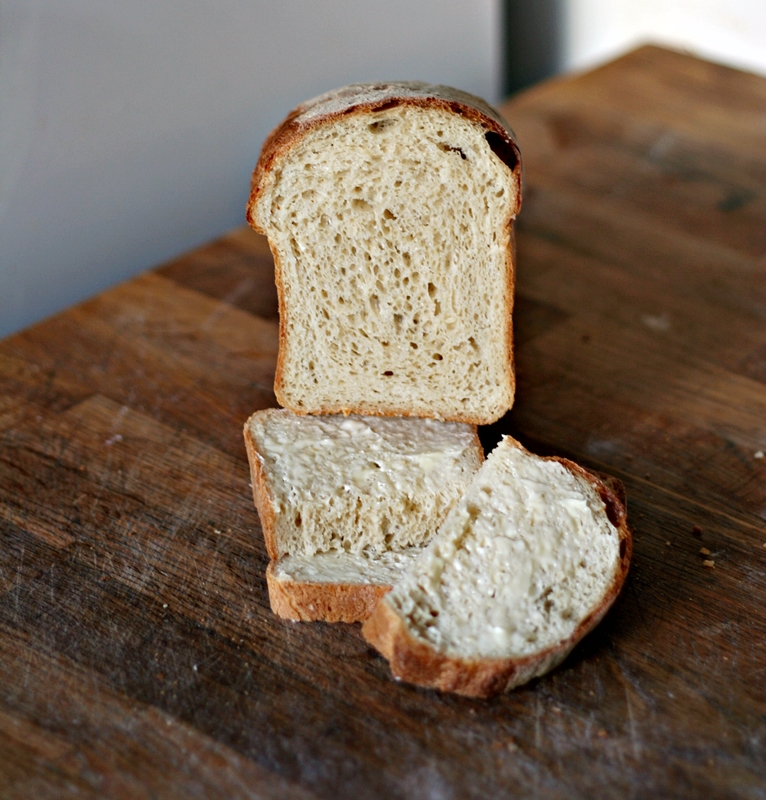
This recipe was copied from the Ipswich Journal into the manuscript book from a Norfolk household in the early 19th century. The manuscript was eventually purchased by the Wellcome Library and its contents digitised and made available online, which is where I discovered it. It was the simplicity of the recipe that appealed – just 3 ingredients: Flour, yeast, apples. I immediately mixed up a batch and was delighted with the results – a lovely open textured bread with a bite/chew similar to sourdough, but with a delicate, underlying sweetness which, when toasted, almost tasted like honey. It went brilliantly, un-buttered, with some strong cheddar and a crisp apple.

Original Recipe
Source: MS3082, Wellcome Library Collection

To continue the week of coincidences, I later found this recipe reprinted word for word in my 1950 copy of Farmhouse Fare, recipes sent in to and collected by Farmer’s Weekly magazine. Which means that someone else copied the same recipe from the Ipswich Advertiser and kept it alive in their family for 150 years to be revived in 1950. Utterly delightful!

It’s a regular in this household – I hope you enjoy it also.

Apple Bread

500g strong, white bread flour
1 sachet easy-blend yeast or 20g fresh yeast
4 Bramley Apples

  • Put the apples in a saucepan and cover with water.
  • Bring to the boil, turn down the heat and simmer for 15-20 minutes until the apples are soft and cooked. The skins might split, but as long as the water is just simmering, the apples should hold together – fast boiling water will only get you apple soup.
  • Lift the apples from the water (you might need some water later). Remove the skins and scrape the cooked apple flesh into a bowl.
  • Sieve the cooked apple to make a smooth puree. If using fresh yeast, you can crumble it into the puree and whisk until thoroughly mixed.
  • Put the flour and dry yeast into a bowl and stir to combine.
  • Add the apple puree gradually and stir to combine into a soft dough. You should need between 250-300g of apple puree. If you need more liquid, use some of the water the apples were cooked in.
  • If you have a mixer with a dough hook, work the dough for 10 minutes on the lowest speed. Otherwise, work it by hand, but be careful not to add too much flour in the kneading – you want to keep the dough nice and soft.
  • Put the dough in a bowl, cover and leave the mixture to double in size.
  • When sufficiently risen, tip the dough out of the bowl and knock back.
  • Shape into loaves and put into a 1kg greased loaf tin.
  • Cover lightly with a cloth and leave to rise for a further 30-45 minutes.
  • Preheat the oven to 200°C, 180°C Fan.
  • Bake for 30-40 minutes until golden brown and the base sounds hollow when tapped. If the bread appears cooked, but not sounding hollow, remove from the tin and return to the oven for 5-10 minutes to crisp up.
  • Cool completely on a wire rack before slicing.

Coconut Gingerbread Cakes

Gingerbread is such a classic teatime treat – and I’m a huge fan of classics – it’s just that I don’t usually feel very inspired when I hear the word ‘gingerbread’. I think of a treacle-dark cake, rich, sticky and aromatic with ginger – sounds delicious, no? – but the main thing that springs to mind is something akin to a brick slab.

It probably goes back to the large, family bakes of my childhood, where the cake-of-the-week was kept wrapped in foil in a tin and slowly chiseled away at during the week until it was all gone. There wouldn’t be another cake until this cake had been eaten, and it used to lurk in the tin in all its brickiness, standing between me and any other baked treat. The chances were high that it would eventually be replaced with something equally heavy and fruity – but that new cake’s attraction would be, initially at any rate, mostly due to the fact that it wasn’t the gingerbread.

The image of heaviness and brick-like shape has lurked in my culinary memory ever since – which is a shame because what it SHOULD bring to mind is crisp winter nights, spiciness and fireworks, treacle-richness and bonfires. So I thought I should try and rehabilitate it, and bring it up to date. Ironically, I achieved this by referring to a recipe over 165 years old, from Miss Eliza Acton.

Heroines of Cooking: Elizabeth ‘Eliza’ Acton (1799 – 1859)

Originally a poet, Eliza Acton is considered by many to be the first to write a cookery book as we would recognise it today. Her Modern Cookery for Private Families (1845) was the first to separate a list of ingredients from the methodology, and was aimed specifically at small households. Additionally, the author’s observations on potential problems and recommendations for subtle variations were included, illustrating Eliza’s personal experience with the recipes, unlike many of her contemporaries and cookery authors that were to follow. It was an immediate success and remained in print for almost 60 years. She was to write only one other book The English Bread Book (1857), in which her strong views against the adulteration and processing of food would still be being echoed by Doris Grant almost a century later.

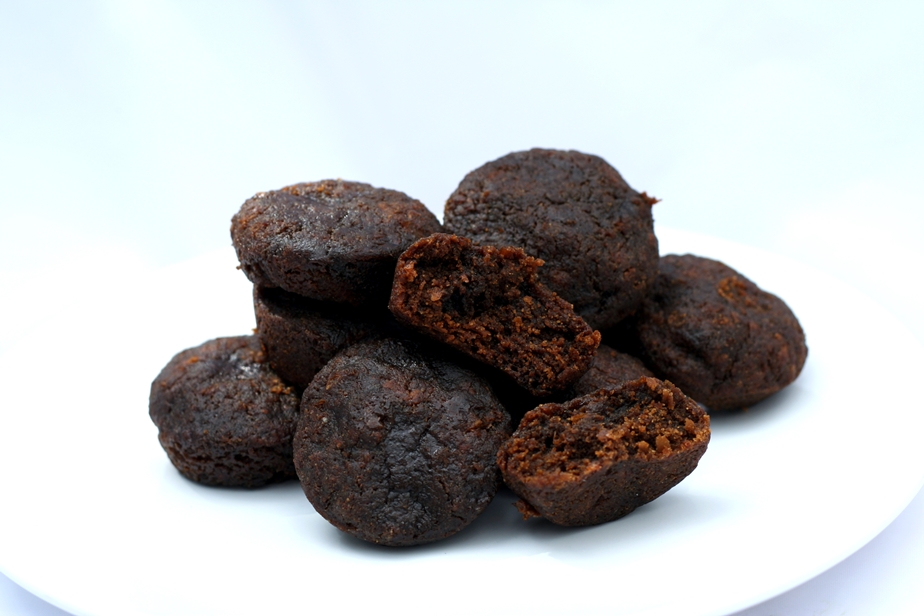
After several experimental baking batches, here is Eliza’s recipe for Coconut Gingerbread Cakes, scaled down to a manageable quantity. Baked in a mini muffin tin, the recipe makes approximately 24 bite -sized cakes with all the dark richness of traditional gingerbread, with the added coconut giving both a lighter texture and more complex flavour. Fresh coconut is a little time consuming to prepare, but very much worth the effort.

Coconut Gingerbread Cakes

Makes 24

75g plain flour
75g ground rice
2 tsp ground ginger
grated rind of 1 lemon
110g treacle
40g butter
40g dark brown soft sugar
80g fresh grated coconut

  • Mix flour, ground rice, ginger and lemon rind in a bowl and set aside.
  • Put the treacle, sugar and butter into a saucepan and heat gently until the butter is melted and the sugar dissolved. Remove from the heat.
  • Add the dry ingredients to the warm treacle mixture and stir to combined. Stir in the coconut and then set mixture aside to cool.
  • Heat oven to 120°C, 100°C Fan.
  • Divide cooled mixture into 20g pieces, roll into a ball and drop into greased mini-muffin cups.
  • Bake for 30 minutes. Cool on a wire rack.
  • Keeps very well in an airtight box/tin.