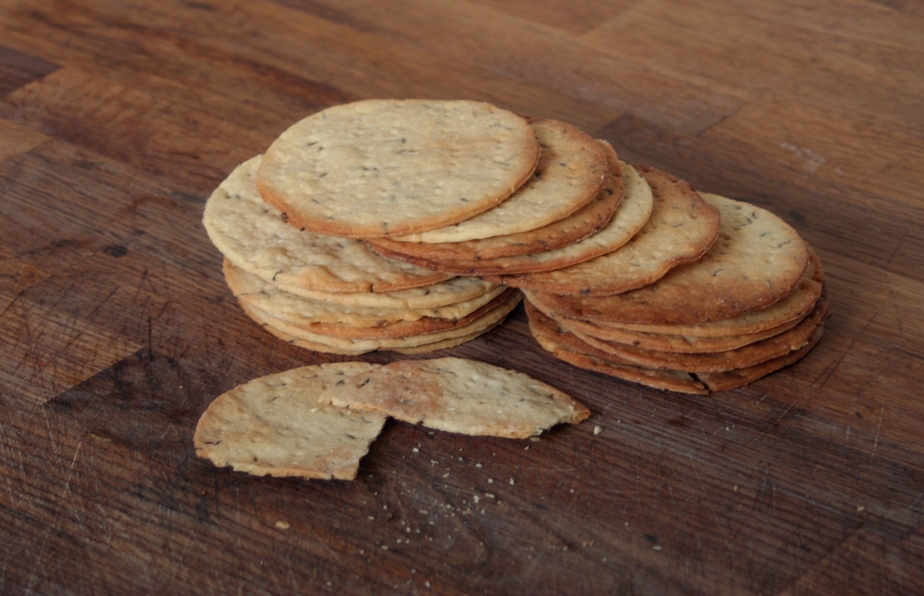
Honey Bunnies

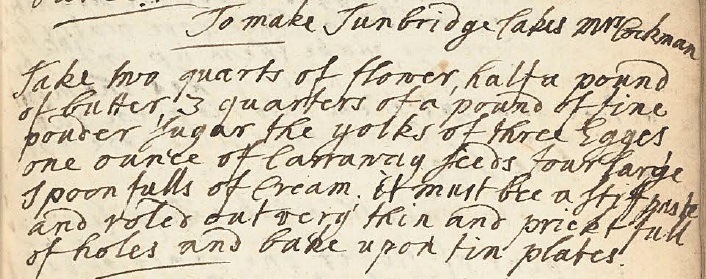
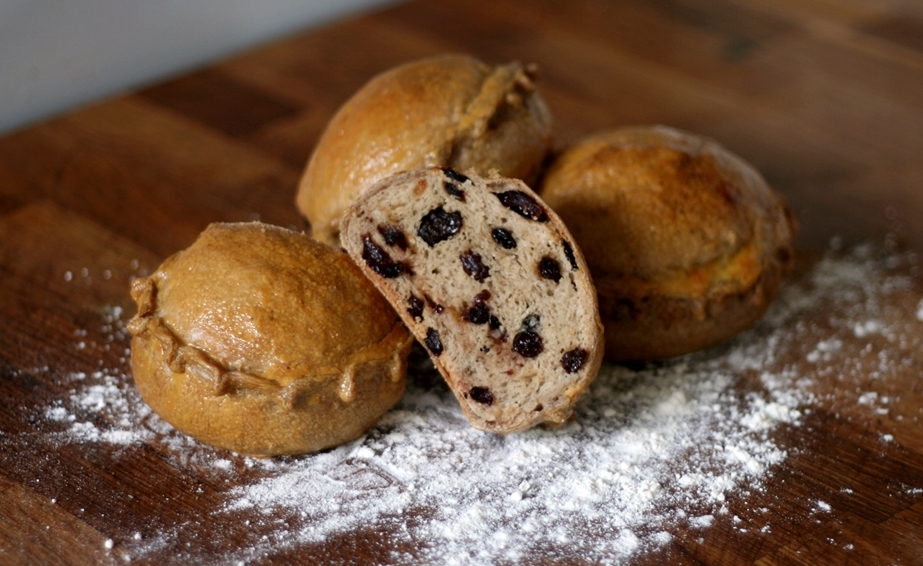
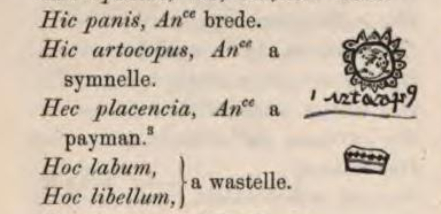
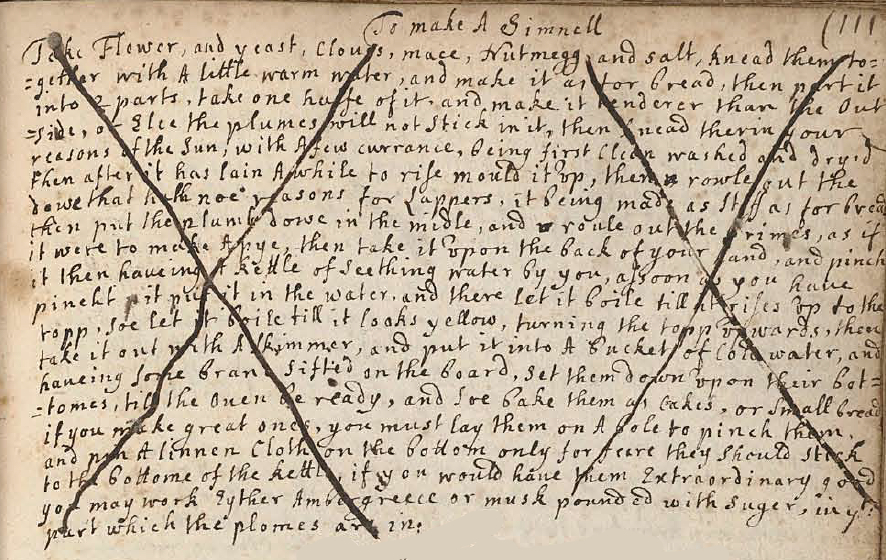
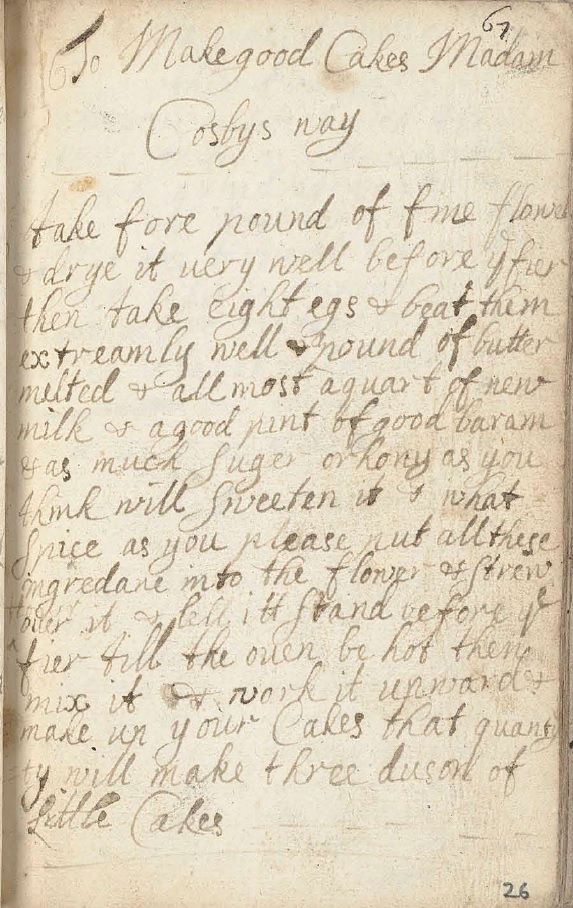
The recipe for this dough comes from one of the many digital manuscripts made available by The Wellcome Library, and dates from 1699. The original was a bit sparse in some of the instructions (“add honey to sweeten” “what spice you will”), but I’ve experimented and come up with a version that is rich, not too sweet and delicately spiced. I specifically wanted a recipe that did not contain fruit, but feel free to throw some in if you like. Additionally, mix it up with your own spice blends.

Bun recipe from MS.3107, p28, dated circa1699,  Wellcome Collection.
Bun recipe from MS.3107, p28, dated circa1699, Wellcome Collection.

Honey Bunnies

Makes 12 bunny buns

450g strong, white flour – plus extra for kneading.
1 sachet easy-blend yeast
2tsp ground cinnamon
2tsp ground nutmeg
1tsp ground allspice
250ml whole milk
113g honey
113g unsalted butter
2 large eggs

  • Put the honey, butter and milk into a small pan and warm gently until the butter has melted and the honey dissolved.
  • Whisk the eggs in a bowl.
  • When the milk mixture has cooled to blood temperature, pour into the whisked eggs, stirring briskly.
  • Add the remaining ingredients to a large bowl and stir to combine.
  • Make a well in the centre and pour in the wet ingredients.
  • Stir together until the mixture comes together in a soft dough. Important: The texture of the dough depends on the moisture content of the ingredients, including that of the flour, eggs, butter and honey. It is probably going to look too wet. Don’t panic. Knead in extra flour to bring it back to a consistency with which you’re happy. It is better to have it slightly too soft, than too dry.
  • Knead for 10 minutes until smooth.
  • Cover and set to rise until doubled in size. The butter and the honey will mean that it will take longer to rise than regular bread dough, so think more in terms of 2-3 hours than just a single hour.
  • When risen, tip out from the bowl and press out the air.
  • Fold the dough together loosely and weigh it.
  • Cut into 12 portions. Using a digital scale will give you the greatest accuracy and therefore a more even batch overall.
  • Shape into buns. To help you shape the dough into bunnies, I’ve prepared a photographic how-to:
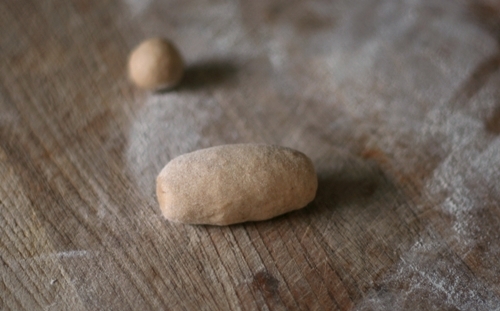
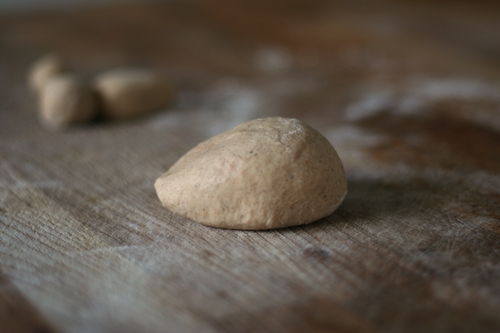
dough tail head
Divide each portion of dough into 3 – about 5g for the tail, 1/3 for the head/ears, and 2/3 for the body. Roll all three into smooth balls. Roll the medium ball into a sausage shape as above.
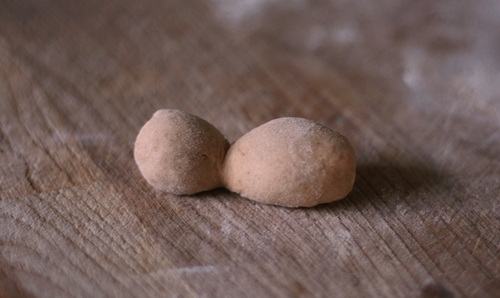
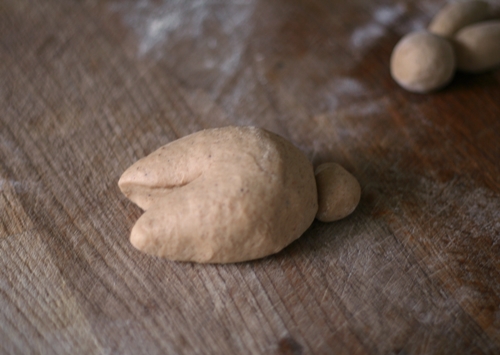
forming ears
Hold your hand as if you were going to do a karate chop, and roll the bottom edge of it back and forth over the sausage of dough, about 1/3 of the way from the left. The smaller portion of dough will form the head, and the remainder the ears.
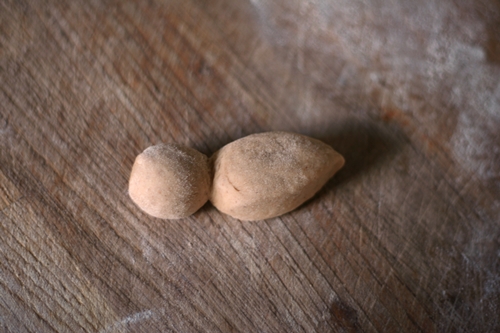
Shape the 'ears' portion by flattening it slightly and adding a point at the end. It will be roughly leaf-shaped, whilst the 'head' portion remains rounded.
Shape the ‘ears’ portion by flattening it slightly and adding a point at the end. It will be roughly leaf-shaped, whilst the ‘head’ portion remains rounded.
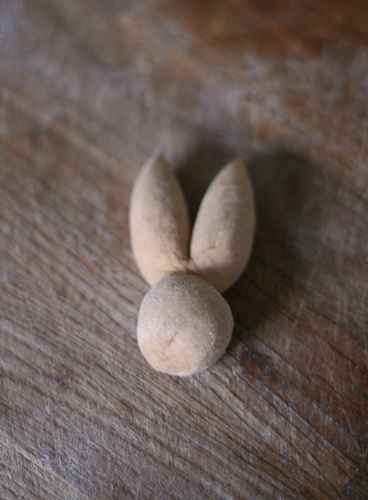
Using a sharp knife or the edge of a scraper, divide the ears by cutting down the middle of the dough.
Shape the body. I pondered long and hard how to describe the shaping of this piece of dough, until I had a brainwave: make it into the shape of a computer mouse. Vaguely oval, with the back end higher and rounded and the front sloping downwards.
Using a little dab of water, attach the tail. Shape the two front paws by cutting approx. 1/3 of the length of the dough, dividing the front part into 2, just like with the ears.
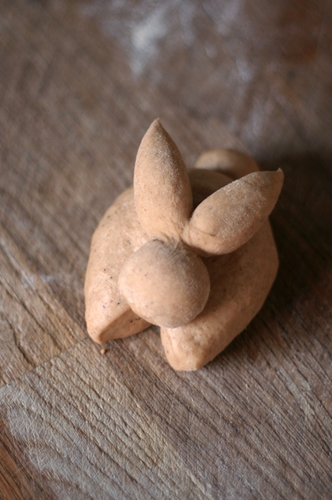
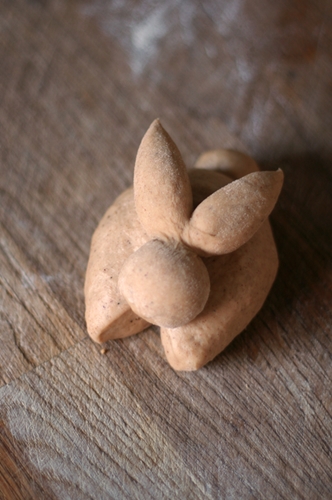
Raw honey dough bunny
Add another dab of water to moisten and lay the head/ears onto the body.
  • Set the buns onto a baking sheet lined with baking parchment while the oven heats up.
  • Heat the oven to 180°C, 160°C Fan.
  • I opted not to glaze the dough, but if you prefer to, brush with milk and/or egg yolk.
  • Bake for 20 minutes, turning the baking tray around 180 degrees after 10 minutes to ensure even baking.
  • Leave cooked buns on the baking sheet and cover with a clean cloth to cool. This will help to keep the crust soft.
  • Eat warm, either as is or with butter.

Radnor Cranberry Tart

If you have an extended social life in the run-up to Christmas, and sample nothing but mince pies throughout December, by the time you get to the 25th, what with the Christmas Cake and Christmas Pudding, you can be all mince-pied out.

Also, sometimes you find yourself fancying something a little savoury at the end of a meal, and this is why this recipe is perfect. It’s simple and straightforward – just two main ingredients of fresh cranberries and juicy raisins. The raisins take the edge off the sometimes eye-popping sharpness of the cranberries and the little dash of vanilla also gives the aroma of sweetness, so only the merest sprinkle of sugar is required. It’s festively reminiscent enough of a mince pie to deserve a place on the table, its fresh-tasting, palate-cleansing, sweet but not too sweet, can be served hot or cold, but ALWAYS with a slice of cheese. I’m thinking some vintage cheddar, crumbly white Cheshire or even one of the fruited cheeses – white Stilton and apricot anyone?

It is a traditional (Welsh) border tart, ideal for Christmas – just look at that glorious colour! The original 1930s recipe in Mrs Arthur Webb’s Farmhouse Cookery didn’t specify any particular pastry, so I’m taking the opportunity to offer for your delectation and amusement, a new pastry recipe! Yes, I know I love the cornflour pastry – and I really do, both sweet and savoury versions – but I can’t resist something that has the potential to add a new arrow to my pastry quiver, as it were, and in this case, I’m really glad that I did.

It’s Eliza Acton’s 1845 recipe for cream pastry and it has my seal of approval for several reasons:

  • Simplicity – in its basic form, it can be whisked together with just two ingredients.
  • Taste – when baked, it is crisp and dry, without any hint of greasiness or stodginess.
  • It can be enriched with butter, but at a ratio of just 1/4 fat-to-flour, it is not as indulgent as it tastes. When enriched with butter, the texture is moving towards the flakiness of flaky pastry, yet with the ‘dryness’ and crispness of the cornflour pastry – Nom!
  • And on the practical side, it handles and rolls really nicely.

You can, of course, use your own favourite pastry instead.

Radnor Cranberry Tart

Eliza Acton’s Cream Pastry
This quantity makes enough for a 20cm pie.

225g plain flour
0.5tsp salt
300-450ml double cream
56g butter

  • Put the flour and salt into the bowl of a food processor.
  • With the motor running, gradually add in the cream, a little at a time, until the mixture comes together.
  • Tip the mixture out and knead until smooth.
  • Roll out the pastry into a long rectangle.
  • Using the same method as for Flaky Pastry, dot over half the butter.
  • Fold the ends over, turn the pastry 90 degrees and repeat.
  • Roll out one last time, and fold the ends inwards.
  • Wrap in plastic and chill in the fridge for 30 minutes.
  • Make the filling (see below).
  • Remove the pastry from the fridge and cut into 2 pieces (2/3 + 1/3 is about right).
  • Roll out the large piece and use it to line a greased, 20cm loose bottomed tart tin. Ease the pastry into the sides, rather than just stretching it by pressing down too hard. Leave the excess hanging over the edge of the tin.
  • Roll out the smaller piece of pastry to make the lid, and lay it onto a cutting board.
  • Chill both pieces of pastry in the fridge for 20 minutes. This will make sure it is relaxed and less prone to shrinkage in the oven.
  • By this time, the filling should be cool enough to use.
  • Preheat the oven to 200°C, 180°C Fan.
  • Remove the two lots of pastry from the fridge.
  • Fill the lined tin with the cooled filling and smooth over.
  • Using a pastry brush, wet the edges of the pastry, then lay the lid across the top and press the edges together.
  • Trim off the excess using the back of a knife.
  • Crimp the edges to your liking – I used the tines of a fork to make for a good seal.
  • Brush the surface of the tart with milk and sprinkle with caster sugar.
  • Cut a steam vent in the middle of the pastry lid using a sharp knife.
  • Bake for 25-30 minutes until the pastry is crisp and golden brown.
  • Allow to cool for 10 minutes in the tin, then remove to a wire rack to cool, if not serving warm.
  • Serve with a nice wedge of cheese.

Filling
450g fresh cranberries
225g raisins
30g sugar
60ml cold water
0.5tsp vanilla extract

  • Rinse the cranberries and put them in a pan with the raisins, sugar and water.
  • Cover and warm on a low heat until the mixture comes to the boil and you can hear the cranberries starting to pop.
  • Simmer for just five minutes, then turn off the heat.
  • Taste to make sure of the sweetness, but remember, this is not supposed to be a really sweet tart, however, it shouldn’t be too sour either. If you think it needs a little more sugar, add it by all means.
  • Stir in the vanilla and leave to cool.

Mince Pies Royale

Here is a great recipe for stretching a small amount of mincemeat into 30+ rich and delicious seasonable bites.

It is adapted from a recipe by Eliza Acton, and I’ve taken the opportunity to pair it with another of her recipes which she refers to as “Superlative Mincemeat”. Taking as an example my adaptation of Hannah Glasse’s Lenten mincemeat, I decided to try making this recipe suet-free. Now I still absolutely love Hannah’s recipe, but I also love discovering new things as well.

The mincemeat recipe is a delight for anyone who loves citrus fruit. It’s also a delight for anyone who loves a healthy slug of booze in their mincemeat. I’ve actually toned down the quantity of brandy because the alcoholic haze rising from the first test batch made my eyes water. Unusually, this mincemeat includes two boiled lemons, chopped finely, which add a real zing to the overall flavour. Once the lemons have been prepared, the method is very similar to the original fat-free mincemeat.

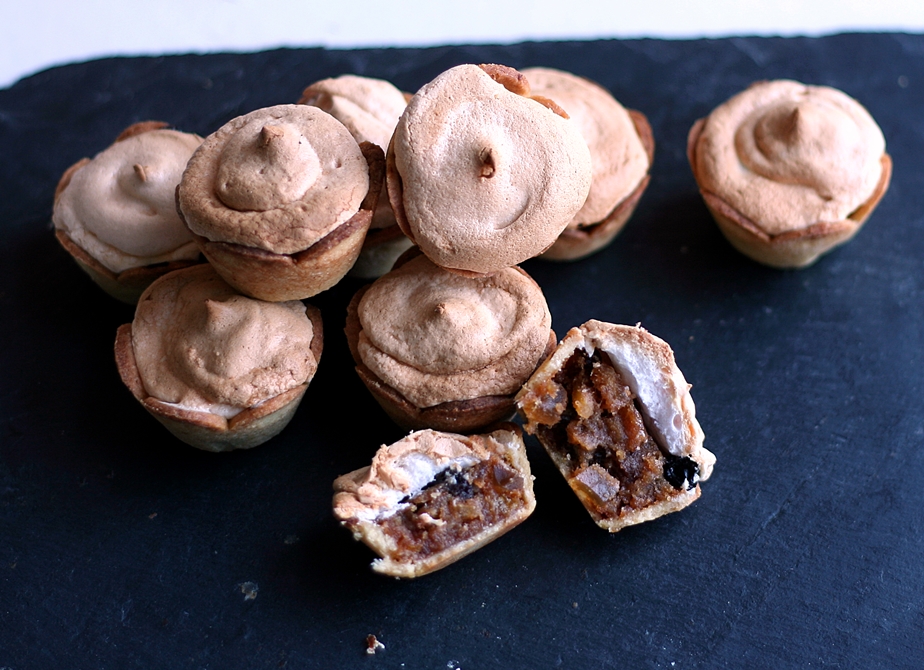
A portion of this mincemeat is then enriched and sweetened with sugar, fresh lemon, egg yolks and butter and used to fill pastry-lined mini tins. The pastry I’ve used is the sweet version of the cornflour shortcrust, flavoured with orange zest, and cut out using a flower cookie cutter. After an initial baking, the pies are topped with meringue and then baked for a further few minutes until nicely browned.

These little pies are extremely rich, which is why baking them in a mini muffin pan is ideal. The filling sets into a dense cross between Christmas pudding and Christmas cake and the crunchy meringue is a great contrast. This quantity makes about 30 mini pies, perfect as petites fours or to serve with coffee. You can keep them in a tin, but the meringues will go a little soft after 24 hours.

You can, of course, use any mincemeat and pastry you have to hand instead.

Citrus mincemeat

Makes about 1kg of mincemeat
2 small lemons (about 170g)
The weight of the lemons in raisins, currants and chopped dates
85g candied orange peel, chopped small
85g candied citron peel, chopped small
30-50g caster sugar
60ml  brandy
60ml apple juice
0.5tsp salt
1tsp grated nutmeg
0.5tsp ground mace
1tsp ground ginger

  • Put the lemons into a small saucepan and cover with cold water.
  • Bring to the boil and simmer for 15 minutes.
  • Drain the water and scrub the sides of the pan to remove the bitter lemon oil.
  • Rinse the lemons also.
  • Repeat 3 times, until the lemons are tender and a clove can be pushed through the skin.
  • Cut open the lemons and remove the pips.
  • Dice the pulp and rind finely.
  • Put the lemons and the rest of the ingredients into a small pan over a low heat.
  • Cover and allow the fruit to plump up. Stir occasionally.
  • If the fruit seems a little dry, add more liquid – your choice whether it’s alcoholic or not.
  • If the mixture seems too wet, uncover and allow the excess to evaporate.
  • Set aside to cool.

Orange Cornflour Pastry

225g plain flour
60g cornflour
140g unsalted butter
85g caster sugar
zest of 1 orange
1 large egg

  • Put everything except the egg into the bowl of a food processor and blitz until the mixture resembles breadcrumbs.
  • Whisk the egg and, with the motor running, gradually add to the mixture until it comes together in a ball. You might not require all the egg, or you might need additional liquid if the mix looks a little dry. If you have extra egg-white, tat would be ideal, otherwise use water.
  • Knead the pastry smooth and wrap in plastic.
  • Chill in the fridge for at least 30 minutes or until required.

Eliza Acton’s Mince Pies Royale

225g mincemeat
3 large eggs
30g clarified butter
juice and zest of 1 lemon
40g caster sugar
pinch of salt
caster sugar

  • Preheat the oven to 200°C, 180°C Fan.
  • Separate the eggs.
  • Mix together the mincemeat, egg yolks, lemon zest and juice and the sugar.
  • Warm the butter until just melted and stir in.
  • Grease a large (24 cup) mini muffin pan.
  • Roll out the pastry very thinly. It is easier to work with either 1/3 or 1/2 of the pastry at a time.
  • Cut out pastry and use it to line the mini muffin pan. For a lovely, neat edge to your pies, I recommend using a flower-shaped pastry cutter. The petals help to avoid the dreaded folds which can sometimes be an issue with the pastry for mini tarts.
  • Add a teaspoon of the enriched mincemeat mixture to each tartlet.
  • Bake for 7-8 minutes until the middle has set and the pastry is cooked.
  • If you’ve got filling and pastry left over (and you probably will), use them up first by making a second batch of tartlets before making the meringue. Arrange the cooked tartlets on a baking sheet, ready for the meringue.
  • While the tarts are baking, make the meringue.
    • You won’t need to use all of the egg white, so I suggest using just half.
    • Put a bowl onto your scales and set them to zero.
    • Pour in the amount of egg-white you will be using and make a note of the weight.
    • Measure out an equivalent amount of caster sugar.
    • Whisk the egg-whites with a pinch of salt until soft peaks.
    • Whisk in the sugar, a spoonful at a time until the meringue is firm and glossy.
    • Spoon the meringue into a piping bag. You choose what style of nozzle to fit.
  • When all the tarts are baked and arranged on a baking sheet, pipe the meringue on top. Make sure the meringue covers all of the filling and goes right to the edge of the pastry.
  • Return the tarts to the oven for 5-7 minutes until the meringue is nicely browned.
  • Cool the tartlets on a wire rack.

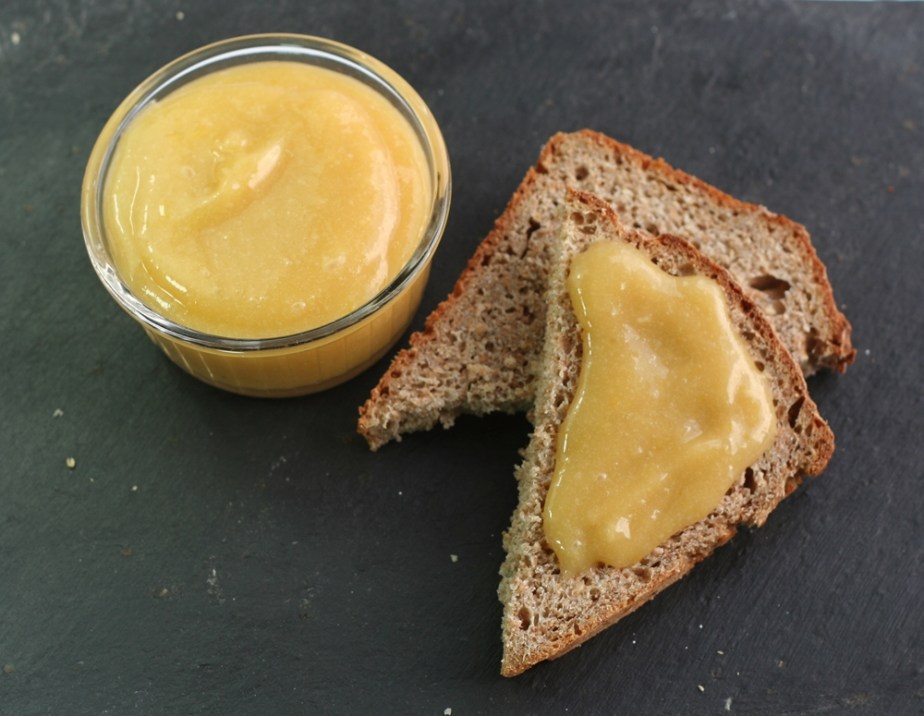
Honey Curd

This recipe was an absolute delight to discover in an old Women’s Institute recipe book. For a start, the use of honey instead of refined sugar is so much better for you, and it increases the keeping properties immensely. The original recipe claimed that it would keep a year.

I used the cheapest, runny honey to see how much the flavour of the honey impacted on the final result, and it’s not overly intrusive – just a gentle hint at the end.

The real beauty of this recipe is how you can tweak both the honey and the accompanying fruit to give an almost limitless variety – Lime Tree Honey and limes, Orange Blossom Honey and oranges are just a couple of suggestions that sprung into my mind. Update: I have now tried both these flavour combinations, and can honestly say, hand on heart, that they are two of the most sublime-tasting citrus curds I have EVER tasted.

This recipe will make double the quantity of honey, so you’ll need just one extra jar in addition to your jar of honey. Wash both jars and lids and put them into a cold oven. Turn the oven on to 100°C, 80°C Fan until dry and hot.

As for the instructions, they couldn’t be easier. The original recipe contained just one line of instruction, but I’ve managed to pad that out to four!

Honey Curd

340g jar of runny honey[1]
2 large eggs
1 large yolk
zest and juice of 1 lemon
juice of 1 extra lemon
45g clarified butter

  • Put all of the ingredients into a small pan and whisk together over a low heat until thickened.
  • Pour into the clean, warm jars and seal.
  • Set aside to cool.
  • Use as any other curd – the original recipe recommends it as a filling for little tarts.

[1] Don’t be too precious about being exact –  I only specify 340ml because that’s how much honey was in the jar that I used. 300ml-ish is fine.

Sheets and Blankets

This is an unusual and wonderfully quirky recipe.

I’ve adapted it from a description found in John White’s “A Treatise on the Art of Baking” from 1828, free copy available here.

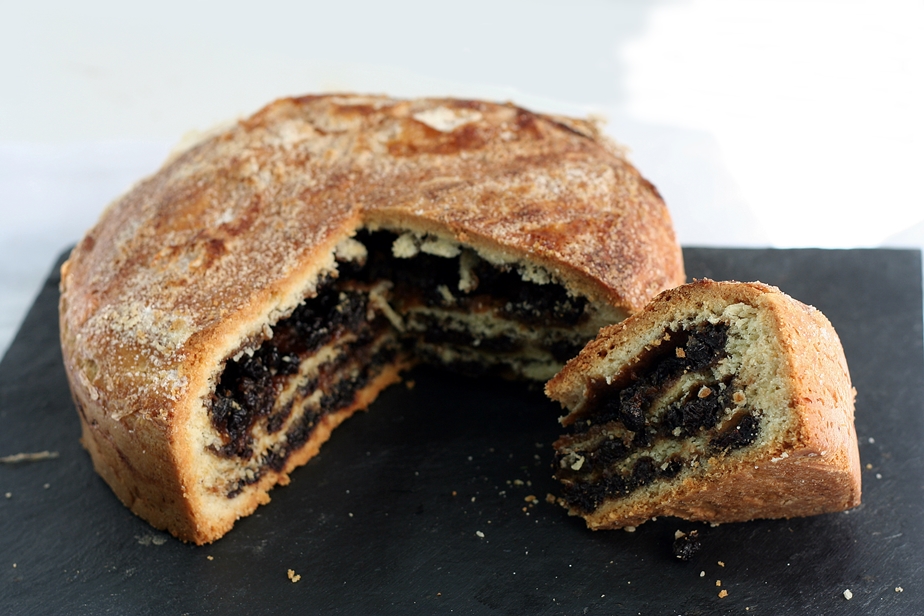
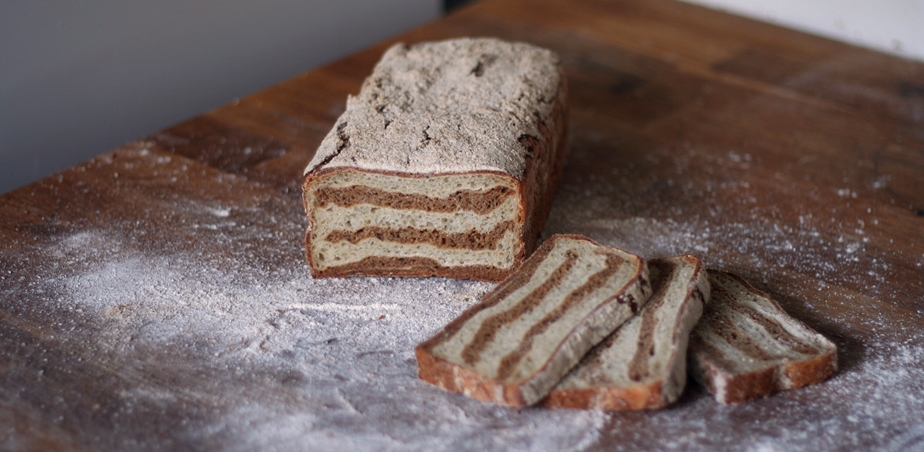
It is made from a mixture of both wheat and rye doughs, but instead of the more usual marbling effect, the doughs are laid on top of one another in layers, so that when the loaf is cut, the contrast between the two doughs is quite striking.  This striped effect gives the loaf it’s name of Sheets and Blankets, as it resembles a stack of folded bed-linen.

As a loaf, it was already fading from popularity in 1828, as tastes moved away from the dark rye breads and towards whiter loaves, but not only is it pretty to look at, it is also delicious to eat.

The rye layers are both darkened and slightly sweetened by the addition of a little treacle and delicately flavoured with caraway seeds. Neither is overpowering, and the addition of the white dough layers does much to lighten the crumb. Whilst sturdy, and having a fabulous crust, it is nowhere near as heavy or as dense as an all-rye loaf.

The challenge with this recipe is the proving times of the different flours. Rye is much slower and so reluctant to respond to the yeast, it requires a staggered start, and only when your rye dough is starting it’s main proofing should you start making your wheat dough. I used wholewheat flour as the starter for the rye, otherwise the proving time would have been a much more lengthy process.

I chose to bake this loaf in a tin to accentuate the layers, but you can leave it free-form on a baking sheet if liked. It’d probably be closer to how it was originally baked.

You can also bake this using brown bread flour instead of the white, for a sturdier loaf and a more subtle contrast between the layers. Stoneground wholemeal flour is do-able, but just that bit too heavy on the chew, in my opinion.

Sheets and Blankets

You need to start the rye dough at least 1 hour before your wheat dough. You can use your regular white dough recipe, or follow the method below.

For the rye sponge
100g brown bread flour
15g fresh yeast – crumbled
25g treacle – warmed
180ml warm water

150g rye flour
1tsp caraway seeds
1tsp salt

For the wheat sponge
100g strong white flour
15g fresh yeast – crumbled
200ml warm water

150g strong white flour
1tsp salt

  • Whisk together the ingredients for the rye sponge, making sure to get plenty of air into the batter.
  • Mix the other ingredients together and sprinkle onto the yeast mixture.
  • Cover the bowl with cling film and set aside to prove for 1 hour.
  • After 1 hour, the sponge will have broken through the dry flour on top, and bubbles should be visible.
  • Mix everything together into a soft dough and knead for 10 minutes. You may need to add a little extra warm water if it’s looking a bit dry.
  • Cover the bowl with cling film and set aside to rise.
  • Whisk together the ingredients for the wheat flour sponge.
  • Sprinkle the rest of the flour and the salt onto the yeast mixture.
  • Cover the bowl with cling film and set aside to prove. This will probably take less time than for the rye flour.
  • After 30-40 minutes, the sponge will have broken through the dry flour on top, and bubbles should be visible.
  • Mix everything together into a soft dough and knead for 10 minutes.
  • Cover the bowl with cling film and set aside to rise.
  • The two doughs should be fully proved at around the same time. Since the wheat dough is going to be more lively, you can deflate it and set it to rise again if the rye dough still needs some time.
  • When both doughs are risen you can shape them into your loaf.
  • Tip out each of the doughs and deflate.
  • Cut off 1/3 of the rye dough and set aside. Divide the remainder into 3 even pieces.
  • Cut 3 x 100g pieces of the white dough. You will have excess dough, so shape it into rolls or put it in the fridge to use later.
  • Shape the six pieces of dough into similar shapes, and stack them alternately one on top of the other, starting with a piece of the rye dough on the bottom.
  • Take the remaining rye dough and roll out thinly. The original recipe recommended having the final layer of the loaf of rye dough, and I chose to roll the remaining dough really thinly and wrapped the whole loaf in a thin layer of rye. This was extremely tricky. Since the bottom layer of the loaf is rye, a much easier approach would be to drape the rolled-out dough over the loaf and either join it to the bottom layer by pinching together, or tuck the edges underneath. I then transferred the loaf to the tin, but if you’re baking the loaf freeform, you can leave it on a baking sheet as is.
  • Sprinkle the top of the loaf with rye flour to prevent it from drying out and set aside to rise for about 1 hour.
  • Preheat the oven to 200°C/180°C Fan.
  • There’s not much oven-rise, so no urgent need to slash the top of the loaf, but it shows a nice contrast of the white dough beneath the rye if you like.
  • Bake for between 50 minutes and 1 hour, until the base sounds hollow when tapped.
  • Set aside to cool on a wire rack.
  • Do not slice until completely cold.

Orange Blossom Tart

Here’s a wonderfully aromatic and delicious dessert that I have adapted from a recipe that appears in Hannah Glasse’s “The art of cookery, made plain and easy”. It must have been popular, because Hannah gives no fewer than four recipes for Orange Pudding, each slightly different. Copyright infringement back then being rife, it is highly likely that Hannah is not the original author of this recipe, but I have yet to find an older version with these particular ingredients.

Hannah calls this a pudding – and indeed it is certainly something that you might eat after lunch or dinner, but it is in fact what we would term a tart, and I can honestly say it is unlike any tart I’ve ever tasted before, for the very best of reasons.

The most striking aspect is the flavour – a mixture of Seville orange, orange flower water, rosewater and white wine. Rather surprisingly, the word that popped into my head when breathing in its aroma was ice-cream – and that was before it was cooked! Once cooked and chilled, the flavours mingle together and taste extraordinary – the only way I can think to describe it is like plunging your face into a bunch of fresh flowers – but in a good way! This isn’t soapy/perfumed – it’s light and fresh and rounded. None of the flavours overpower, it’s just fantastically floral.

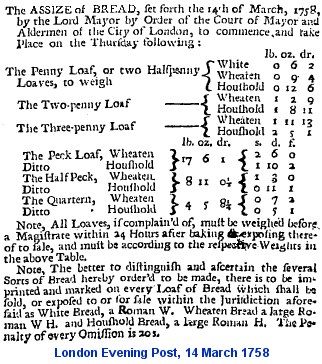
One of the challenges when adapting old recipes, is that specific quantities are sometimes a bit of a challenge. This recipe is a good example, because amongst other things it calls for “the crumb of a halfpenny loaf”. Although food prices were relatively stable before the industrial revolution, wheat, and by extension bread, was especially subject to price fluctuations due to harvest yield. So much so, specific laws were created concerning the manufacture and sale of the various types of bread (The Assize of Bread) and books of tables drawn up specifying the size of loaves depending on the cost of wheat.

Even with the Assize of Bread tables to hand, it’s still not clear which loaf the crumb should come from: white, wheaten or household. Household bread was the coarsest, and therefore unlikely, I reasoned, to have been used for such a delicate dessert. That left either white or wheaten and at just over 6oz and 9oz for a penny loaf, the difference in the quantity of crumb was going to be significant. The only solution was to make two tarts, and try each to see if one quantity was more suited than the other.

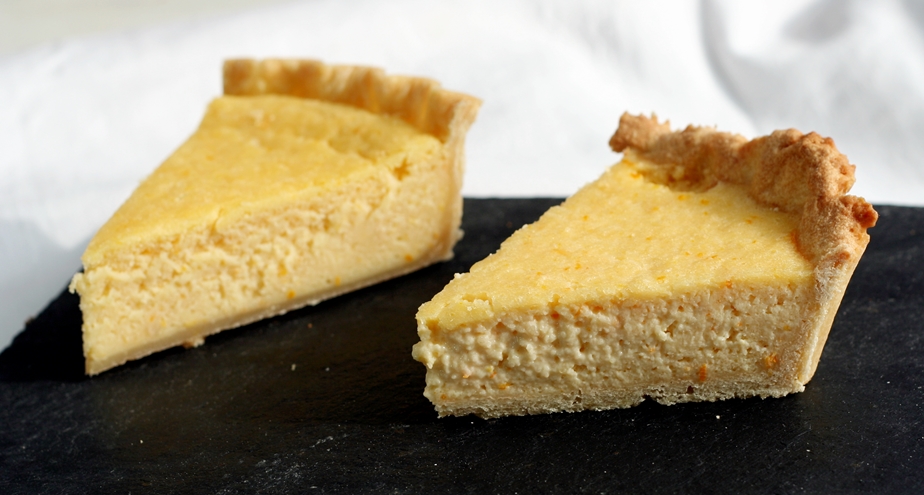
The photograph at the top shows the result. The slice on the left was cut from a tart made with 150g fresh white breadcrumbs. The slice on the right from a tart made with just 100g. Personally, I prefer the one on the left – the texture is like baked cheesecake, but not heavy and cloying. The slice on the right has a much softer consistency – if you’re a fan of baked custards, then this is the one for you. For an even more delicate texture, you could even try with just 50g of breadcrumbs – do let me know if you try this!

This is a wonderful springtime tart and I really hope you’ll give it a try.

Orange Blossom Tart

Sweet Shortcrust Pastry
225g plain flour
140g butter
60g cornflour
85g caster sugar
1 large egg
grated zest of 1 lemon
ice cold water
egg-white for glazing

  • Put all the ingredients except the water into the bowl of a food processor and blitz until the mixture comes together in a ball.
  • If the mixture is too dry, add some ice cold water 1 tablespoon at a time until the pastry forms a ball.
  • Tip the mixture onto a floured surface and knead smooth.
  • Wrap in plastic and chill for at least 30 minutes.
  • Grease a 22cm fluted, deep, loose-bottom tart tin – a lemon meringue tin if you have one, is ideal.
  • Remove the chilled pastry from the fridge and place on a floured surface.
  • Roll out thinly (7-8mm) and line the prepared tin, gently easing the pastry into the sides.
  • Let the excess pastry hang over the sides of the tin for now.
  • Prick the bottom of the pastry with a fork and put the lined tin back into the fridge to chill for another 30 minutes.
  • Preheat the oven to 200°C, 180°C Fan.
  • Remove the tart from the fridge and trim the excess pastry. Don’t remove too much – allow 3-4cm to overhand the side of the tin – this keeps the pastry from shrinking back into the tin and can be trimmed after cooking.
  • Line the pastry with baking parchment and fill with baking beads/beans/rice.
  • Bake for 12 minutes, then remove the parchment and beads and bake for another 5-6 minutes until the pastry is cooked through.
  • Brush the inside of the pastry with lightly beaten egg-white and return to the oven for 5 minutes. This seems like a faff, but it will ensure you pastry is both cooked AND resistant to the wetness of the filling until it is cooked. *lying* I deliberately undercooked the pastry on the left in the photo to demonstrate.

Filling
150g fresh white breadcrumbs
250ml double cream
75g caster sugar
5 large egg yolks
60ml white wine [1]
1 tablespoon orange flower water [2]
1 teaspoon rose water [2]
zest and juice of a Seville orange [3]
70g clarified butter – melted

  • Mix all of the ingredients together in a bowl and set aside to let the flavours mingle. It will have the consistency of porridge.
  • When the pastry base is finally cooked, turn the oven down to 160°C, 140°C Fan.
  • Cover the top edges of the pastry with tin foil, to prevent them from burning.
  • Pour the filling into the cooked pastry case and bake for 25-30 minutes until the filling is set. There should be a slight joggle to the middle of the tart, but nothing too fluid.
  • Set aside to cool for at least 1 hour.
  • When cold, trim off the excess pastry, remove from the tin and place on a serving plate.
  • Eat slightly warm or at room temperature. Alternatively (and my own personal preference) chill thoroughly in the fridge for at least 5 hours.

[1] The original recipe called for sack, a fortified wine similar to sweet sherry. You could use sherry, madeira even marsala if you like. Whilst I love the flavours of all three, I thought them a little rich for this recipe, so I chose a regular white wine. A sweet and aromatic dessert wine would also be delightful.

[2]Both of these fragrances are available in the baking aisle at the supermarket. They also tend to vary greatly in strength and aroma according to which brand you use. The original recipe called for equal quantities of both, but the rosewater I use is rather strong. In contrast, the orange flower water that I use is rather lightly perfumed, so I used slightly more. if you use different brands, my advice is to use just 1 teaspoon at a time and taste as you go until you’re happy with the flavourings.

[3] If, like me, you made Seville orange ice cubes with the zest and juice back in January, then all you need is one cube. If not, then use the zest only of a sweet orange, together with the zest of either a lemon or lime for added sharpness.

Hunter’s Biscuits

As you may know, I have one or two cookbooks lying around and I haven’t actually got around to making absolutely all of the recipes contained therein.

But I’m working my way through slowly – and it’s just fabulous when I discover little gems like the recipe this week, tucked away as it was in a nondescript little booklet from the 1940s.

For a start, I have all the ingredients in the cupboard. I just LOVE it when that happens. It s a great irritation to find something delicious to make, only to discover a trip to the shops is required. So these are a great ‘spur of the moment’ bake.

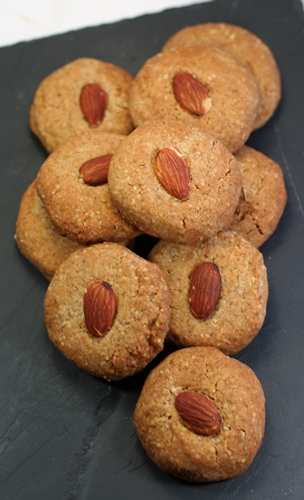
Second, the recipe doesn’t make a whole mountain of biscuits – I got just twelve out of this batch. And they’re so fast to put together – little bit of melting/warming of liquids, chuck in the dry ingredients and you’re done. Even taking the time to pretty their appearance up doesn’t take long, and with 12 minute cooking time, you can be dunking them in a cup of something hot in not much more than 20 minutes.

Also – oats.  LOVE oats in a biscuit – they make them it so crunchy and satisfying. Great energy snacks too. I can just imagine these biscuits being stuffed into pockets to snack on during invigorating afternoons tramping about the countryside.

And then we come to the main reason this recipe caught my eye. The lard. Yes – I did a double take too. But it works beautifully – and deliciously. And for me it also absolutely makes it a biscuit of country origin. Back in the day, not everyone could keep a cow – but most cottagers would have a pig, and once butchered for the winter, a ready and plentiful supply of lard. If you really can’t face it, you could try butter, but I haven’t tried it myself, so do let me know how it goes if you do.

Hunter’s Biscuits

56g golden syrup
56g lard
28g demerera sugar
56g plain flour
56g wholemeal flour
56g medium oatmeal
1/2 tsp bicarbonate of soda
1/2 tsp ground mixed spice
1/2 tsp ground ginger
grated zest of a small lemon – or of half a large lemon
1/2 tsp salt
6 almonds – halved

  • Preheat the oven to 175°C, 150°C Fan.
  • Put the lard and the golden syrup into a small pan over a low heat to melt/warm
  • Mix all the other ingredients together.
  • When the lard has melted, tip in the dry ingredients and stir to combine. You’ll end up with a moist paste.
  • Divide mixture into 12. I have a small-ish ice cream scoop which was perfect at portioning out the mix. Roll into a ball then flatten slightly. Place half a split almond on each biscuit.
  • Put the biscuits onto a baking sheet lined with parchment and bake for 12 minutes, turning the baking sheet round 180 degrees halfway though the cooking time. The biscuits should be just browning around the edges when done. They might seem a little soft, but will crisp up beautifully as they cool.
  • Lift the biscuits from the baking sheet and cool on a wire rack.

Cracked Wheat Bread

Something a little different this week – not just an unusual recipe but also a method of baking a loaf that might be new to you.

It’s called baking ‘under tin’ and is very useful if your loaf is decorated on the outside with seeds or grains, as it prevents them from becoming over-coloured in the high heat necessary for baking bread. It’s not just for use with speciality loaves, however, it is also useful for creating a very regularly-shaped loaf for making sandwiches, etc or keeping a delicately-crumbed loaf of enriched or milk bread from over-browning. You can splash out and buy a special sandwich tin with a lid that slides on/off (also known in the US as Pullman Tins), but it’s not necessary. Ideally, the tin would have vents in the lid to allow the steam to estape, but inverting a solid tin is fine – since the tin isn’t weighted down, any steam can escape from under the edges.

The other interesting aspect of this week’s post is one of the ingredients. I found the recipe for cracked wheat loaves in Walter Banfield’s classic book “Manna”: A Comprehensive Treatise on Bread Manufacture (1937). The cracked wheat is used both in the dough itself and also to decorate the outsides. I decided to adapt the recipe slightly in order to use an ingredient I picked up recently but had yet to use in anything – freekeh.

Freekeh a cereal made from air-dried and roasted green wheat and is popular in the middle east. It can be used as an alternative to rice or couscous, or substituted for bulgur wheat in tabbouleh salad. It is available in a couple of UK supermarkets, and also health food shops and online. It needs only a brief amount of cooking in water in order to soften it. If you zoom in to the picture, you can just make out the little yellow nuggets of chewy freekeh dotted through the slice. They make for great texture and add a pleasantly nutty flavour. This loaf is also nice made with half freekeh, half bulgur or all bulgur if you can’t find freekeh anywhere.

Whilst you can choose any flour to make these loaves, my recommendation is for strong brown flour (pictured) or malted flour. 100% stoneground wholemeal is tasty, but extremely dense. If you want the grains to be more noticable, you could mix 1/2 brown and 1/2 white, or experiment with rye, barley and other unusual grain flours.

Cracked Wheat Bread

100g freekeh, bulgur wheat or a mixture of both
500g strong brown flour
10g salt
EITHER 15g fresh yeast mixed with 5g brown sugar until liquid OR 1 sachet fast-action yeast.
warm water to mix

50g freekeh and/or bulgur wheat for coating

  • Put the 100g of freekeh into a small pan, cover with water and bring to a boil. Simmer for 10 minutes then drain. If using bulgur wheat, there’s no need to pre-cook, just cover with water and allow to soak for 30 minutes, then drain.
  • Add the drained freekeh or bulgur to the rest of the dry ingredients.
  • Add sufficient warm water to bring the dough together.
  • Knead for 10 minutes, then cover the bowl with plastic and allow to rise until doubled in size (about an hour).
  • Prepare the 50g freekeh and/or bulgur wheat in a similar manner and drain.
  • Grease a large loaf tin. The tin should be slightly larger than you would normally use for a loaf of this quantity of flour.
  • When the dough has risen. turn out of the bowl and deflate by patting gently.
  • Fold the edges into the middle and form the dough into a loaf shape. The top should be smooth and the seam underneath. Use as little flour as possible. The surface of the dough should be tacky to the touch.
  • Scatter the prepared grains over the work surface and roll the loaf of dough over them to coat. If there are any patches, pat the grains onto those areas by hand.
  • Put the dough into the loaf tin UPSIDE DOWN – that is, with the seam uppermost – and set aside to rise for about 30 minutes.
  • Preheat the oven to 200°C, 180°C Fan.
  • When the dough has risen almost to the top of the tin, lay a sheet of parchment over the top of the loaf tin and lay a baking sheet on top. Carefully invert both loaf tin and baking sheet so that the upside-down loaf tin is on top of the baking sheet, and the dough completely enclosed.
  • Slide a second baking sheet under the first and put all into the oven. The second sheet will help prevent the bottom of the loaf becoming too crisp.
  • Bake for 45 minutes, until the loaf sounds hollow when tapped.
  • Turn out of the tin and cool on a wire rack.

Cinder Toffee

Here’s another recipe that can, be part of a home-made Christmas, either for nibbling at home or prettily wrapped in cellophane as a gift, or indeed any suitable gift-giving time.

It can also be customised in a number of ways, as I shall detail below, be it in the ingredients you choose or the finishing touches you employ.

Honeycomb recipe from a 17thC manuscript (MS1511) dated 1682 in the Wellcome Library
Honeycomb recipe from a 17th century manuscript (MS1511) dated 1682 in the Wellcome Library

Cinder toffee is a traditional UK sweetie recipe which has been around for centuries, and early recipes can be found in household manuscript books from the reign of Charles II. Recently, it has seen a return to popularity under the name Honeycomb Toffee. Whilst a more appetising name, perhaps, unless you actually make it with honey, it is, to my mind, a bit misleading, whereas you have only to glance at the Wikipedia page for cinder to see that the appropriateness is evident in both looks and definition.

The toffee is made by bringing a mixture of sugars to the Hard Crack stage and then quickly stirring in a small amount of bicarbonate of soda to produce effervescence. The mixture is then poured into a suitably prepared tin and as it cools, the air bubbles are trapped in the sugar, thus giving it its distinctive structure.

Having read numerous recipes online, it is fairly safe to say that the most popular combination of sugars is caster sugar and golden syrup. This gives a bright, golden toffee reminiscent of the insides of a modern Crunchie bar. Whilst delicious, the flavour is, however, very one-note, and extremely sweet, and I got to pondering how it might be improved.

I found a recipe in F.Marian McNeil’s The Scots Kitchen (1929) for Black Man, a version of cinder toffee made with treacle, and kin to the Yellow Man of Northern Ireland. Made solely with treacle and bicarbonate of soda, it would definitely have the dark, bubbled appearance of genuine cinders, however in experimentation, the treacle proved exceedingly bitter as well as being much too easily burnt.

I liked the idea of using more complex flavourings to make the toffee and so I have come up with a base recipe for cinder toffee, with suggestions of how to adjust it for variety and interest. By varying the sugars and syrups, the range of flavours can be quite extensive and with more time at my disposal, I believe similar subtleties could also be achieved using honey as the liquid sugar. Feel free to experiment yourself!

Base Recipe Components

Choose your main flavouring from either the solid sugars or the liquid sugars. For example, malt extract and caster sugar, Demerera sugar and golden syrup. Both together, e.g. treacle and dark muscovado, is too dark and will burn to bitterness.

  • Solid sugar: This can range from fine, white, caster sugar, granulated sugar, soft light brown, soft dark brown, Demerera, light muscovado, dark muscovado all the way through to molasses sugar. The varying degrees of colour have a bearing on the eventual flavour which becomes richer and more caramelised the darker you go.
  • Liquid sugar: Any sweet syrup liquid at room temperature can be used including golden syrup, molasses, maple syrup, treacle, agave nectar, malt extract, honey.
  • Butter – for richness
  • water – to help dissolve the sugar
  • cream of tartar/liquid glucose – to help prevent crystallisation
  • bicarbonate of soda – for the bubbles! This recipe only uses a teaspoon, which, if properly stirred through, is more than enough to produce sufficient bubbles. Using more will produce more vigorous frothing, however, it will also become more noticeable in the flavour of the toffee, as well as being trickier to stir through without clumping.
Cinder Toffee 3 ways

Presentation Suggestions

  • Plain: Cinder toffee is delicious in it’s simple, unadorned state, but will absorb moisture from the air if left exposed. Once cooled, it should be stored in an airtight box or ziplock bag to keep from becoming sticky.
  • Dipped in chocolate: To keep the toffee crisp without the need for airtight storage, you can dip pieces in melted chocolate and set aside to cool. Although this will serve admirably, it will have a tendency to melt in the hand. The solution is to temper the chocolate, instructions for which abound on the internet. Whilst milk chocolate is the most popular pairing, you can experiment with a whole range of flavours from white through to the extremely dark. The sweetness of the cinder toffee made with caster sugar and golden syrup can be offset to a certain extent by dipping in dark (at least 60% cocoa) chocolate, not to mention the very pleasing contrast of the golden toffee against the dark chocolate. Similarly, the bitterness of treacle cinder toffee can be lightened by the use of white chocolate flavoured with lemon zest.
  • Made into cinder coal: This is the most fun. By tossing the chocolate-coated cinder toffee pieces into some black caster sugar, they immediately become, to all intents and purposes, little pieces of sweet coal, and thus the embodiment of their name.

How to make black sugar

The intense colour provided by modern gel food colouring is ideal for creating vibrant coloured sugar. Although we’ll only be using black the principal is the same for making any shade of coloured sugar.

1tsp black food gel colouring
200g caster sugar.

  • Pour the sugar into a small zip-lock bag and add the food colouring gel.
  • Seal the bag and gently massage the sugar against the gel. It will gradually take on an intense colour whilst still remaining separate grains.
  • Continue massaging the sugar until it is evenly coloured throughout. If the shade is too light, add a little more gel and repeat the massaging motion.
  • The coloured sugar will keep in the ziplock bag for weeks.

Cinder Toffee

110g caster sugar
110g treacle
30g unsalted butter
2tbs cold water
1 pinch cream of tartar or 1/2tsp glucose
1tsp bicarbonate of soda

  • Line a roasting tin with parchment paper.
  • Put all of the ingredients except the bicarbonate of soda into a non-stick saucepan and warm gently until the sugar has dissolved.
  • Increase the heat until the sugars boil. Continue heating without stirring until the syrup registers 150°C on a thermometer.
  • Tip in the bicarbonate of soda and mix briskly for 5 seconds, ensuring the powder is well incorporated.
  • Pour the frothing mixture onto the baking parchment in the tin and leave to cool. You can speed this up (and thereby trap more bubbles in the toffee) by putting it into the freezer for 15 minutes.
  • When completely cold, tap gently to break into bite-sized pieces.

To cover with chocolate

  • Melt or temper 200g of your chocolate of choice.
  • Drop pieces of cinder toffee into the melted chocolate and use a fork to lift them out.
  • Tap the fork briskly on the side of the chocolate bowl in order to shake off excess chocolate.
  • Lay the coated pieces on parchment paper to set.
  • Store in an airtight container.
To make cinder toffee coal

  • Whilst still wet, drop the chocolate coated pieces into the black sugar and toss to coat.
  • Lift out the coated pieces and lay onto a wire rack until set.
  • When completely cold, toss the pieces of coal gently in a wire sieve to remove excess sugar.
  • Store in a ziplock bag or wrap in cellophane bags for presents.

Apricot Jam

I’m a big fan of the sharp-sweet tang of apricots, and with a respectable amount of pectin, there’s no need to Faff About™ adding any extra. The small quantity lemon juice helps anyway, both in the set and in sharpening the flavour of the apricots.

This method, gleaned from several hand-written 17th century manuscripts, is slightly longer than your regular jam-making session might be, but it is seriously low on effort. Start-to-finish, it’s about 24 hours, but of that, there’s maybe only 1 hour of actually doing anything – bonus!

The result is so vibrant, so delicious, you’ll wish you’d made more – however many jars you make. I bought 6 x 350g punnets – and made six jars. One jar of finished jam for every 350g of raw fruit is also a handy way to work out how many jars your going to need. As a precaution, I always have one jar extra, all cleaned, heated and ready to go, in case of an overabundance. I’ve scaled the quantities down to use just 1 kg of fresh, pitted fruits (so 3 punnets from the shop), so it’s a little easier to scale up/down.

This method involves first macerating (or soaking) the fruit in sugar for several hours (or even overnight). The sugar draws out the juice from the fruit, and in turn a little of the sugar is absorbed. This absorption of sugar will help to firm up the fruit and keep it from disintegrating during the necessary boiling later on.

That being said, this is not a solid jam that has to be crowbar’d out of the jar (a particular dislike of mine). It’s definitely leaning more towards the conserve, although having sliced the fruit to manageable bite-sizes, I think that disqualifies it from the traditional definition of conserve (i.e. whole fruit in syrup).

ANYHOO….

Here’s how it goes:

Apricot Jam

3 x 350g punnets of Bergeron (for preference, but not compulsory) apricots, to give 1kg of prepared fruit
800g granulated sugar
Juice of 2-3 lemons
Day 1

  • Rinse the apricots and cut into halves, top to bottom, and remove the stone.
  • Layer the apricot halves, sugar and the juice of 2 of the lemons in a large bowl ensuring the cut surfaces of the apricots are covered with sugar.
  • Cover the bowl with cling film and set aside for 8-10 hours, or overnight.
  • Mop brow and declare loudly to any interested parties “This jam-making is EXHAUSTING! I must have a REST and watch a FILM”.
  • Put feet up.

8 hours later, or next morning if you started at night

  • Gently slide the apricot mixture (which will probably be quite runny by now) into a preserving pan and warm gently, until all the sugar is melted.
  • Try and avoid stirring, as the fruit will still be very fragile and might begin to break apart with too much spoon action.
  • When all the sugar is melted, bring the mixture to a boil.
  • As soon as it boils, remove the pan from the heat and gently pour the fruit mixture back into the bowl.
  • Re-cover with cling film and set aside overnight.
  • Mop brow and put feet up as above.

12-14 hours later

Here’s where things might get a little too Faffy™ for your liking, feel free to skip the next part if you prefer a slightly more rustic jam.

  • Removing the skins
    • Strain the fruit from the syrup. I prefer to lift the aricot gently with a skimmer, to avoid squishingthem too much, but you can pour it through a sieve if you like.
    • By this time, after their overnight soaking, the skins should be wrinkled and easy to separate from the flesh of the apricots. I usually start by picking up an apricot half by the skin in my left hand and then using a small, sharp knife to ease the flesh away. Sometimes the cut edge of the apricot next to the skin has hardened and needs a little encouragement to come free. If your apricots have a slightly thicker skin, this may not be as easy as described. In this case, give up.. Persevering will only mash the apricots to mush.
    • Discard skins.
  • Using some sharp scissors, cut the now skin-free apricots into strips about 0.5-1cm wide. Again, feel free to skip this if so inclined. It just makes the jam easier to spread. Set fruit aside for now.
  • Once the fruit is prepared, it’s time to boil the syrup to setting point.
  • But before you start heating it, taste. I like a particularly sharp jam, so I tend to add the juice of another lemon at this stage if necessary. Taste the syrup and make your own decision.
  • Also, put 2 saucers in the freezer. These will be used later to test whether your jam has reached setting point.
  • Pour all the syrup into the preserving pan and bring to a simmering boil. Keep an eye on it, as too high a heat may cause it to boil over.
  • Skim the froth from the top of the simmering syrup – removing this will help give your finished jam that jewel-like clarity. Don’t throw the foam away, it’s still delicious, just bubbly. Enjoy on toast with some salty feta or goats cheese – NOM!
  • Setting point is reached at 105°C, when the excess water has evaporated – there will be a distinct lack of steam coming from the pan, but use a thermometer to double-check.
  • Add the apricots, sliding them gently into the syrup. It will immediately go off the boil, and as there will be quite a lot of syrup clinging to the apricots themselves, it will take several minutes to come back to setting point.
  • Use this time to wash your jam jars, rinse and arrange onto a baking sheet, together with their lids.
  • Put the jars into a cold oven, and turn the heat to 100°C, 80°C Fan.
  • When the jam has reached setting point for the second time, draw the pan to one side away from the heat and test the jam by putting a teaspoon onto one of the cold saucers from the freezer. Return the plate to the freezer for a minute or two then remove and slowly push a finger through the cooled jam. If the surface wrinkles, then the jam is done. If not, return to the heat for a few more minutes and test again.
  • Once the jam is set to your satisfaction, turn off the heat and leave it to cool a little. You want it to be cool enough to begin to form a thin skin on the surface. This means that it is starting to set, and you should put it in jars. Depending on how big a batch you’re making, this could be as long as 20 minutes. Have a cuppa while waiting!
  • Stir the jam gently, to distribute the fruit throughout the syrup. Now that the jam has cooled a little, the fruit will stay suspended evenly. Stirring when the jam is too hot will do nothing, and pouring too-hot jam into jars will just make all the fruit float to the top.
  • Remove the hot and now dry jars from the oven and, using a jam funnel, pour your jam into the jars. You might want to use oven gloves to hold the jar steady. Fill the jars as close as possible to the top – to within 5mm at least (bacteria love air gaps, so you want to keep them as small as possible).
  • Screw the lids on tightly and then wipe off any spillage from the outside of the jars. Leave to cool completely before labelling.