Blog

Christmas Pie

Charles Elmé Francatelli, 1863

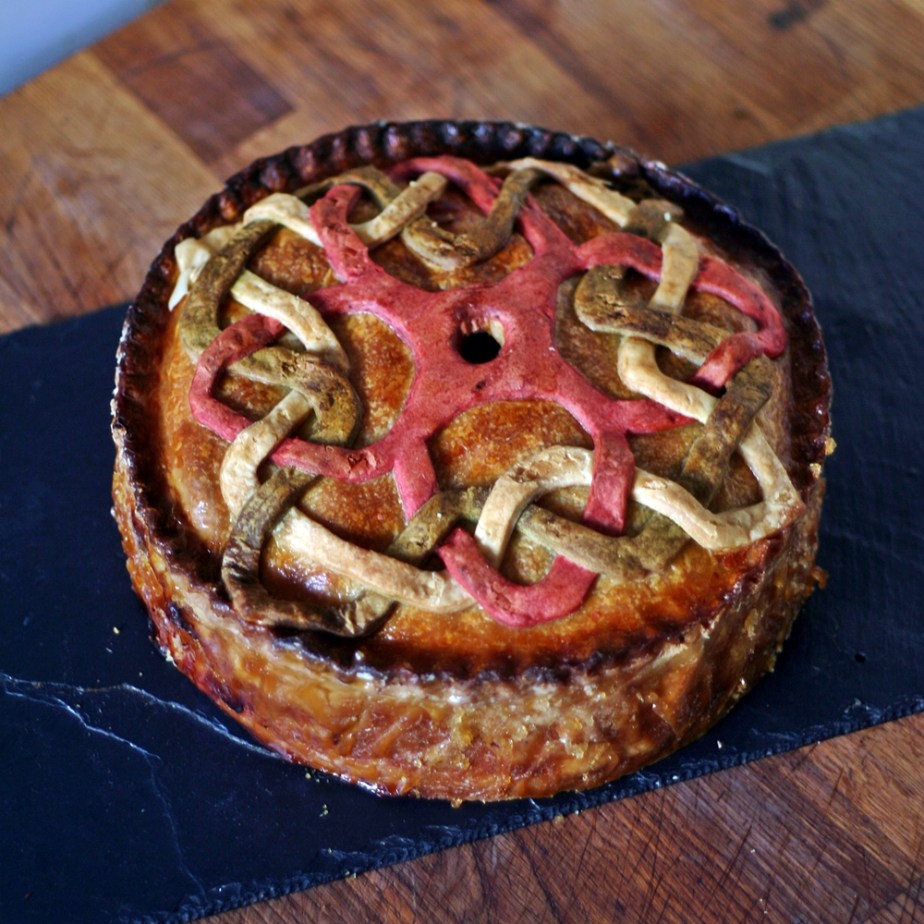
This is a version of the traditional raised pie that graced the sideboards of many a rich household going back centuries. With much time being devoted to celebrating the festive season, the amount of time spent waiting on the kitchen could be drastically reduced with a sideboard groaning under selection of cold cuts and pies to slice throughout the twelve days of Christmas.

The most famous Christmas pies were undoubtedly from Yorkshire, whose frequently gargantuan sizes inspired both awe and wonder, not to mention expense.

“The host of the Angel Hotel, at Whitby, last week, set before his friends a Yorkshire Christmas Pie, seven feet in circumference and containing four stones of flour, 12lbs butter and suet, a brace of pheasants, a brace of partridges, two geese, two rabbits, ten chickens, six ducks, two tongues, one turkey, and six pounds of ham.” ¹

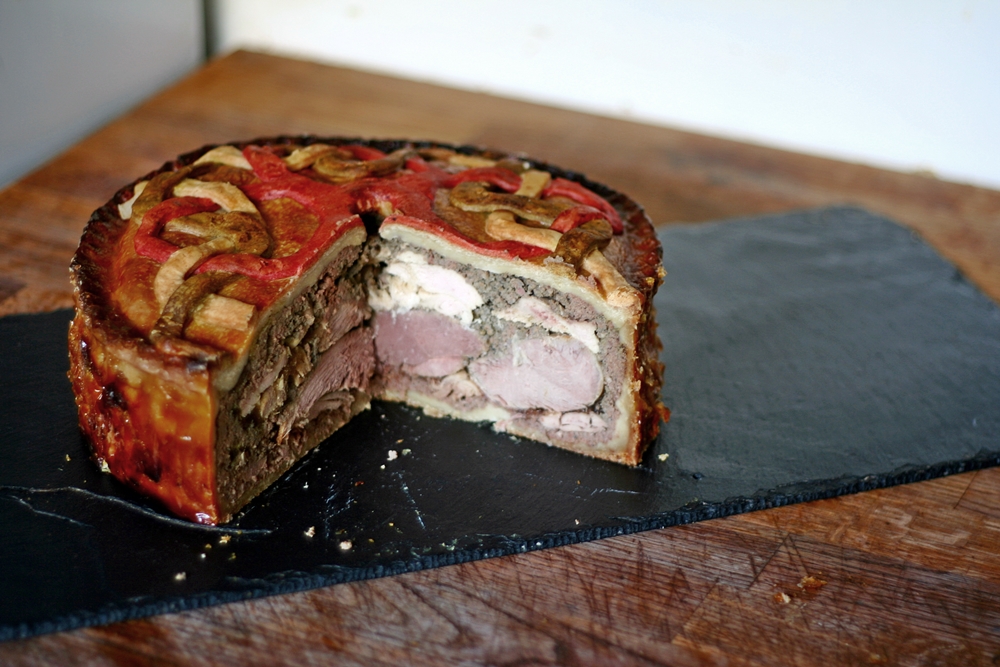
The traditional format of these pies consisted of the birds being boned, seasoned, rolled and then stuffed one inside the other, in the manner of Russian babushka dolls, quite putting the modern ‘turducken’ to shame for its amateurishness. Hannah Glasse’s recipe of 1747 called for a turkey, a goose, a fowl, a partridge and a pigeon. In addition, to fill up the gaps around the main bird, on one side was laid a jointed hare, on the other side woodcock, and “more Game, and what Sort of wild Fowl you can get.”

These large pies were frequently packaged up and sent to London as gifts, or merely as provisions for the festive season. Unfortunately, their size and sturdiness wasn’t always a guarantee of safe travel. In 1832, The Age newspaper carried the following morsel of information in it’s roundup of news snippets column, the Georgian newspaper equivalent of an “And finally…” news item:

“The Lord Chancellor’s Christmas Pie upset, broken and devoured by dogs.”

Adapted from his book The Cook’s Guide and Housekeeper’s & Butler’s Assistant, Francatelli’s recipe simplifies the difficulty of baking so many different types of game and poultry from raw, by pre-cooking the birds to medium rare, filling the pie with the meat, and then finishing the cooking when the pie is baked. The baking time is also considerably reduced.

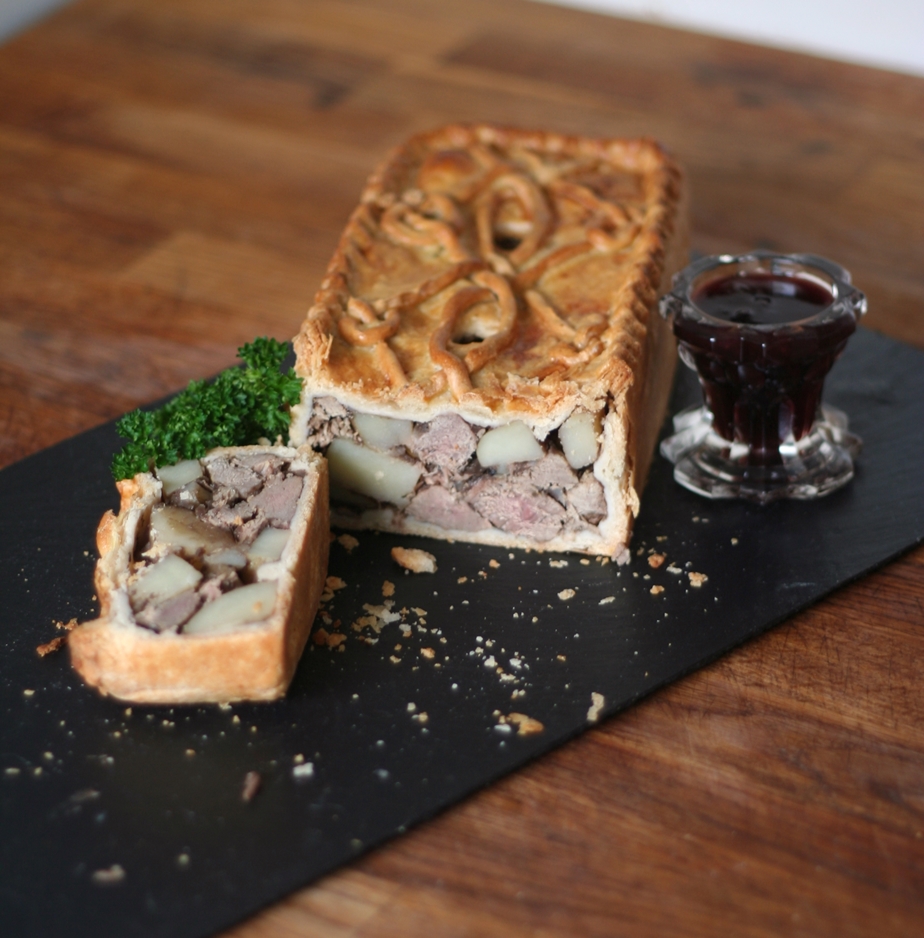
Christmas Pie cut

This recipe has a lot of steps, none of which are particularly difficult, but you can spread them out over a couple of days rather than feel obliged to have one mammoth kitchen session.

Christmas Pie

Seasoning
1/2 tsp nutmeg
1/4 tsp mace
1/4 tsp cloves
1 tsp peppercorns
2 crushed dried bay leaves
1.5tsp dried basil
1.5 tsp marjoram
1.5 tsp winter savoury
1.5 tsp thyme
0.25tsp chilli pepper
0.5tsp sumac dried mango powder
1tsp garlic powder

Forcemeat
150g butter
1 clove of garlic, chopped fine
1tsp salt
500g rindless streaky bacon, chopped
500g chicken livers, rinsed

Filling
1 whole turkey leg, slow-cooked overnight on a raft of celery, carrot and onion
An assortment of game birds, preferably with carcass, such as:
1 duck crown
1 goose crown
1 pheasant
2 woodcock

Savoury jelly
1 litre of beef stock
turkey stock from cooking the turkey leg
Any trimmings/bones from cooking the game birds
1 onion
2 carrots
3 sticks celery
2 bay leaves
1tbs black peppercorns
3 sprigs thyme
1 blade mace
1 batch game pie pastry (see page xx)
1 large egg for glazing.

  • Preparing The Pie Components
  • Set aside 1 tablespoon of the seasoning mixture for use on the filling.
  • Melt the butter for the forcemeat in a large pan with the chopped garlic.
  • Add the chopped bacon and cook for 5-10 minutes.
  • Add the chicken livers and sprinkle with the seasoning mixture.
  • Cook until just pink in the middle.
  • Remove from the heat and tip into a food processor fitting with a chopping blade.
  • Blitz until smooth, pour into a bowl, cover and set aside until required.
  • Preheat the oven to 180°C/160°C fan/gas 4.
  • Season the game birds with salt, pepper, and the tablespoon of the seasoning mix.
  • Spread with a thin layer of the forcemeat.
  • Arrange in a baking tray and brush over with melted clarified butter.
  • Bake until just cooked through (internal temperature of 74°C).
  • Remove from the oven and allow to cool for 15 minutes.
  • If using crowns or whole birds remove the breasts, as whole as possible, from the carcass and strip the rest of the meat from the bones. Allow to cool completely then cover and chill in the fridge until needed.
  • Put the remnants of the carcasses into a large pan, together with the stocks, seasonings and vegetables for the savoury jelly.
  • Bring to a boil, then cover, turn down the heat and simmer for 2-3
    hours to allow the flavours to develop.
  • Strain the stock twice: once through a fine sieve and then again through dampened muslin to remove all the unwanted solids.
  • Allow the stock to cool, then chill in the fridge. Remove the fat from the surface of the chilled stock and decant the stock into suitable containers.
  • Make a note of how solid, or not, the stock is when cold, and when the time comes to mix the gelatine, adjust accordingly: if the stock is fairly stiff,
    then little or no gelatine will be required, if it is a soft-set, then just half the regular quantity of gelatine may be all that is required.
  • Constructing The Pie
  • Cut off about 1/3 of the pastry and roll out for the lid of the pie. Cut it to size with 2cm extra all round. Cover with cling film and set aside.
  • Gather the trimmings together with the rest of the pastry and roll out for lining your greased pie tin. Be sure not to have your pastry too thin, as it will have
    to support a lot of filling – no less than 1cm on the sides and a little thicker over the bottom half of the pie. Let any excess pastry lie over the edges of the tin.
  • Spread a 1cm layer of forcemeat all over the inside of the pie. Arrange a layer of the meat and cover with a layer of forcemeat to fill in any gaps. Continue layering until all the filling and forcemeat has been used up.
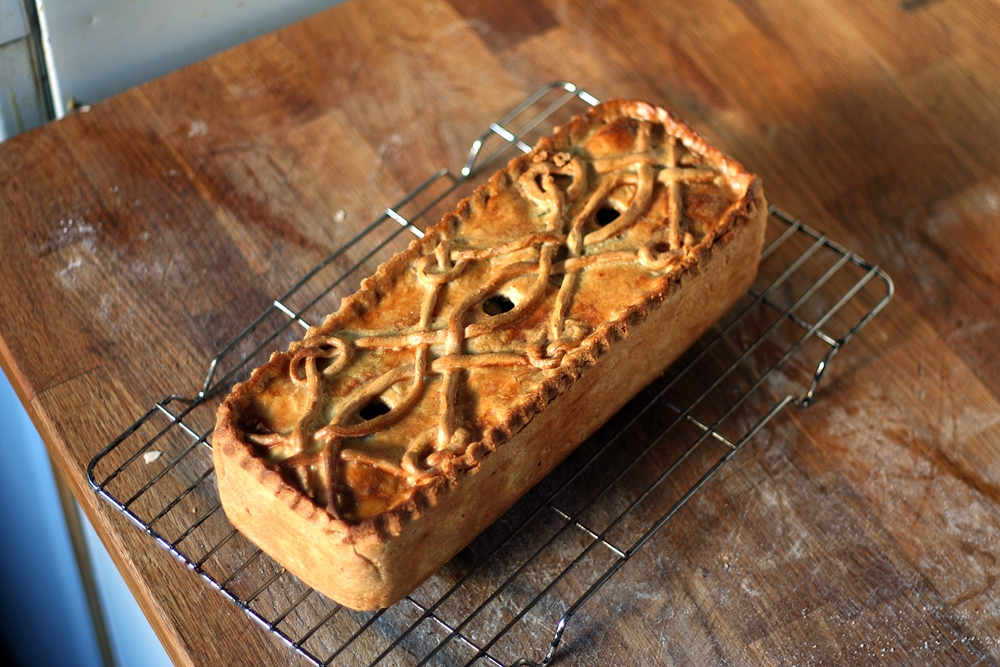
  • Brush the top edges of the pastry with water. Lay the pie lid over the top of the pie. Press firmly around the edges to seal. Trim any excess pastry using the back of a knife, then crimp the edges of the pie to decorate. Use the trimmings to make decorations for the top of the pie.
  • Cut a 1-2cm steam vent in the top of the pie, large enough for the savoury jelly to be poured through once the pie is baked.
  • Preheat the oven to 200°C/180°C fan/gas 6.
  • Brush the lid of the pie with beaten egg and bake for 1 hour and 15 minutes, or until the internal temperature reaches 70°C. If the top starts browning too much, cover loosely with a sheet of baking parchment or foil.
  • Remove from the oven and set aside to cool for several hours. When almost cold, measure out 600ml of the savoury jelly and warm in a pan. If using gelatine, soak as many leaves as required in cold water before draining and adding to the stock.
  • Stir until the gelatine has melted.
  • Before you start pouring the savoury jelly into the pie, you might want to check whether there are any holes in your pastry. Carefully remove the pie from the tin and inspect closely. You can either mix up a flower and water paste to fill any cracks, or wrap the sides and bottom of the pie tightly in cling film: this won’t stop the leaks, but it will keep everything contained until the jelly has set.
  • Return the wrapped pie to the tin before adding the jelly.
  • Pour the jelly a little at a time through the hole in the top of the pie. Use a jug and/or a fine funnel.
  • Allow time between pourings for the liquid to permeate the pie filling – it has to find and fill all the air pockets between the meat.
  • Leave to set in a cool place, or, if you have room, in the fridge overnight. The jelly will seal off any air pockets and thus prolong the shelf-life of the pie.
  • Properly stored, it can adorn a sideboard buffet all the way from Christmas almost to the New Year.

1 “Local and General Intelligence”, The Northern Star and Leeds General Advertiser (Leeds, England), Saturday, January 7, 1843; Issue 269. p3.

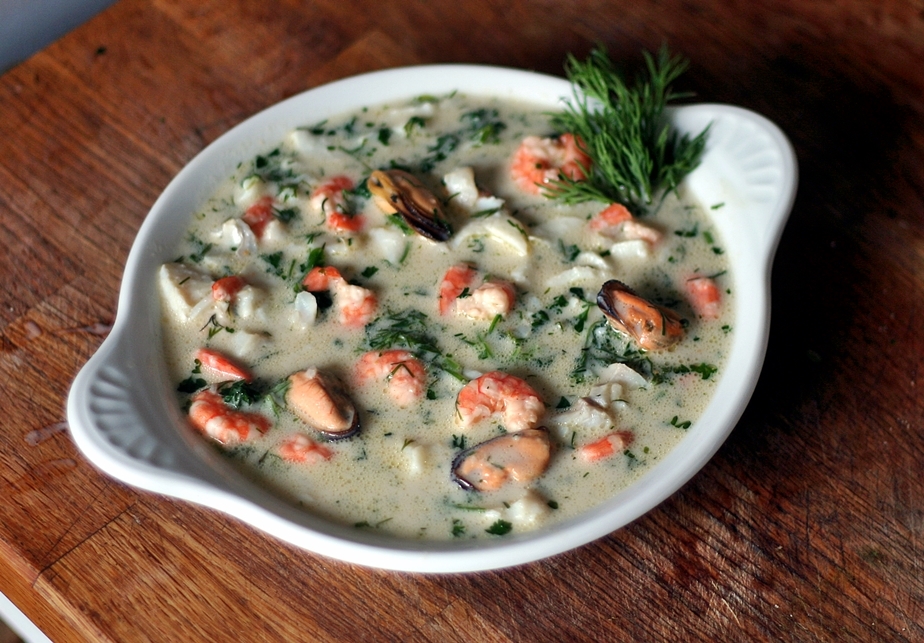
Seafood Pottage

This recipe is an attempt to recreate a dish served at the legendary Pontack’s Head tavern in Abchurch Lane, which reigned supreme as London’s foremost eatery at the close of the seventeenth century.

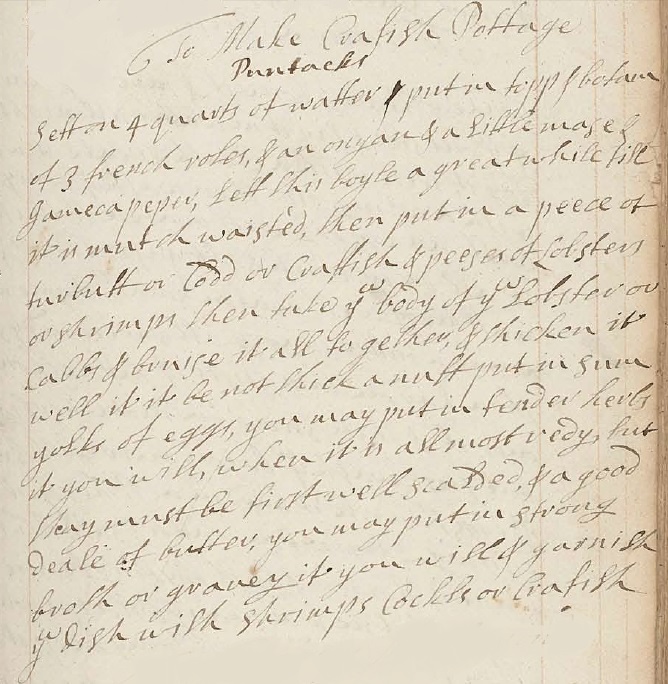
It is listed in the Johnson Family Receipts manuscript as Crayfish Pottage, but the instructions give so much leeway in terms of ingredients, it’s more appropriate to call it a seafood pottage. It would appear that the Johnson Family, or whomever composed the recipes in the manuscript, was a great admirer of the fare at Pontack’s, as there are no fewer than four entries ascribed to that establishment. Whether they were frequent visitors or merely collected the receipts from others, it gives a glimpse into the  type of food served and enjoyed there by Pepys, Swift, Defoe and London’s society elite.

Although luxurious, with ready-prepared seafood and good quality fish stock, it is ready in mere moments.

Original Recipe
Source: MS3082, Wellcome Library Collection

Seafood Pottage

Serves 4

1 litre fish stock
250g soft white breadcrumbs
4 spring onions, finely chopped
½ tsp ground mace
½ tsp ground allspice
400g prepared crayfish tails, prawns, lobster, cockles, mussels, shrimp
1 handful fresh parsley
8 sprigs dill
2 large yolks
150ml double cream
salt and pepper to taste
Put the fish stock, breadcrumbs, onion, mace and allspice into a pan and simmer for 10 minutes
until slightly reduced.
Whisk the yolks with the cream and mix into the soup, stirring as the mixture thickens.
Add the prepared seafood and allow to warm through.
Strip the fresh herbs from the stalks, chop finely and stir into the soup.
Taste, and season with salt and pepper.
Serve with crusty bread and toast sippets.

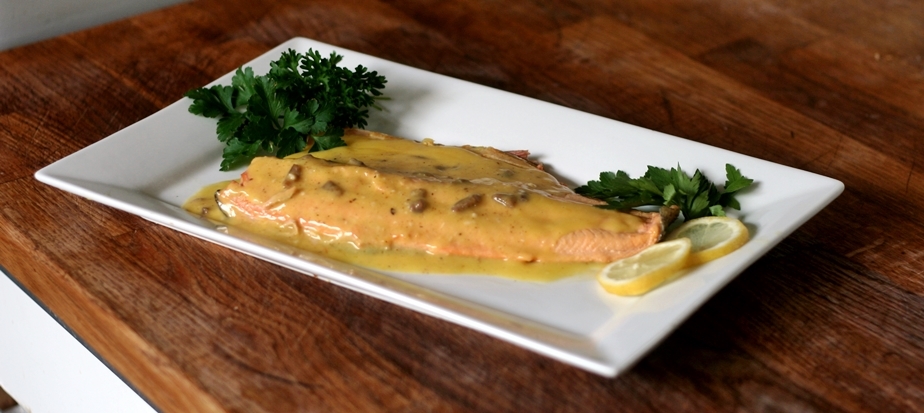
Saffron Trout

Trout has a glorious, rich, coral-orange colour when raw, and a delicate poaching for a few minutes is all that is required to cook it to perfection. Alas, even this gentle treatment causes some of that fantastic colour to fade to a rather less interesting pastel pink.

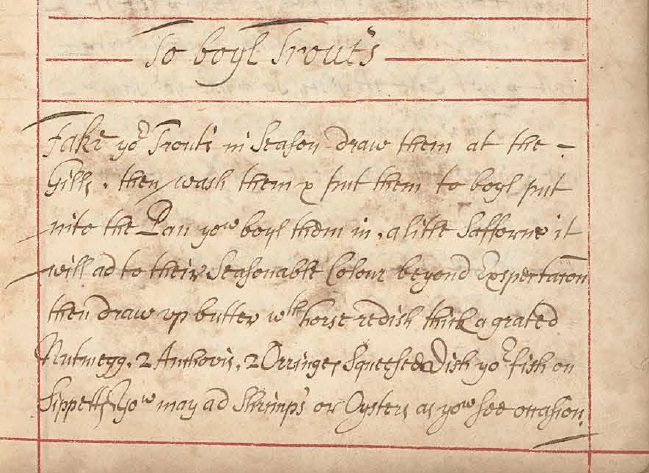
Jane Newton’s recipe, taken from her colourfully laid out manuscript book (MS1325, Wellcome Library) suggests introducing a touch of saffron to the poaching liquid which, she assures us, “will add to the seasonal colour beyond expectation.”

Original Recipe
Source: MS1325, Wellcome Library Collection

Saffron Trout

Serves 4

600g boneless trout fillets

Poaching liquid
4 spring onions, sliced
1tbs black peppercorns
2 bay leaves
12 stalks of parsley
a few sprigs of fresh herbs
4 slices lemon
1tsp horseradish
1tsp salt
pinch of saffron

English Butter Sauce
Standard Butter Sauce – see recipe here – made with 60ml freshly squeezed orange juice instead of water, and the following additions stirred in:
1tsp grated horseradish
½ nutmeg, grated
2-4 anchovy fillets, rinsed and chopped fine

4 slices white bread, crusts removed, toasted

  • Put all of the ingredients for the poaching liquid into a wide pan and add 500ml water.
  • Bring to the boil, turn the heat down, cover and simmer for 30 minutes.
  • Prepare the butter sauce.
  • When the poaching liquid has simmered for 30 minutes, slide the fish in and allow to gently poach for 5-6 minutes, depending on the thickness of your fillets.
  • Lay the trimmed toast into a serving dish and place the trout fillets on top.
  • Spoon over a little of the butter sauce and serve the rest on the side.

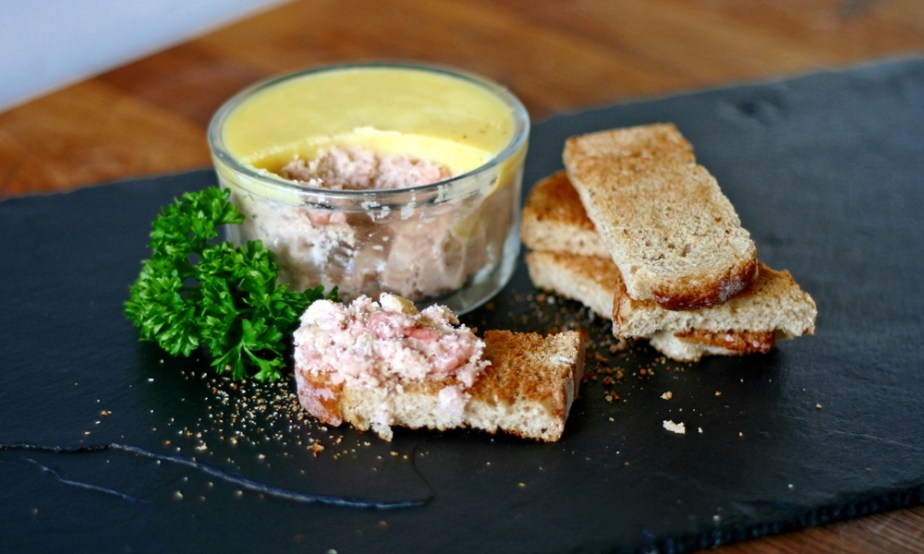
Potted Prawn, Shrimp or Crayfish

This recipe was chosen for it’s multi-purposeness , because you can use this method for any of the above-mentioned seafood, or perhaps even a mixture of two or three.

Potting used to be a means of preserving, the clarified butter being used to make the contents impervious to air-borne microbes, etc. Properly potted food could last days, if not weeks, without the need for refrigeration. When required, the butter was removed and the potted food used for whatever purpose the cook had in mind.

Nowadays, potted food is consumed in much the same way as a pate, spread on crisp toast or crackers. In this adaptation, the butter used to bind the seafood is delicately infused with spices before being combined with the fish and seasoning.

Potted Shrimp, Prawn or Crayfish

100g clarified, unsalted butter
1 blade mace
2 cloves
1 slice nutmeg
270g cooked brown shrimp, prawns or crayfish
black pepper
salt
Extra clarified butter to seal

  • Put the clarified butter and spices into a small pan and heat over a very low flame for 10 minutes.
  • Remove from the heat and allow to infuse for a further 20 minutes.
  • Remove the spices and combined with the seafood. NB British brown shrimp are tiny and perfect for spooning onto a finger of toast, so you might prefer to omit the next stage, and just season and pot them directly. Prawns and crayfish are larger and thus require chopping to make them easier to
    pot as well as easier to spread when served.
  • If you opt for chopping up the seafood, pour the mixture int a food processor and blitz intermittently until combined.
  • Taste and add salt and pepper as required.
  • Spoon into small pots or ramekins.
  • Pour over a thin layer of clarified butter to seal.
  • Chill in the fridge until required.
  • Serve with hot buttered toast

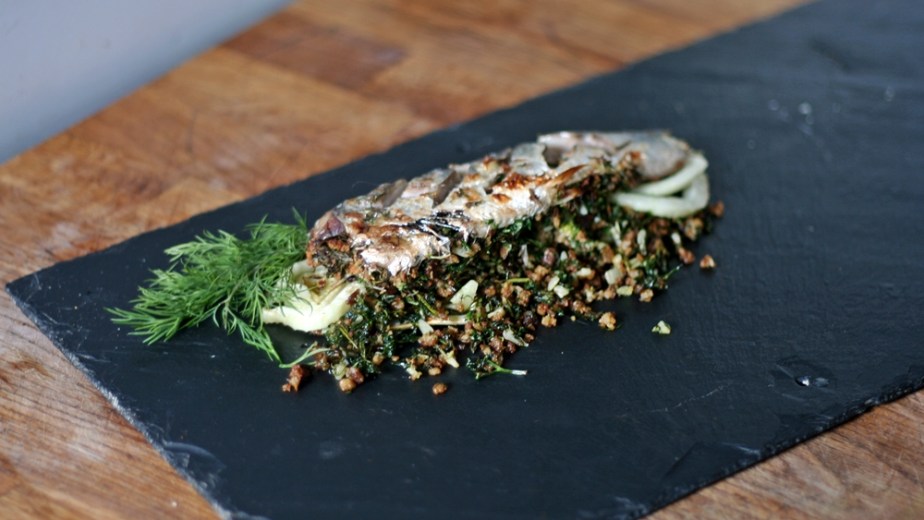
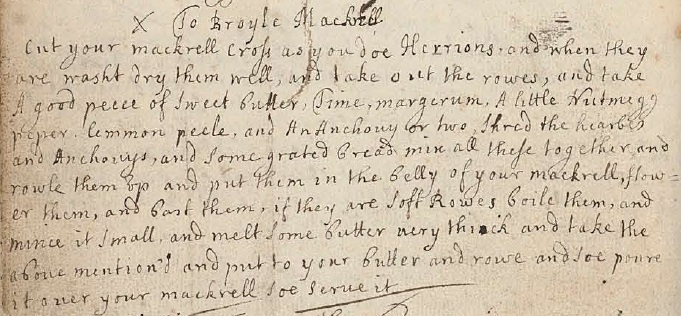
Broiled Mackerel with Butter Sauce

Mackerel is an oily fish, rich in omega-3 fatty acids. They have been an important food source for thousands of years, and are especially important to the fishing communities of coastal Scotland.

Once in danger from overfishing, mackerel are now available through thoughtful and sustainable farming methods. They are beautiful to behold, with their dark blue tiger stripes over a pale blue, sometimes green, background and dazzlingly white undersides.

This recipe, with it’s simple stuffing and garnish allows both the beauty and flavour of the mackerel to shine, in addition to being speedy to both prepare and cook.

Original Recipe
Source: MS3009, Wellcome Library Collection

Broiled Mackerel with Butter Sauce

4 fresh mackerel, gutted
2 bulbs of fennel, cut into thin slices

For the stuffing
2 slices of fresh wholemeal bread made into breadcrumbs
2tbs each of chopped fresh dill, parsley, fennel, thyme, rosemary
¼ tsp pepper
¼ tsp salt

Butter Sauce – see recipe here
To Add
2-3tbs capers
a little caper pickle liquid

  • Make the butter sauce:
  • Add the capers and a little of the pickle liquid to taste.
  • Wash and dry the fish.
  • Scotch the outside of the mackerel in diamond shapes with a sharp knife.
  • Mix the stuffing ingredients together and fill the insides of the mackerel. Don’t worry if there’s stuffing left over.
  • Sprinkle the fish with salt and lay thin slices of butter over them.
  • Lay slices of fennel on an oiled rack over a grillpan.
  • Lay on some flakes of butter.
  • Add the fish and cover with more butter.
  • Lay over more fennel. Dot a little butter over the fennel, or brush lightly with oil, to prevent it burning.
  • Grill under high heat for 5-6 minutes then turn the fish and grill the other side.
  • To turn the fish, lay a wire rack over the top and hold the grill and the wire rack like the bread of a sandwich. Turn the whole over, so the underside of the fish is now uppermost, with the fennel on top.
  • Grill for a further 5-6 minutes.
  • While the fish is cooking, melt a little butter in a an and quickly stir fry any excess herb stuffing, until the breadcrumbs crisp up.
  • Serve the fish on a bed of the fennel, sprinkled with the toasted crumbs, and butter sauce with capers on the side.

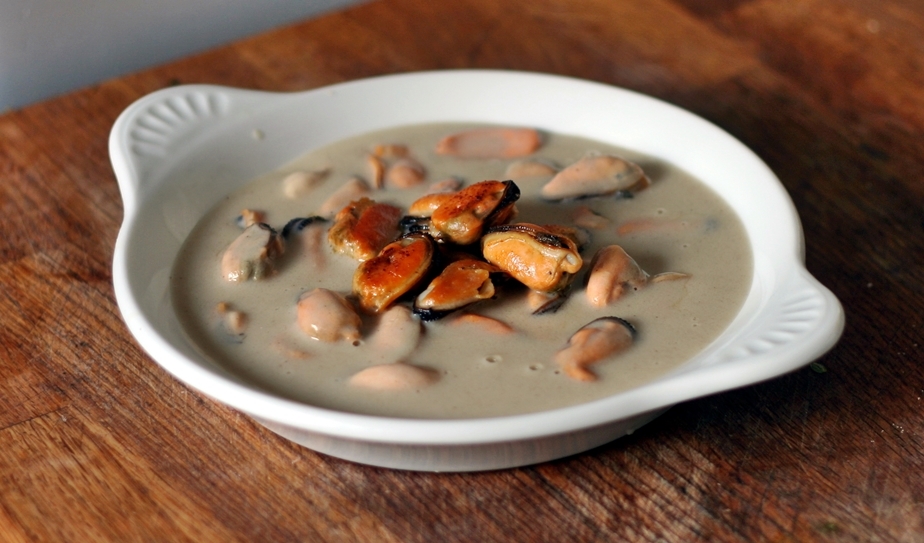
Mussel Pottage

A pottage is a thickened, substantial cross between a soup and a stew. I was drawn to this recipe by the lazy cook in me that is always looking for a simpler, easier way to achieve tasty food.

When this recipe was jotted down three hundred years ago, it would have been quite hard work to prepare: collecting the mussels, cleaning them, steaming them, straining the sand from the broth, etc.

Luckily for us, we have the luxury of buying what someone else has collected and cleaned, and also cooked. Whilst you can certainly buy fresh mussels in their shells and prepare them yourself, cooked mussels and prepared fish stock can bring this dish together in just minutes. I’ve been rather specific with the number of mussels, however you should feel free to increase this quantity with abandon, if so inclined.

Mussel Pottage

Serves 4

500ml fish stock
250ml water
4 slices of white bread, crusts removed
2 blades mace
½ tsp ground allspice
150ml cream
3 large yolks
1tbs anchovy sauce
32 cooked mussels
30g butter
2tbs chopped parsley to serve

  • Put the stock, water, bread, spices and anchovy sauce into a pan and bring to a boil.
  • Turn the heat down and allow to simmer for 10 minutes.
  • Remove from the heat, fish out the mace and purée with a stick blender.
  • Mix the cream, anchovy sauce and the yolks together and whisk into the soup.
  • Set aside 12 mussels for garnish and add the remainder to the soup. Warm gently.
  • When ready to serve, melt the butter in a pan and when hot, quickly toss the mussels set aside for garnish in the hot butter for about a minute, to heat through .
  • Serve garnished with the fried mussels and a sprinkle of chopped parsley.

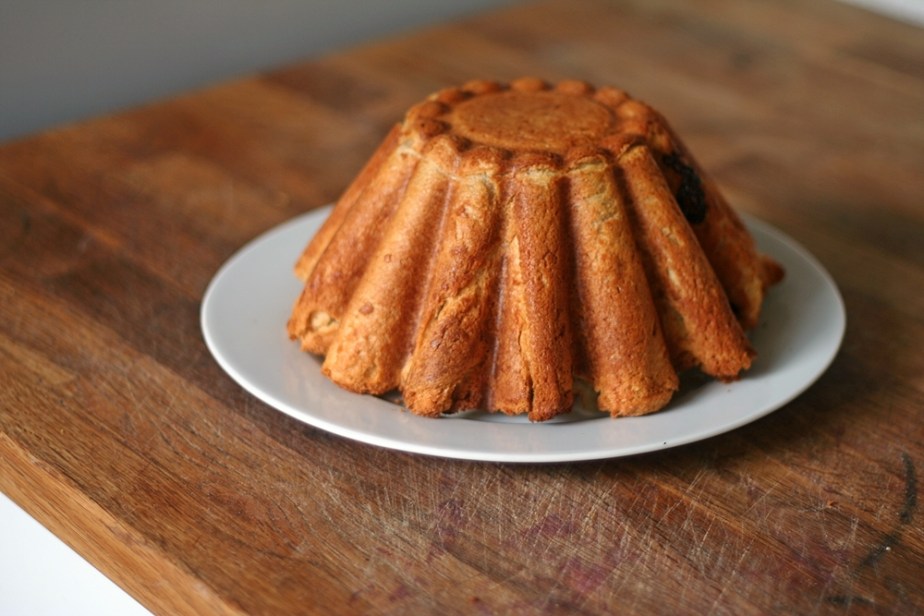
Fruit Charlotte

This is a deliciously simple, autumnal dessert that, although it can be assembled from very few, ordinary ingredients, ends up tasting so much better than the sum of its parts – the crisp, golden outside, hot and sharp insides and cool cream or hot, rich custard make this a dish of delicious contrasts. It is one of the many British desserts that evolved to use up stale bread and cooked fruit. Whilst the filling can be almost any fruit purée you have to hand, the construction needs to observe a few rules if it is going to look as impressive when served as it tastes.

Firstly, the fruit purée needs to be relatively firm and ‘dry’, with little or no visible liquid. If your cooked fruit is especially moist, then just set it in a sieve to drain – the resultant liquid can be sweetened and served as a pouring syrup or saved for use in/on other desserts. Alternatively, set it over a low heat in a wide pan, to help evaporate the excess liquid. If you think your fruit is still too soft, you could consider whisking in an egg yolk or two to help thicken it during cooking, making it more of a fruit custard.

The bread should not be plastic-wrapped and pre-sliced. The best charlottes are made when the bread can absorb some moisture from the filling in much the same way as it does in Summer Pudding, and sliced bread just doesn’t have a suitable surface for this. Not that having your bread sliced by a machine is bad – it can make it wonderfully thin and regular – just buy a whole loaf and get the bakery to cut it for you on their machine. If it’s not stale, just leave the slices you intend to use out on the counter for an hour, they’ll dry just enough. During baking, the dry outside will, thanks to the coating of butter, crisp up and turn wonderfully golden, and the inside will draw moisture from the filling and pull everything together, so that you have a firm pudding to turn out.

The final important consideration is the shape of the bowl in which you construct your charlotte. It needs to be both oven-proof and domed/tapering. Straight-sided charlottes are usually cold desserts such as the Charlotte Russe, which uses sponge fingers and a firmly set cream and is also thoroughly chilled before being served, which helps greatly with presentation. A traditional, domed pudding bowl, or individual pudding bowls, are ideal. Their tapering form is most conducive to maintaining an impressive shape of your hot charlotte. The fluted tins commonly marketed as brioche tins are also the ideal shape, with the added detail of fluting giving the turned-out dish a very elegant appearance.

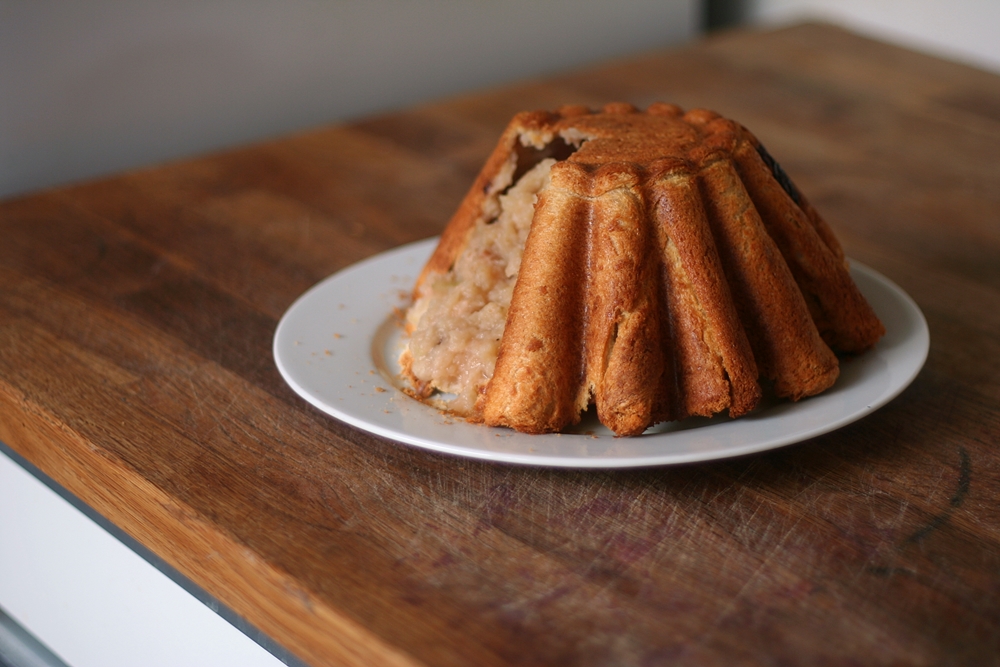
This is an adaptation of Mrs Rundell’s recipe from 1808. Her version calls for raw apples, sugar and butter and is baked slowly for 3 hours with a weight on top to help compress the apples as they shrink during cooking. This recipe is much shorter, just over one hour, but this length of time is necessary for the bread to crisp, turn golden and be sturdy enough to support the fruit filling until serving time. Higher heat and baking for a shorter time means that, when turned out, the pudding slowly sags and collapses, like a Victorian matron with her corset removed. The use of an already-cooked puree makes preparation that much quicker and the cooked pudding less prone to loss of volume.

Fruit Charlotte cut

Fruit Charlotte

I used some apples from a friend’s garden for this recipe, and added no sugar – the sharpness was a great contrast against the rich, buttery crust. I highly recommend this approach. If your fruit is especially sharp, consider using a sweet custard as an accompaniment.

750g fruit pulp
stale white bread slices
softened butter

pouring cream or custard to serve

  • Preheat the oven to 200°C/180°C fan.
  • Butter the inside of your bowl(s) generously with softened butter.
  • Cut the crusts from the bread. Cut a circle or flower shape for the bottom of your bowl and put it in first. It will make for a neat top once you turn out the pudding, and also hide the ends of all the side pieces of bread.
  • Line your bowl(s) with the crustless bread. How you choose to do this is up to you. Personally, I keep the pieced of bread whole and patch where necessary. If your bread is fresh and springy, you can make things easier for yourself by using a rolling pin to flatten them slightly. If you are using individual pudding bowls, you might want to reduce this to a width of 1.5cm, as the smaller form will need thinner slices if it is still to look dainty when turned out.  Place the slices inside the pudding at a slight angle and press into the butter. Leave the excess sticking out of the top of the bowl for now. Make sure  there are no spaces or holes for fruit to leak through. You can see on the above photo that a little apple juice has squeezed out and been caramelised by the heat of the oven. Delicious, but a flaw if you’re after an unblemished exterior to your charlotte.
  • Fill the lined mould with the fruit puree.
  • Butter slices of crustless bread for the top of the mould. Fold the ends of the bread at the sides inward and place the final pieces of bread butter-side upward over the top.
  • Spread a little butter onto a sheet of parchment and place this butter-side down over your filled bowl.
  • Add a cake tin on top together with an oven-safe weight, such as a foil-wrapped metal weight or quarry tile.
  • Bake for about an hour until the outside of the buttered bread is crisp and golden brown and the filling piping hot. For individual puddings, bake for 30-40minutes.
  • Remove the weight/tin/parchment and bake for a further 10 minutes, to allow the lid to crisp up.
  • Remove from the oven and turn out onto your serving dish.

Cockle and Mussel Puffs

Jane Parker, 1651 adapted from A New Booke of Cookerie, 1615

The availability of British seafood has increased dramatically with the introduction by the major supermarkets of dedicated fish counters staffed by professional fish mongers. No longer do we have to live close to our coastline in order to enjoy fresh seafood. Ideally, you would create this dish from scratch, and if you have the time and the inclination, it will no-doubt be superb. However, for those with limited time, by taking full advantage of pre-prepared seafood and ready-rolled puff pastry, this can come together in less than 30 minutes.

I first came across this recipe in the household manuscript book of Jane Parker (MS3769 at the Welcome Library). I subsequently discovered that she had copied it from John Murrell’s 1615 A New Booke of Cookerie, rephrasing it slightly and adding a little note to herself about changing the shape if frying them instead of baking. As noted elsewhere, Mistress Parker was not reticent about embellishing and improving the recipes she cherry-picked from the scant number of cookbooks of the day to suit her own style and preferences.

A Made dish of Cocokles and Mussels
From John Murrell’s A New Booke of Cookerie, 1615, p20
cocklepierecipe
From the manuscript book of Jane Parker, MS3769 at the Welcome Library

I have refrained from chopping the seafood as finely as suggested, much preferring to allow the constituent parts to be both distinguishable and identifiable omce the crisp pastry reveals it’s contents. I have added only pastry decoration to the original recipe.

Cockle and Mussel Puffs

200g cooked cockles
200g cooked mussels
4 large yolks
¼ tsp pepper
pinch of salt
a little grated nutmeg
60ml white wine
60ml orange juice
2 sheets puff pastry
1 large egg for glazing

  • Preheat the oven to 220°C/200°C fan/gas 7.
  • Mix the cockles and mussels in a bowl.
  • Season with salt, pepper and nutmeg.
  • Mix 2 tablespoons of the orange juice with the yolks and stir to combine.
  • Pour over the cockles and mussels and toss gently.
  • Taste and add more orange juice if liked, but beware of making the mixture too wet.
  • Roll the pastry sheets lightly to smooth, then cut four strips of 1cm width across the shorter side of each pastry sheet. Leave one sheet for the bases, and roll the second sheet thinner (tops), to fit overthe filling easily without stretching.
  • Moisten the edges of the bases and use the strips to build up a border around the edges.
  • Divide the solid part mixture evenly between the four bases and spread out. Don’t worry about adding the liquid at this stage, wait until the pies are sealed.
  • Moisten the pastry strips with a little water and lay over the lids.
  • Brush the border with water, then lay over the lids, pressing around the filling firmly to seal.
  • Trim the edges to neaten. Use a pastry or pizza wheel, or a neat, vertical cut with a sharp, unserrated knife. The cleaner the cut, the better and more puffed the edges will become.
  • With the back of a knife, press down all around the pie, 5mm from the edge, to seal.
  • Brush the tops of the pies with beaten egg, making sure none drips down the sides, as this will stick the pastry layers together and stop them from puffing up. Cut a vent hole to let out steam during cooking.
  • Divide any leftover liquid between the pies, pouring it through the vent hole.
  • Use pastry offcuts to shape some decorations. Leaving these pieces unglazed will make them stand out more against the glazed pastry.
  • Transfer the pies to a baking sheet lined with parchment.
  • Bake for 12 minutes, turning the baking sheet around 180 degrees after 6 minutes to ensure even colouring.
  • Serve immediately.

Batalia Fish Pie

Battalia Pie is a classic, double-crust pie from times past, the filling for which filling could be made from any of a number of ingredients. It’s origins are thought to come from the French béatilles, meaning titbits, and originally comprised of all the little odds and ends that are too small to use by themselves: cockscombs, lamb stones, sweetbreads, ox palates, etc.

By the 18th century, the spelling had settled onto Battalia, but in the 16th and 17th centuries it was a much more ad hoc affair (beatille, beatilla, beatilia), although the French origin can still be seen. To the ear, however, it sounded closer to ‘battle’ and William Rabisha embraced this interpretation with gusto, styling his fish pie in a pastry castle, complete with crenellated battlements, which I think is a fabulous concept as well as being visually stunning for a special occasion or centrepiece.

This design works especially well with the mixture of ingredients called for in his filling, as he suggests that each tower hold a different kind of fish and sauce. Then again, he also suggests that the decapitated heads of the various fish and seafood creatures be stuffed and propped on the battlements like some macabre seafood re-enactment of the siege in Beau Geste, thus illustrating the importance of being selective when choosing which aspects of historical recipes to revive.

bataliafishpie
From The Whole Body of Cookery Dissected (1661) William Rabisha

Another presentation idea is to utilize the castle and battlement elements for a cold, seafood buffet, as in the picture above. Each tower is filled with a different seafood, and the main body of the ‘castle’ can incorporate garnishes, salads and seafood items better suited to being laid out, such as smoked salmon and/or trout and oysters on the half shell.

Instructions are given below for how to construct and bake your crenellated pastry castle. Do not be constrained by the picture – only by the dimensions of the tin that will fit inside your oven: a large roasting tin will give you ample space in which to lay out your centrpiece.

Neither should you think only in terms of rectangular shapes for your ‘castle’. Use whatever baking tins you have to hand and create your own fortified masterpiece. A variety of heights will add interest as well as flexibility to your display.

Happy castling!

Batalia Fish Pie

William Rabisha, 1661

Game Pie Pastry made with wholemeal flour instead of white
2 large eggs for glazing.

To make the castle pie shell

  • Select a pie tin suitable for serving; round of rectangular, either is fine. It should be at least 10cm deep in order to form the walls and crenellations.
  • Select tins to shape your towers. These can be ordinary tins from soup or vegetables; remove the labels by soaking, and cut off both ends, leaving a tube. Cover all of the tins with foil or baking parchment, leaving one end open on each of the smaller ‘tower’ tins. The pastry will be baked on the outsides of the tins, to ensure a neat appearance.
  • Turn all of your tins upside down. Grease well.
  • Preheat your oven to 200°C/180°C fan/gas 6.
  • Roll out the pastry to about 1cm and use to cover all of the tins with a smooth layer. Trim any excess pastry.
  • Re-roll the scraps of pastry and cut into 3cm strips. Brush the top edges – which are currently the bases of the tins – with beaten egg and attach the strips of pastry. Press firmly.
  • Using a sharp knife, cut out the crenellations on the towers and the castle. Make them 1.5cm deep and 1.5cm wide.
  • Brush the pastry with the beaten egg.
  • Using the tip of a sharp knife, lightly score the pastry into a brickwork pattern.
  • Set your tins, still upside-down, onto a baking sheet and bake for 15-20 minutes until browned and firm.
  • Remove from the oven and CAREFULLY turn the tins the right way up.
  • Ease the foil/parchment away from the tins and lift out. Remove the foil/parchment, leaving the pastry shell. Brush the insides of the pastry with beaten egg and return to the oven for 5-10 minutes until fully cooked.
  • Cool on a wire rack.

New Potato Pie

Pies are frequently seen as the star of a meal, but this new potato pie is a delightful accompaniment to numerous meals. Tender new potatoes are baked beneath a rich buttery crust with a creamy sauce flavoured with parsley.

Not only does the crisp and golden pastry lid keep in all the flavours, it allows the potatoes to finish cooking without fear of them falling to pieces.

Simple and delicious with a gratin of leeks, sprinkled with cheese, or fresh, farmhouse ham and salad.

New Potato Pie

500g new potatoes, scrubbed
2tbs plain flour
1/2tsp salt
1/4tsp ground white pepper
3-4tbs chopped, fresh parsley
80ml double cream or creme fraiche
1 sheet puff pastry
beaten egg to glaze

  • Preheat the oven to 200°C/180°C fan/gas 5.
  • Bring a pan of water to the boil.
  • Boil the potatoes for 5 minutes, then drain.
  • When cool enough to handle, cut the potatoes into slices, 2cm thick.
  • Mix the flour, salt and pepper, sprinkle over the potatoes.
  • Add the parsley and toss to coat.
  • Put potatoes into an oven-proof dish and pour over the cream.
  • Cut some strips of pastry and line the edge of the dish.
  • Dampen the pastry rim and cover with the sheet of pastry, pressing the edges down firmly.
  • Brush wih beaten egg and cut a vent in the middle to let out steam.
  • Bake for 20-30 minutes, depending on the size and shape of your dish until the pastry is crisp and brown and the potatoes cooked through.