Shaping Meringues

I have a bit of a love/hate relationship with meringues. On the one hand they are extremely simple to make, with just two ingredients, but on the other, for the most part, they are almost universally blobby. Not such a defect, you might think, but it doesn’t help the elegance of a dish when one’s natural inclination is to the rustic.

So armed with one of my favourite baking books, I decided to experiment with trying to impose some order on these feather-light and versatile confections.

There are three basic types of meringue, which have come to be identified as French, Italian and Swiss, based mostly on how the sugar is treated in the mixing.

French meringue is the classic, with the egg-whites being whipped to soft peaks, before caster sugar is gradually added, then whisked to stiff peaks. This is a versatile meringue in that you can bake it by itself in blobs and nests an kisses or use it to top sweet-filled pies and tarts. However, it is not stable and will, over time, deflate back into a liquid. It needs to be baked after whisking.

Italian meringue has become very popular in recent times, due to its longer ‘shelf-life’ for want of a better word. The egg-whites are whisked together with a hot sugar syrup which cooks them enough to prevent them deflating once cold. Italian meringue can be folded into mousses and ice-creams to provide lightness and creaminess, can be piped directly onto cakes and pies and toasted either in the oven or with a blow-torch. It can also have butter whipped into it to make an indulgent filling/icing for cakes large and small.

Swiss Meringue is a method that falls roughly between that of French and Italian. The sugar and unwhipped egg-whites are stirred over simmering water until the sugar has dissolved, then they are removed from the heat and whisked vigorously until cool. This method makes for a firm, dazzlingly-white meringue that holds its shape exceptionally well, especially when piped with a patterned nozzle, which makes it the perfect meringue to use for adding a little more form and structure to your desserts.

This recipe comes from the Victorian baking book, “All about Biscuits” by H.G.Harris & S.P.Borella (c1900) and is listed only as a meringue mixture (one of many throughtout the book). It calls for caster sugar and the whites of eggs  to be whisked to a temperature of 66°C. Comparing this method with recipes available online, it is interesting to note that the ratio of sugar to egg-whites in modern mixtures varies, as does the temperature to which the mixture should be heated, from equal quantities by weight of sugar and egg-whites up to double the sugar to egg-whites, and in temperature from ‘until the sugar is dissolved’ as high as 80°C.

This recipe is a diplomatic middle-ground, but you should experiment to find the mixture that works best for you. What you do with the meringue after it is made, is really the main focus of this post, and my initial experiments are included below.  Most modern recipes stop after the mixing stage and either suggest the meringue be used as-is on top of pies and cakes, or that butter is whipped into the meringue to create a buttercream. Detailed below is a third option: that of baking the meringue dry to enjoy as they are or for use in other recipes. I hope to be able to add to the photographs as I discover additional suitable designs.

Use of silicone moulds

Meringue Shapes
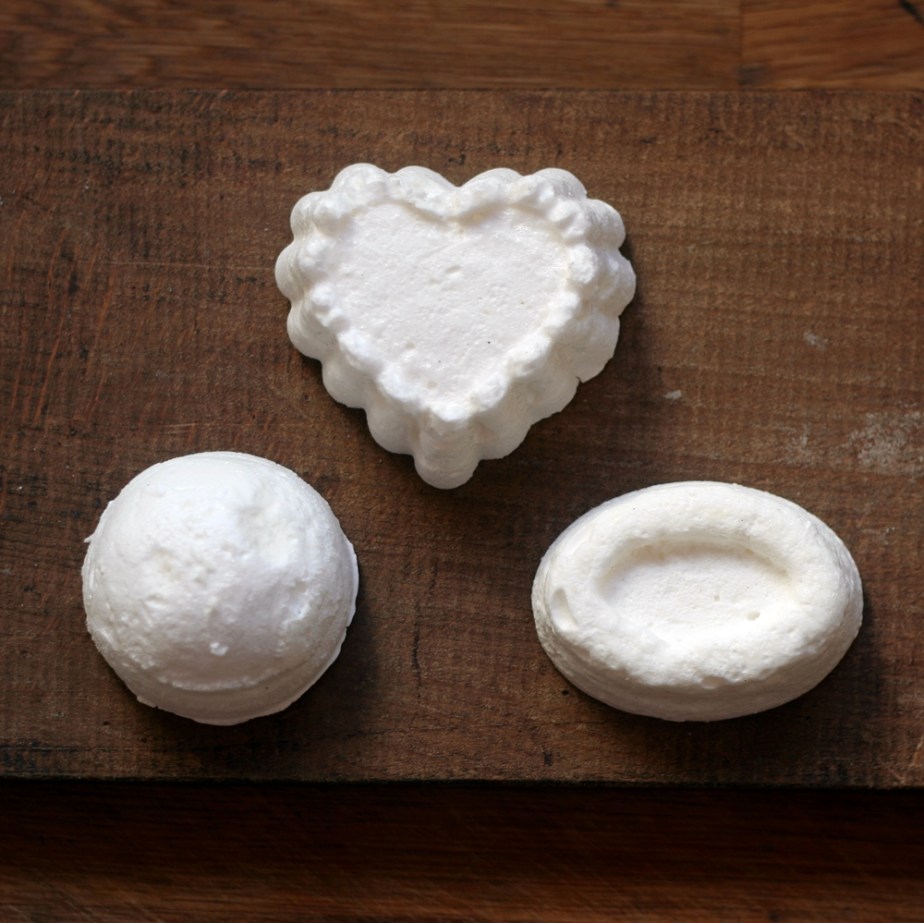
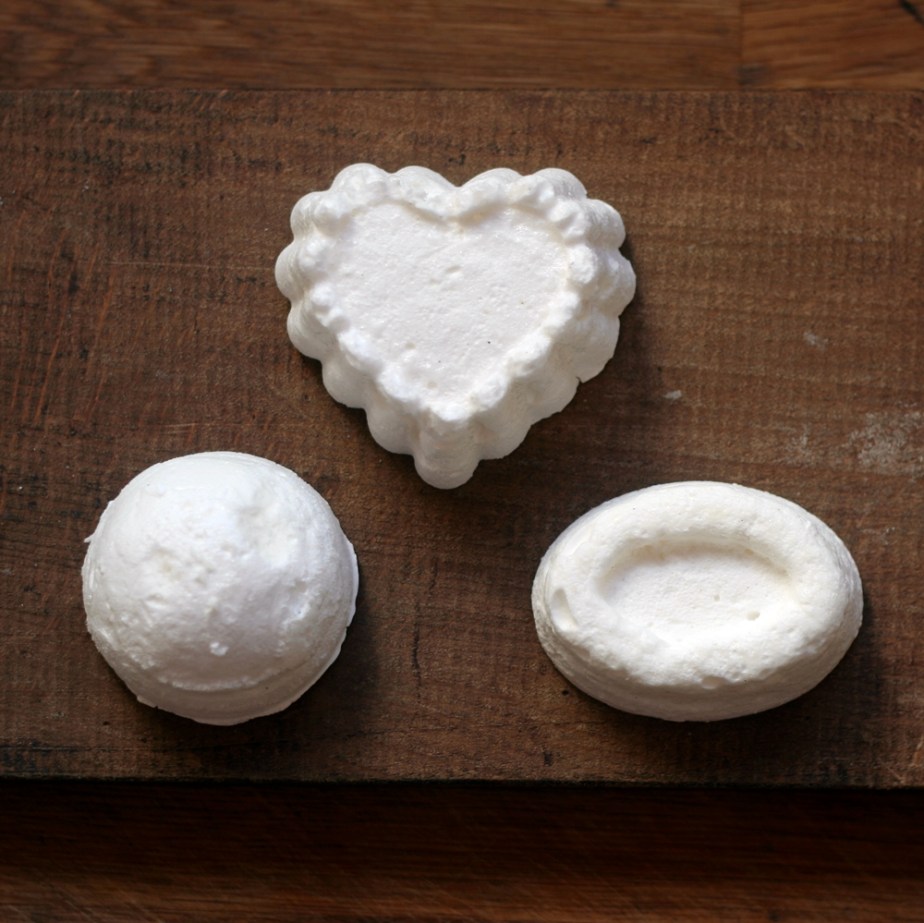
Meringues shaped in silicone moulds

Use of flexible silicone moulds are the simplest way to give your meringues a professional look. Smooth the meringue into clean moulds, trying to ensure there are no air-pockets trapped between the mixture and the surface of the mould. The drawback of this approach is the length of time the meringues take to dry. The best method I have found, is to cook them at a slightly higher temperature initially (80°C), until the visible surface is cooked and firm, then gently ease them from the mould and allow them to dry overnight in an extremely low oven (mine will actually go as low as 30°C). They will be perfectly dry, dazzlingly white and will keep for days in an airtight container.

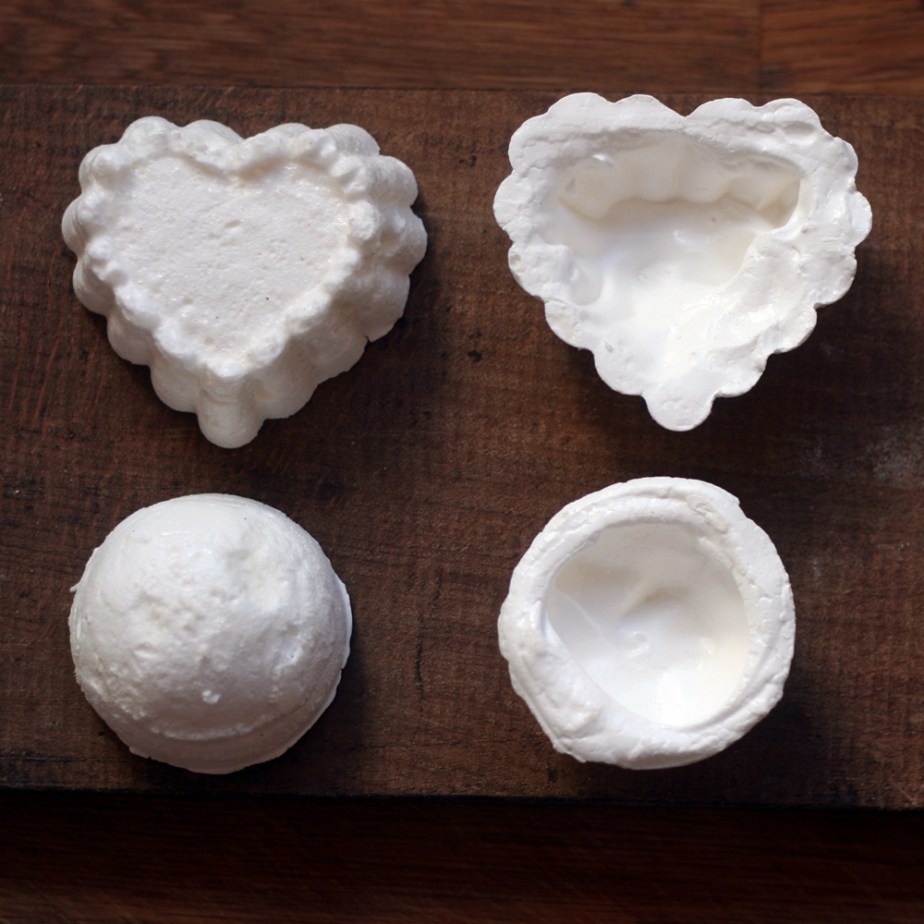
Meringues shaped in silicone moulds can be hollowed out to shorten baking time and provide room for a surprise filling

If you hollow out the meringue shapes, as seen above, not only does this reduce the drying time, but you can then use this for a hidden filling underneath, or turn the meringue the other way up and use it as a bowl for a moist and creamy filling: Eton Mess becomes Eton Tidy in an instant!

Use of piping tips

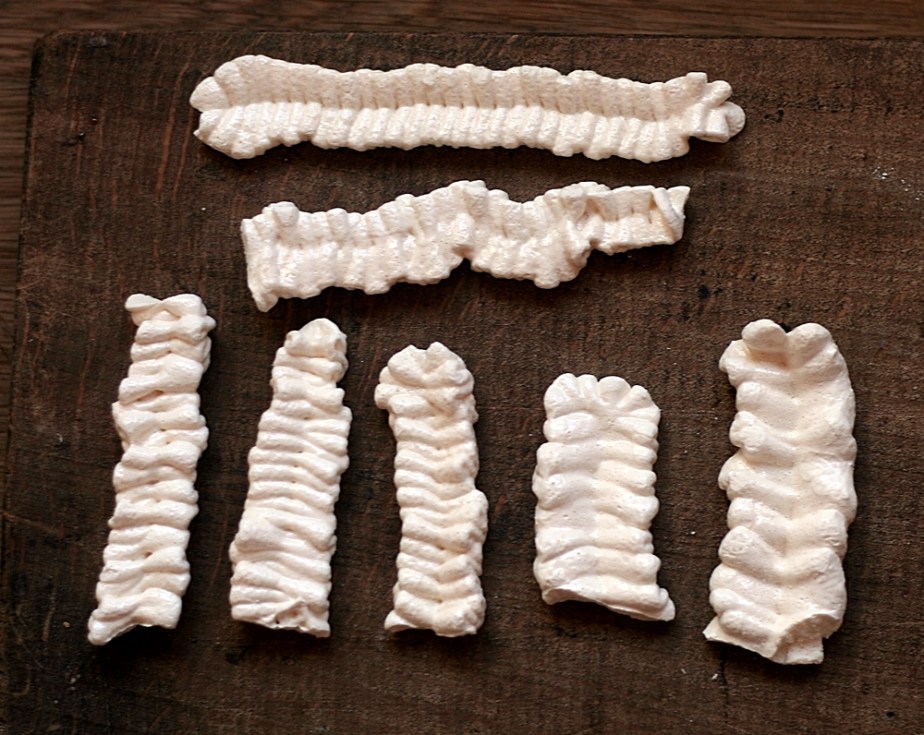
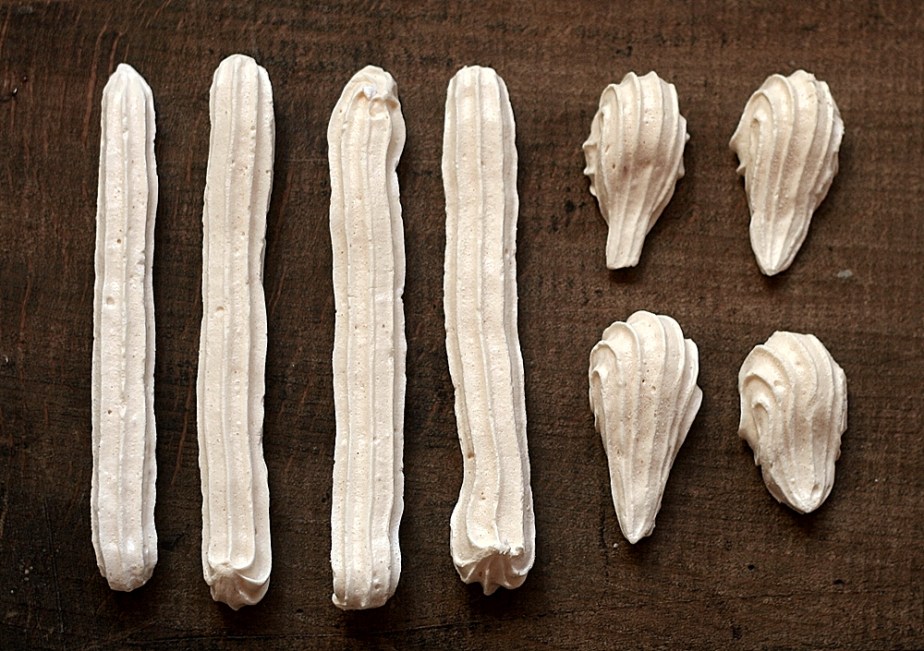
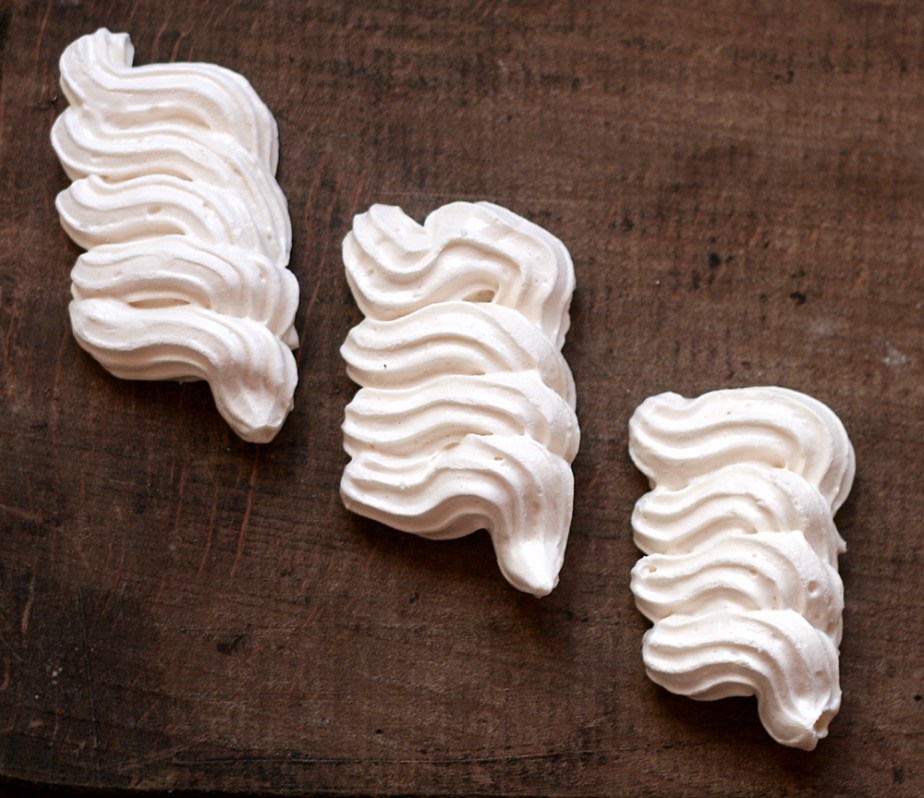
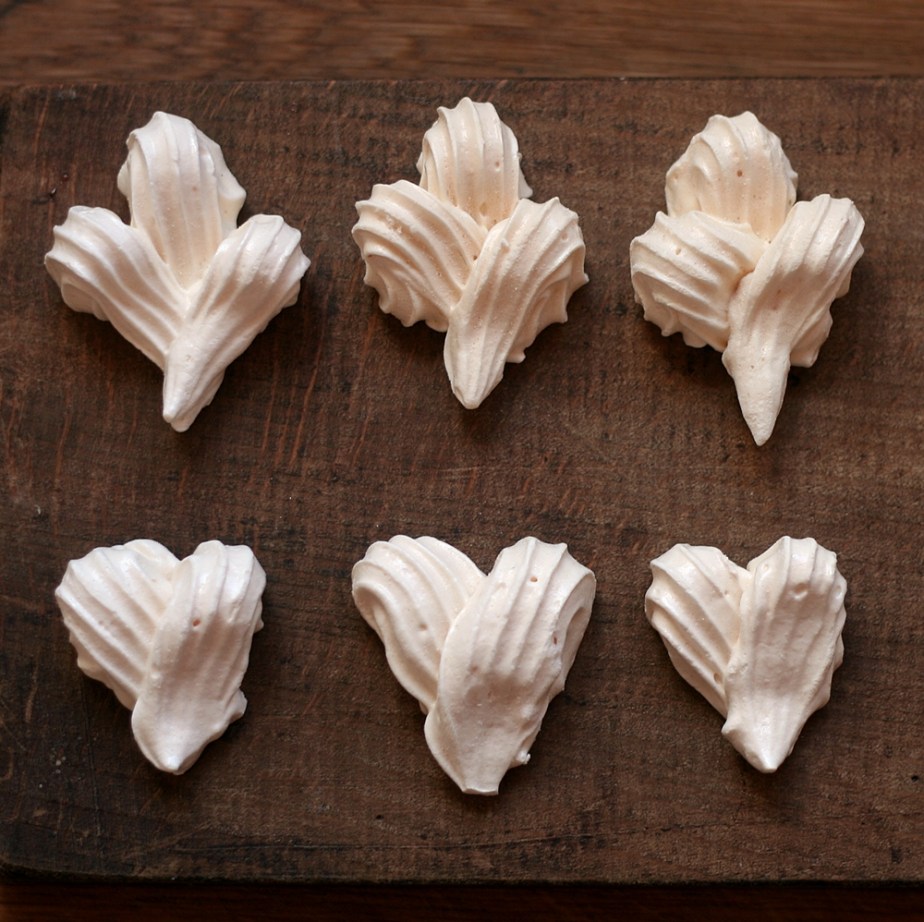
Spooned into a piping bag fitted with a shaped piping tip, Swiss Meringue is fantastic for creating shapes and designs with crisp details that hold their shape whilst baking. A few simple examples are listed below.

Meringue Ruffles made using the ‘leaf’ piping tip
Meringue Batons and Shells piped using an open star tip.
Meringue Feathers piped using an open star tip.
Meringue Swirls piped using an open star tip.
Meringue Fleur de Lys and Hearts piped using an open star tip.

Swiss Meringue

450g caster sugar
300g egg-whites

  • Put the egg-whites and sugar into a clean, dry bowl and set it on top of a pan of simmering water.
  • Be sure that the bowl doesn’t touch the surface of the water.
  • Gently stir the ingredients together until the sugar is dissolved and the temperature has reached 66°C.
  • Remove the bowl from the pan and whisk the contents briskly until the mixture is cold, firm, billowy and dazzlingly white.
  • Pipe onto parchment-lined baking sheets or into silicone moulds as you see fit.

To bake

The whiter you wish your meringues, the lower the temperature they need to bake, or rather, dry out. The shape will also dictate how long they require in the oven.

  • Preheat the oven to 100°C, 80°C Fan.
  • Bake for 1-2 hours, depending on shape, until set and firm. If you’re using silicone moulds, now would be the time to ease the meringues from the moulds.
  • Reduce oven temperature to 50°C, 40°C Fan and allow meringues to dry out.
  • Once cooled, store in an airtight container until required.

Malt Scones

My current lack of oven (for those interested the ETA is currently mid-February) has prompted me to delve into my small but eminently interesting collection of Victorian and Edwardian commercial bakery books in search of something to ‘bake’.

Back in the day, there were numerous recipes that could be baked on a griddle, a far more varied selection than the standard trio of Welshcakes, muffins and crumpets generally known today.

Admittedly, these do tend to be variations of a theme of ‘scones’, but the range available with just slight alterations of the ratio of ingredients is delightful.

The recipe I’ve chosen today is for an unusual griddle scone, as it is flavoured with malt, and every other version I have read has been for oven-baked scones only. I’m a great fan of malt loaves,  and have been since childhood, and they’re pretty straightforward to make at home. The 2-5 day wait for them to mature once baked, however, is frustratingly long.

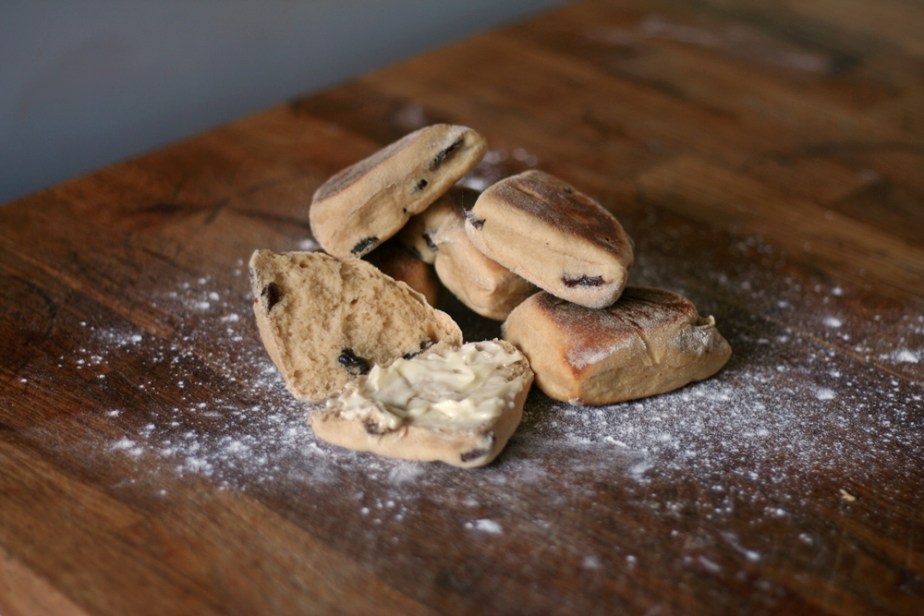
Not so with this recipe. Cooked in just 10 minutes on the stovetop, they can be enjoyed on day of making either fresh from the griddle or cooled, split and buttered. The delicate malt flavour is probably most pronounced when the scones are freshly baked and cooled. Interestingly, these use both yeast and raising agents to achieve their light and fluffy texture, as well as just a single proving.

These are not SWEET sweet scones, although the malt and the sultanas do place them on the sweet side. I was delighted to discover that, with the original quantity of sultanas (30g), they are delicious with cheese. For a sweeter bite, double this quantity and enjoy them split and buttered.

This batch makes twelve, so if this is rather too much for your needs for one day, you can either freeze some, warm them in the oven (just flaunt your oven-ness at me why don’t you!?) or enjoy them toasted and buttered.

Malt Scones

Makes 12

Ferment
150ml warm water
10g    fresh yeast
2 tsp sugar – brown or white
1tbs plain flour

225g plain flour
35g unsalted butter
30g sultanas
60g  malt extract
½tsp cream of tartar
¼tsp bicarbonate of soda

  • Whisk together the ferment ingredients and set aside in a warm place for 30 minutes until frothy.
  • Put the remaining ingredients except the sultanas, into a food processor and blitz until the malt and butter are fully incorporated,
  • Tip the flour mixture into a bowl.
  • Gradually stir in the frothy ferment until the mixture comes together as a soft dough. NB Depending on the moisture levels of the rest of the ingredients you might not need all of the ferment.
  • Knead for 10 minutes.
  • Add the sultanas and mix thoroughly.
  • Divide the dough into three (about 150g each, or 170g if using the larger amount of sultanas).
  • Roll into a smooth ball, then pat out by hand to a 12cm circle.
  • Cut into quarters and set the farls onto a floured board to rise for 45 minutes.
  • Heat a heavy-bottomed pan on the stove top. I use a cast iron, non-stick pan on the largest ring set to the lowest heat. Allow the pan 5-10 minutes to come to an even heat before you start cooking the scones. If your pan doesn’t have a thick base, then choose a smaller heat and watch carefully that the scones don’t become too dark.
  • Cook the scones in batches, for 5 minutes per side until risen and lightly browned.
  • Cool on a wire rack.
  • Store in an airtight container once cold.

Oyster Tarts

A great little recipe from that classic baking institution: Be-Ro.

Thomas Bell founded his grocery company in Newcastle-upon-Tyne in 1875. Amongst other items, he manufactured and sold baking powder and the world’s first self-raising flour under the brand name Bell’s Royal.

After the death of King Edward VII the use of the word ‘Royal’ in business was prohibited, so Thomas shortened each word to just two letters, and the Be-Ro brand was born.

To encourage the use of self-raising flour, the company staged exhibitions where visitors could taste freshly-baked scones, pastries and cakes. This proved so popular, and requests for the recipes so numerous, the Be-Ro Home Recipes book was created. Now in it’s 40th edition, the company claims that, at over 38 million copies, its recipe booklet “is arguably one of the best-selling cookery books ever.”

I’m not sure which edition my Be-Ro booklet is, as it’s undated, but from the appearance of the smiling lady on the front it definitely has a 1930s feeling; it’s pictured on the Be-Ro website, with a deep red cover.

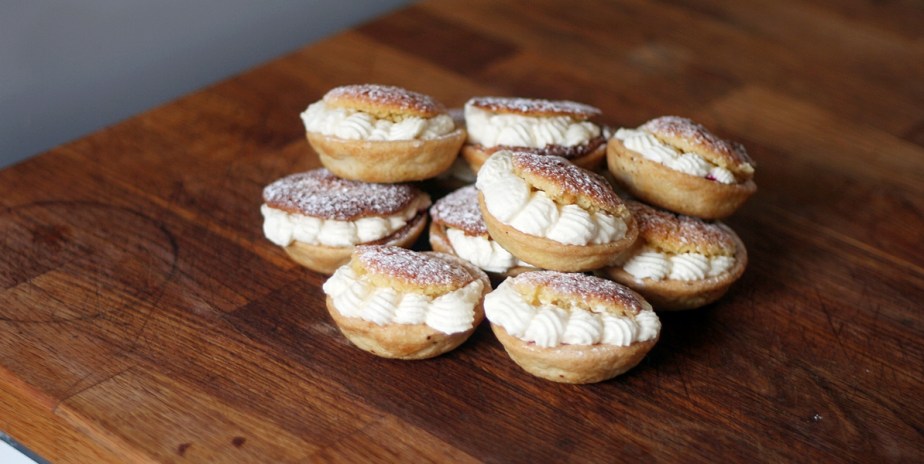
These little tarts are a beautiful example of how the simplest ingredients can be given a subtle twist and appeal by both their appearance and the ease with which they are whipped up. In essence, these are a Bakewell Tart with cream, but a little tweak turns them into sweet ‘oysters’.

I’m not a fan of almond flavouring, so I’ve used lemon zest to brighten the almond sponge and used a seedless blackcurrant jam inside. Adding the jam after baking (unlike the method for Bakewell Tarts) circumvents cooking the jam for a second time, and so it retains its brightness of flavour as well as colour. The pastry is crisp and dry and a perfect contrast against the moist filling. I’ve opted for an unsweetened pastry, but feel free to use a sweetened one if you prefer.

You could customise these tarts by swapping the ground almonds for almost any other nut, and matching the jam accordingly. Here are a few that occurred to me.

  • Almond with orange zest, and orange curd as the filling.
  • Coconut and lime curd, with a little lime zest in the filling.
  • Hazelnuts or pecans, with a praline paste or Nutella in the filling.
  • Walnut and a little coffee icing.

Have fun with them!

Oyster Tarts

Pastry
60g cornflour
225g plain flour
140g butter
ice-cold water

Filling
70g unsalted butter, softened
70g caster sugar
1 large egg
zest of 1 small lemon
85g ground almonds

To serve
200g cream cheese
200ml whipping cream
1tsp vanilla extract
1-2tbs icing sugar, plus more to sprinkle
120g sharp jam

  • Put all the pastry ingredients except for the water into the bowl of a food processor and blitz until the mixture resembles breadcrumbs.
  • Gradually add the water, one tablespoon at a time, until the mixture comes together in a ball.
  • Knead smooth, then roll out thinly. Cover with cling film and chill in the fridge to relax.
  • Preheat the oven to 170°C, 150°C Fan.
  • Beat the butter and sugar for the filling until light and fluffy. This will take about 5 minutes to get as much air into the mix as possible.
  • Add the egg and whisk in thoroughly.
  • Fold in the lemon zest and ground almonds.
  • Grease a 12-hole shallow tart tin.
  • Remove the pastry from the fridge and cut out 12 circles. Line the prepared tin with the pastry.Add about a tablespoon of filling to each tart. I use a small ice-cream scoop but 2 spoons will also work.
  • Bake for 18-20 minutes, turning the tin around after 10 minutes to ensure even cooking.
  • Transfer the cooked tarts onto a wire rack and allow to cool.
  • Whisk the cream cheese, vanilla and cream together until firm. Gently stir through a little icing sugar to slightly sweeten.
  • When the tarts have cooled, slice off the top of the filling with a sharp knife and set aside.
  • Add a teaspoon of jam and either spoon or pipe a little of the cream mixture into each tart.
  • Set the ‘lids’ back on the tarts at a jaunty angle, so as to appear like a half-opened oyster.
  • Dust with icing sugar and serve.

Cream Cakes

I spend a lot of our holidays in southwest France prowling around patisseries and artisan boulangeries with eyes like saucers, admiring the delicate and stylish combinations of cream and fruit and chocolate and truffle and glaze and, and, and….

However, in order to get there, it is rather a mammoth road trip, so I generally make sure I’ve got a handful of recipe books with me in the car to while away the hours. With no other reading matter to hand, I find it’s a good way to make sure I actually READ some of the hundreds of books on my shelves and I invariably discover something I’ve overlooked before. Sure enough, this year, yet again, I have re-discovered a recipe in a dusty housewives’ pamphlet from umpty-plonk years ago that reveals itself to be a real gem and, despite my hopeless and complete admiration for the exotic and awe-inspiring patisserie creations of France, I am enchanted all over again by British simplicity.

The recipe for these cakes was so brief I almost passed it by, yet curiosity caused me to pause and read it over, wondering what ‘trick’ there was; surely the small paragraph didn’t contain making, baking AND decorating instructions for cream cakes?

Sure enough, it didn’t, because the recipe was for cakes MADE with cream. Specifically, substituting cream into the mix instead of butter.

So simple – flour, sugar, eggs, cream, baking powder. I just had to try them.

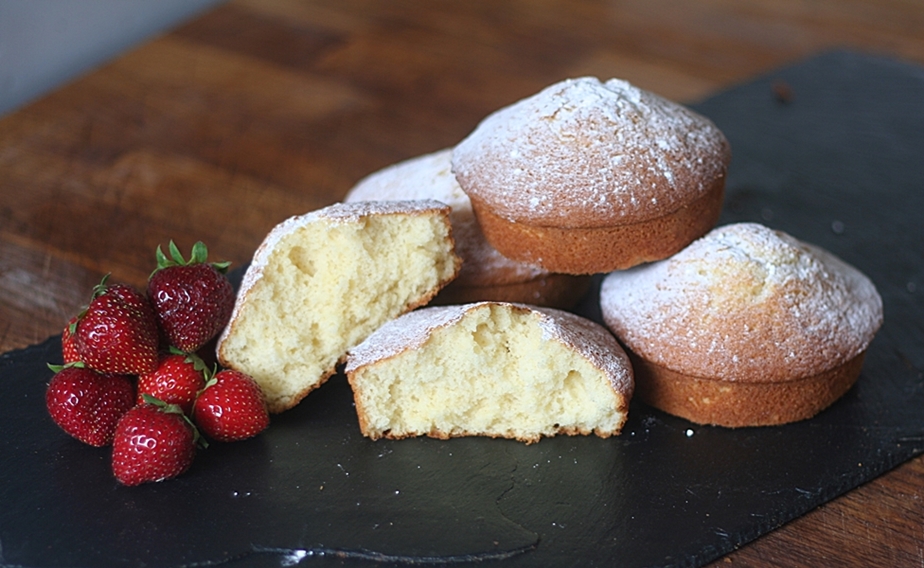
And they were delicious, and a complete breeze to make; no fretting over whether the butter is soft enough, or whether the sugar is dissolved sufficiently. They rose, magnificently domed, in the oven and are light and tender of crumb.

If I had just one niggle, it was that they were sweet. Tooth-achingly so. I couldn’t resist tweaking them a little. Even the sugar-pop posing as my daughter prefers this version. Of course she ate the sweet batch too, but she prefers these.

There’s no added flavouring – you could add some if you like, but I urge you to try the recipe just once, with farm-fresh eggs and rich double – or even clotted – cream.

The simplicity, lightness and flavour will be a delight.

Promise.

Cream Cakes

The cakes in the photo are made in mini layer tins I bought in my local The Range, 4 x 10cm diameter pans for £2.50 (also fab for Yorkshire Puddings – I bought 2 sets) and I put 100g of batter per pan and made six. If you’re using large cupcake/muffin tins, I suggest just 50g of batter per ‘hole’, and thus twelve cakes. Cooking time is the same for both sizes.

150g caster sugar
2 large eggs
125ml cream – double or clotted
150g plain flour
1.5 tsp baking powder

  •  Preheat the oven to 180°C/160°C Fan.
  • Crack the eggs into a bowl and add the sugar. Beat with a balloon whisk (or by hand or stand mixer) until the eggs are frothy and the sugar dissolved – about 5 minutes.
  • Add the cream and whisk in.
  • Sift the flour and baking powder together and stir into the rest of the ingredients – the balloon whisk/attachment is best for this, less washing up too!
  • Grease and line your tins, or use cupcake cases.
  • Spoon your mixture into your tins. Spread the batter to the sides, leaving a hollow in the middle. They will still dome up during cooking, but this way it should be a little more controlled.
  • Bake for 15 minutes until risen and golden brown.
  • Cool on a wire rack.
  • I think these are delicious served warm, lightly dusted with icing sugar and with a drizzle of cold cream poured over and a few fresh berries on the side. You can also split them and fill with whipped cream and berries or jam, or indeed any way that takes your fancy!

Coconut Gingerbread Cakes

Gingerbread is such a classic teatime treat – and I’m a huge fan of classics – it’s just that I don’t usually feel very inspired when I hear the word ‘gingerbread’. I think of a treacle-dark cake, rich, sticky and aromatic with ginger – sounds delicious, no? – but the main thing that springs to mind is something akin to a brick slab.

It probably goes back to the large, family bakes of my childhood, where the cake-of-the-week was kept wrapped in foil in a tin and slowly chiseled away at during the week until it was all gone. There wouldn’t be another cake until this cake had been eaten, and it used to lurk in the tin in all its brickiness, standing between me and any other baked treat. The chances were high that it would eventually be replaced with something equally heavy and fruity – but that new cake’s attraction would be, initially at any rate, mostly due to the fact that it wasn’t the gingerbread.

The image of heaviness and brick-like shape has lurked in my culinary memory ever since – which is a shame because what it SHOULD bring to mind is crisp winter nights, spiciness and fireworks, treacle-richness and bonfires. So I thought I should try and rehabilitate it, and bring it up to date. Ironically, I achieved this by referring to a recipe over 165 years old, from Miss Eliza Acton.

Heroines of Cooking: Elizabeth ‘Eliza’ Acton (1799 – 1859)

Originally a poet, Eliza Acton is considered by many to be the first to write a cookery book as we would recognise it today. Her Modern Cookery for Private Families (1845) was the first to separate a list of ingredients from the methodology, and was aimed specifically at small households. Additionally, the author’s observations on potential problems and recommendations for subtle variations were included, illustrating Eliza’s personal experience with the recipes, unlike many of her contemporaries and cookery authors that were to follow. It was an immediate success and remained in print for almost 60 years. She was to write only one other book The English Bread Book (1857), in which her strong views against the adulteration and processing of food would still be being echoed by Doris Grant almost a century later.

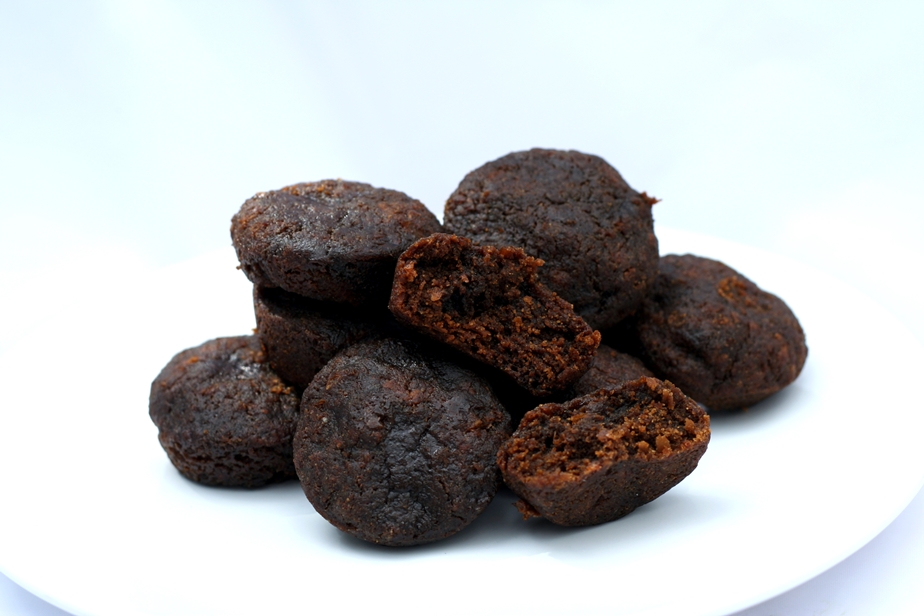
After several experimental baking batches, here is Eliza’s recipe for Coconut Gingerbread Cakes, scaled down to a manageable quantity. Baked in a mini muffin tin, the recipe makes approximately 24 bite -sized cakes with all the dark richness of traditional gingerbread, with the added coconut giving both a lighter texture and more complex flavour. Fresh coconut is a little time consuming to prepare, but very much worth the effort.

Coconut Gingerbread Cakes

Makes 24

75g plain flour
75g ground rice
2 tsp ground ginger
grated rind of 1 lemon
110g treacle
40g butter
40g dark brown soft sugar
80g fresh grated coconut

  • Mix flour, ground rice, ginger and lemon rind in a bowl and set aside.
  • Put the treacle, sugar and butter into a saucepan and heat gently until the butter is melted and the sugar dissolved. Remove from the heat.
  • Add the dry ingredients to the warm treacle mixture and stir to combined. Stir in the coconut and then set mixture aside to cool.
  • Heat oven to 120°C, 100°C Fan.
  • Divide cooled mixture into 20g pieces, roll into a ball and drop into greased mini-muffin cups.
  • Bake for 30 minutes. Cool on a wire rack.
  • Keeps very well in an airtight box/tin.