Onion Soup

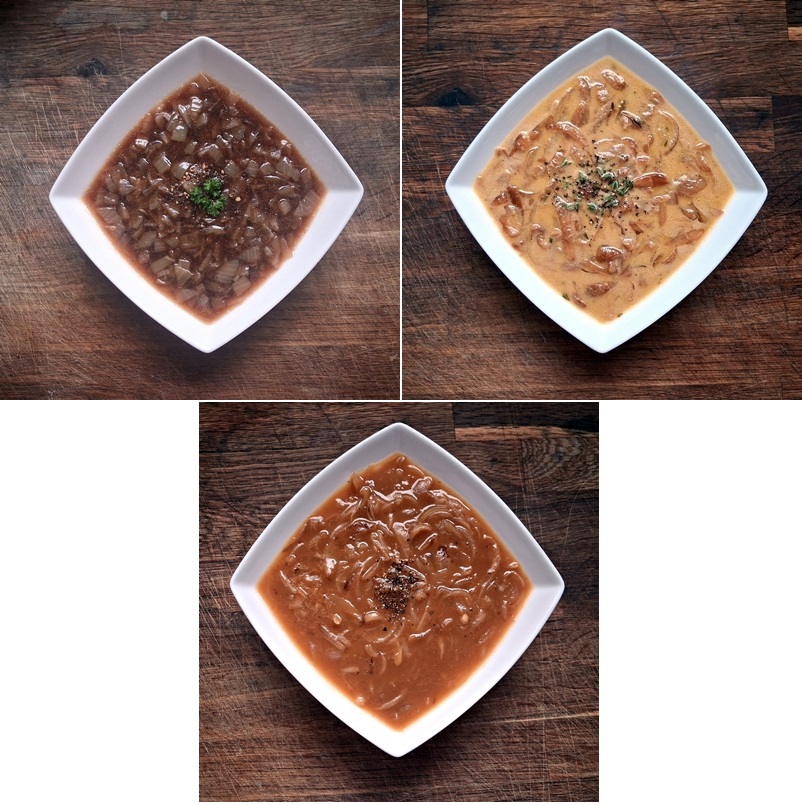
There’s nothing quite like a hearty soup for filling and warming you up on a brisk winter’s day. I’m patriotic for British food and deep down I must confess being a little resentful of the popularity of French Onion Soup. Nothing against the French, but recently, I starting pondering why we don’t have a decent British Onion Soup? After all, onions have been part of our food landscape for over 1500 years, brought by the Romans, presumably because our native alliums did not, pardon the pun, cut the mustard.

So I leapt, gazelle-like, to my collection of handwritten manuscripts to see what was occurring back in the day, and found many an onion soup, if not alive and kicking, then robustly chopped and simmering for many a decade.

I have selected three such soups for your delectation today, each of them delicious (obvs), each of them different in subtle, surprising ways. In deference to modern eating habits, one is vegan, one is vegetarian and one is whipped up with an unashamedly meaty stock.

Feel free to serve your onion soup with whatever garnishes take your fancy: crusty bread, cheesy croutons, spring onions/chives, grated cheese…

Which ever you choose, I hope you’ll enjoy warming yourself up with some/all of them .

White Onion Soup, circa 1820

Gluten-free.
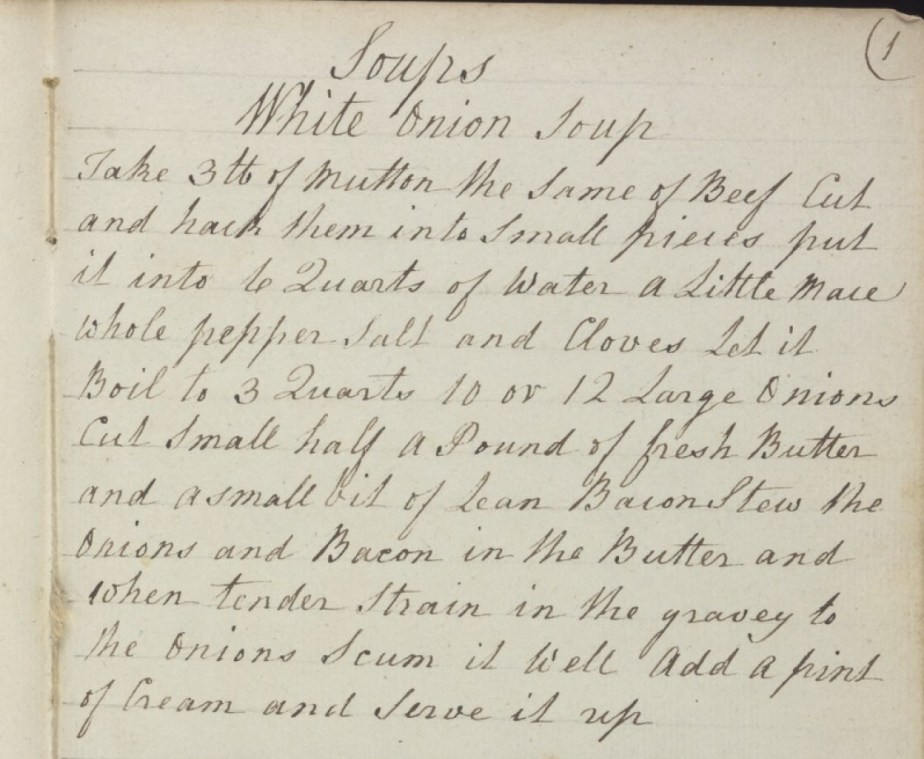
A Georgian White Onion Soup, circa 1820, MS7854, Wellcome Collection

This recipe caught my eye first and foremost because it is the first recipe in an anonymous, early 19thC manuscript. I like to imagine the author excitedly beginning a new recipe collection and what’s their first choice? Boom! White Onion Soup! I, not unreasonably, assumed this would be a banger of a recipe. I was also intrigued because of it’s title – specifying ‘white’ – unlike the majority of the onion soup recipes. It isn’t in reference to a specific type of onion, so I thought maybe it was for something cream or milk-based, thus resulting in a light-coloured soup. Turns out, it is quite the opposite, as the cooking liquid is made from two very meaty stocks of lamb and beef, and the onions are initially simmered with some lean ham/bacon. After much thought, I’ve come to the conclusion that ‘white’ refers to how the onions are treated, i.e. not browned or coloured. In each white onion soup recipe I found, the onions were either gently stewed in butter or initially parboiled in water. Cream was added at the end, as is recommended in this recipe, but having tasted this soup both before and after the addition of cream, my recommendation is to omit it altogether: the mix of meat broths give a light and delicate flavour that is as savoury as it is surprising, given its dark colouring. It is deliciously complex.
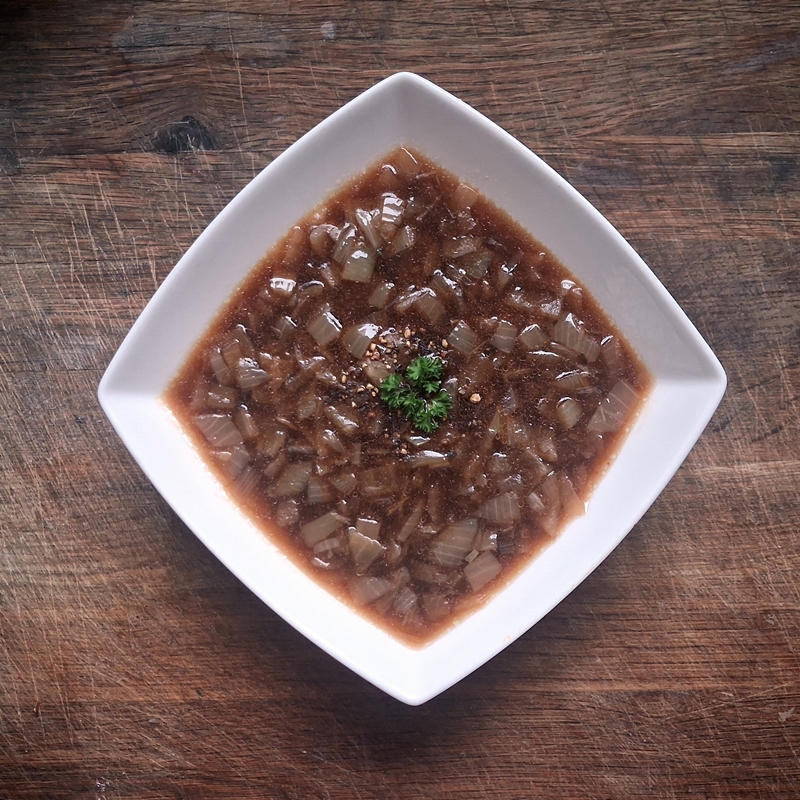
A bowl of onion soup, showing chopped onion in a dark meat broth
White Onion Soup with meat broth

For the stock
2 strong beef stock pots/cubes
2 lamb stock pots/cubes
1 blade of mace
3 whole cloves
1 tbs black peppercorns
2 litres water

800g brown onions
120g unsalted butter
½ gammon steak or  120g lean back bacon

salt and pepper
cream to taste (optional)

  • Put the ingredients for the stock into a large saucepan.
  • Bring gently to a boil, stirring until the stock pots have dissolved, then turn down the heat  and simmer, uncovered, for about an hour, or until reduced to 1.5 litres.
  • While the stock is simmering, peel and chop the onions finely.
  • Melt the butter in a pan and add the onions and gammon/bacon and toss to coat.
  • Cook the onions in the butter over a low heat, stirring occasionally, until softened and translucent. Stir to keep them from catching any colour.
  • When the stock is ready, strain out the solids and return the stock to the saucepan.
  • Remove the gammon from the pan, then add the softened onions and butter to the stock.
  • Simmer the soup for 10-15 minutes, then taste and adjust the seasoning with salt and pepper. Since the stock pots are already quite heavily salted, you may not need anything further.
  • Chop the gammon/bacon finely and return to the soup if liked, or use it elsewhere (sandwich, salad, omelette, etc).
  • Serve hot, with cream if preferred.

Late Stuart Onion Soup, circa 1700

Vegetarian. Gluten-free.
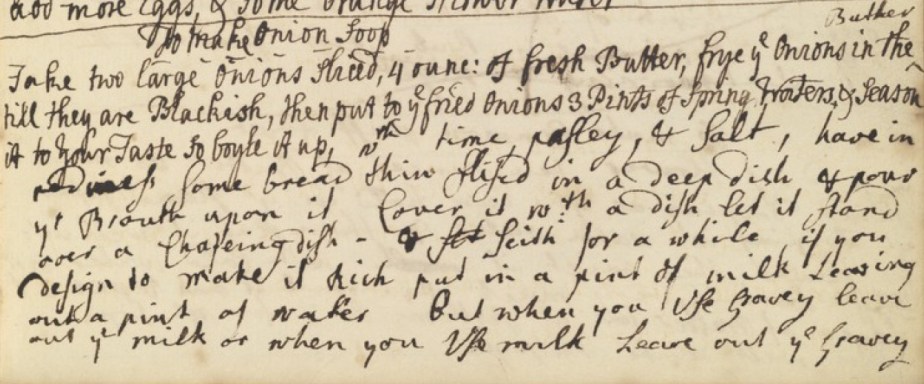
Late Stuart Onion Soup, circa 1700, MS1811, Wellcome Collection

This onion soup is about a century older than the one above, and is the kind of recipe I love in that it gives several options when making it to tailor it to your own personal tastes. I do love multi-purpose recipes! This is a recipe where the onions are browned/caramelised, and you can feel free to decide how dark to take them, according to your personal preference. The recipe actually calls for them to be ‘blackish’, which I think is a bit far, but certainly they should be brown and maybe a little dark on the edges also.

I love the addition of the fresh herbs in the cooking liquid, adding a real savoury note to the soup. This recipe also suggests ways in which the soup can be enriched, either by the addition of milk or broth for the cooking liquid, but only either one or the other, never both together. Adding milk to hot liquids can be tricky, because it is prone to curdling if you take your eye off the pan for a second and the soup gets too hot. One solution would be to use double cream, as the additional fat content helps to prevent curdling, but this might prove too rich for some palates. I recommend using a small can of evaporated milk: its caramel notes being very complimentary to the browned onions, and also much less likely to curdle.
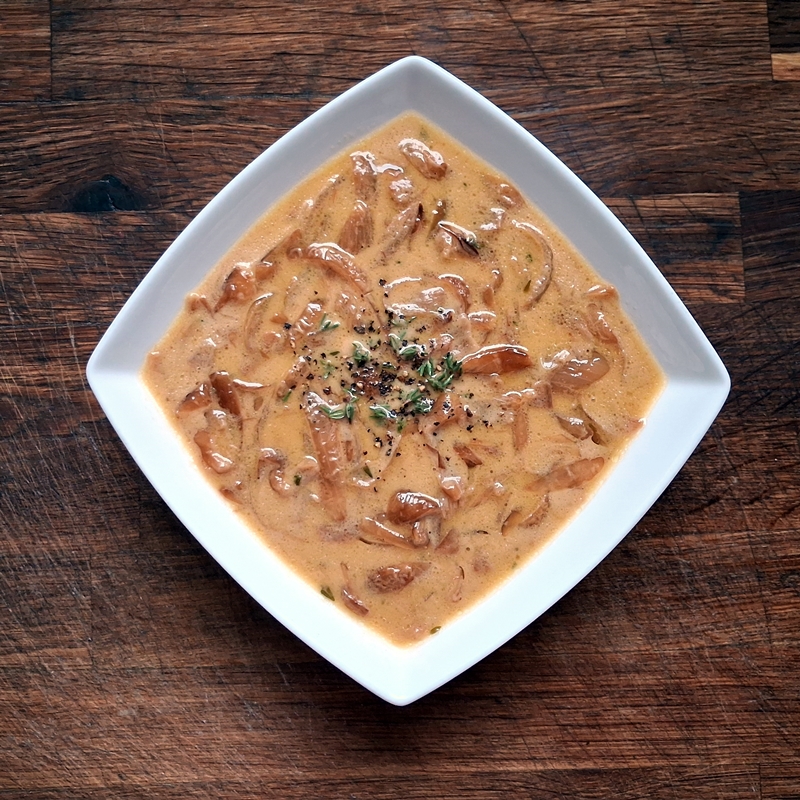
Creamy caramelised onion soup with fresh herbs

800g onions
1 level tsp salt
125g unsalted butter
1200ml cold water
3 sprigs fresh thyme + more to garnish
12 stalks fresh parsley + more to garnish
EITHER evaporated milk – 1 small tin (170ml) or to taste from a large tin (410ml) OR 500ml beef stock
black pepper to taste

  • Peel and slice the onions into semi-circles.
  • Melt the butter in a large pan, preferably non-stick
  • Add the onions and cook slowly over a medium-low (6 of 9) heat, stirring occasionally, until browned to your liking. This will take a while, probably 30 minutes or more. Sprinkling the onions with the salt will help draw out their moisture and speed up the browning process a little.
  • When the onions are browned to your liking, add the water, thyme and parsley.
  • Simmer with the herbs for 20-30 minutes. NB Fresh thyme can be quite potent, so check along the way how your soup is tasting – you might want to fish out the thyme stalks sooner rather than later.
  • Add your enrichment liquids – either evaporated milk or beef stock – and heat through.
  • Taste and adjust the seasoning to your palate.
  • Serve.

Martha Bradley’s Onion Soup with Vinegar, 1758

Vegan. Vegetarian. Dairy-free. Gluten-free*.
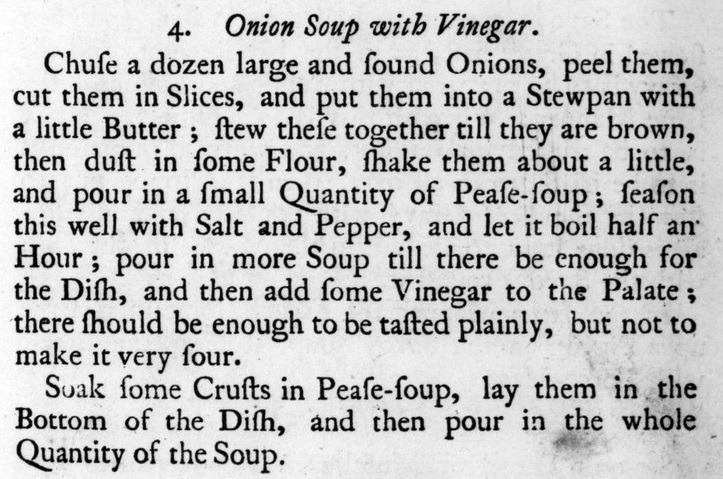
This onion soup recipe is the most surprising of the three. I have adjusted it slightly in order to make it vegan (oil for butter), but that’s not what is surprising.

No, the surprising part is the flavour: bold and hearty with a real punch of richness and then brightness brought by the vinegar. I looked up this rather unusual combination, and found several versions, some of which were entitled “Drunk Soup” and emphasized the restorative properties of such a soup when recovering from over-indulgence: the sweetness of the onions providing restorative energy to the body and the vinegar providing balance to the fat/richness.

Another unusual aspect is the use of another soup to give body to the onion soup. ‘Pease soup’ is made from dried peas, not fresh garden peas, and is usually simmered with a ham hock in the making to give a thick and hearty soup. Obviously that wouldn’t do if I was to keep this recipe vegan, so not having any dried peas to hand, I opted for a tin of lentil soup, reasoning that both peas and lentils are farinaceous in texture and also vegan. I figured I could switch things around later if the recipe showed promise. However, it made for such an extraordinary soup I had absolutely no notes, so the recipe neither needed nor got any further tweaks.

It is my favourite of all three soups and epitomises why old British recipes are worthy of perseverance: this recipe was just tucked away in a relatively unknown, mid-eighteenth century book and it turns out to be a classic.
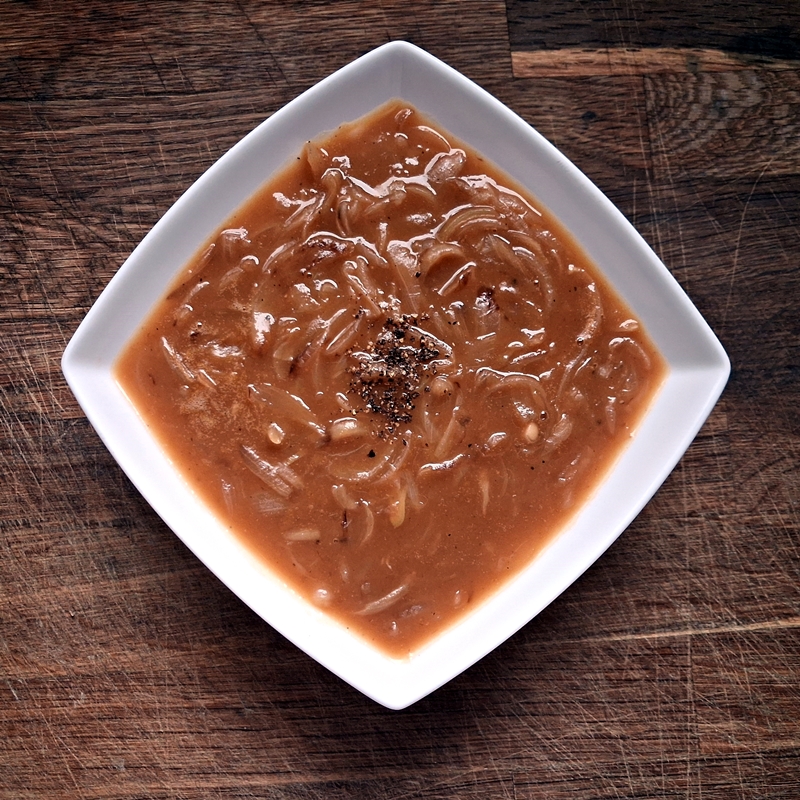
Martha Bradley's Onion Soup with Vinegar, "The British Housewife" 1758
Martha Bradley’s Onion Soup with Vinegar, “The British Housewife” 1758

600g brown onions
2tbs vegetable oil
2 level tbs cornflour
salt and pepper to taste
1 x 400g tin Heinz Lentil Soup*(See note [1] below)
1-2tbs vinegar (your choice of type)

  • Peel and slice the onions either in half moons or vertically.
  • Add the vegetable oil to a large pan and tip in the onions.
  • Stir the onions over a medium-low heat (6 of 9) until softened and browned. Again, you can take the browning to whatever degree you like, but a mid-brown will take about 30 minutes.
  • Add the cornflour and stir in. Cook for a couple of minutes.
  • Open the tin of soup and pour into a bowl. Fill the tin with water and add it to the bowl. Use a stick blender to puree the mixture smooth, then pour the blended and diluted soup into the onion mixture.
  • Stir the soup/onion mixture. It will thicken quite quickly. Decide whether the soup is thick enough or too thick for your tastes. Add another soup-tin of water to dilute it, if liked.
  • Add vinegar of your choice. This can be any kind of vinegar: white, distilled, rice, sherry, malt, wine, cider, balsamic – whatever you have to hand. I would caution you to add a teaspoon at a time and stir it in thoroughly before tasting and adding more. A relatively mild white balsamic might require the full two tablespoons, but distilled vinegar merely a teaspoon or two.
  • Heat through and serve.


[1] Heinz Lentil Soup is vegan, even though it only says Vegetarian on the tin. It contains wheat flour (presumably for thickening purposes), making it not strictly gluten-free. I have developed some sensitivity to gluten, and yet I experienced no adverse effects, which leads me to assume it is only there in trace quantities. Not everyone is the same, so in order to keep this strictly gluten-free, I recommend making your own lentil/split-pea soup. My suggestion is for using yellow split peas due to their colour (a better match to the caramelised onions than green peas – although I could be wrong. Let me know!), dried black Carlin peas or even dried white beans/peas.
Fasting Day Soup

On my other blog I recently posted my version of the classic Leek and Potato Soup, which is a firm favourite not only because of its deliciousness but also its simplicity to make. I thought it would be nice to complement it here with an equally delicious and equally simple-to-make soup from three centuries ago.

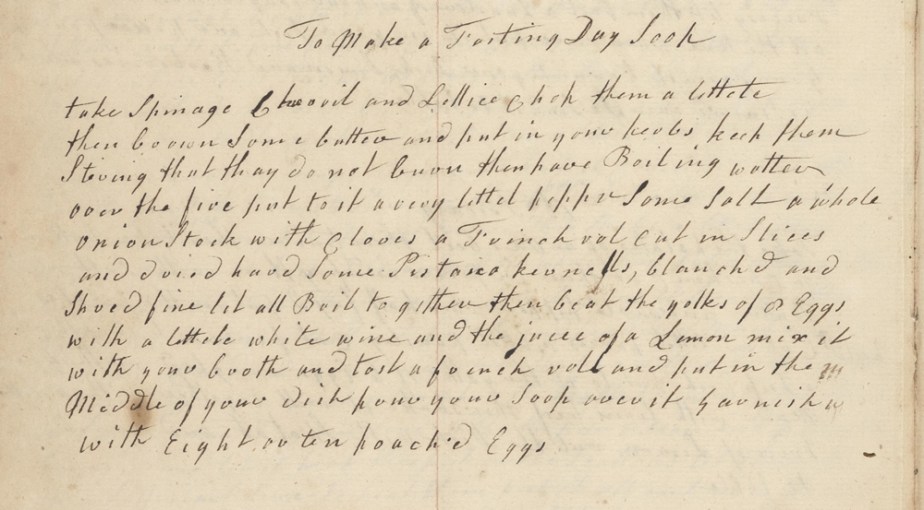
This Fasting Day Soup comes from the manuscript recipe and household book of the Coley family (MS1711), and is held in the archives at the Wellcome Library.

It would have been served on one of the many fasting (i.e. non-meat) days that used to be observed in the church calendar, and as such is eminently suitable for vegetarians and, with a little adjustment, vegans. It is so speedily made, it takes only about 30 minutes from start to finish.

In the original recipe, it is thickened through a combination of breadcrumbs and egg-yolks. For simplicity, I would recommend choosing just one of these, and to keep the soup accessible to anyone with a gluten intolerance, the yolks are the obvious choice, adding both richness and silkiness of texture. Vegans will obviously need to choose breadcrumbs, or a different thickener, or indeed no thickener at all.

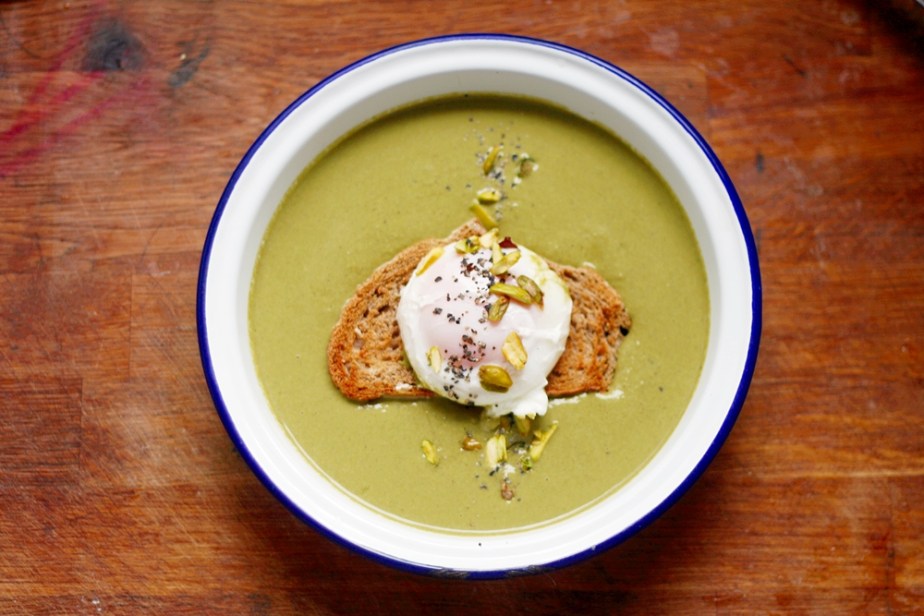
The main flavourings are of lettuce, spinach and chervil, which are unusual for a soup, but their delicate nature allows for the soup to be quickly made. As already mentioned, the soup is enriched with egg yolk and also the addition of bright green pistachios. When purréed smooth, the colour is truly glorious, something not accurately reflected in the photo, alas.

I particularly liked the serving suggestion of a toast and a poached egg, to which I have added only a scattering of chopped pistachios.

Fasting Day Soup recipe
Fasting Day Soup recipe, circa 1750 – MS.1711, Wellcome Library Collection

Fasting Day Soup

50g unsalted butter
4 gem lettuce
200g baby spinach
1 bunch fresh chervil – or 3tbs dried
0.5tsp salt
50g shelled pistachios
1 onion – peeled
8 cloves
1 litre boiling water
3 large egg yolks
60ml white wine
juice of 1 lemon

to serve: per person
1 slice of bread, toasted
1 poached egg
a few chopped pistachios
coarse-ground black pepper

  • Shred the lettuce, spinach and chervil finely.
  • Melt the butter in a pan and heat gently until browned.
  • Add the greens and stir until wilted.
  • Stick the cloves into the onion and add to the pot with the pistachios, salt and hot water.
  • Simmer for 15 minutes.
  • Take about a cup of liquid from the pan and remove the onion. Blend the soup smooth using either a liquidiser or use a stick blender.
  • Whisk the yolks with the white wine, then slowly add the cup of liquid to the yolk mixture, whisking thoroughly.
  • Pour the egg mixture into the soup and stir over a medium heat until the soup thickens. Do not let the soup boil.
  • Taste and adjust seasoning, adding some or all of the lemon juice to taste.
  • Serve with toast, a poached egg and a sprinkling of chopped pistachios.

Black Broth

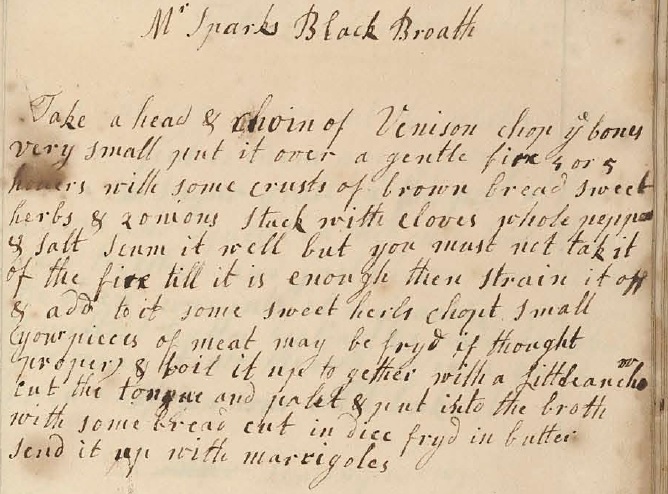
I have no idea who Mr Sparks was, but he obviously made an impression on at least one of the many ladies through whose hands one particular manuscript¹ passed, for there are no fewer than nine of his recipes included over the course of ten pages.

I have been unable to find any printed cookery book with a Mr Sparks as author, so must assume that these recipes were copied from one handwritten source into another as a result of having tasted the dishes in question. I almost have more confidence in a handwritten recipe with a name attached that is otherwise untraceable, because it hints at genuine originality: someone created it, someone ate it, that someone liked it so much, they asked for the recipe.

Original Black Broth recipe
Source: MS7851, Wellcome Library Collection

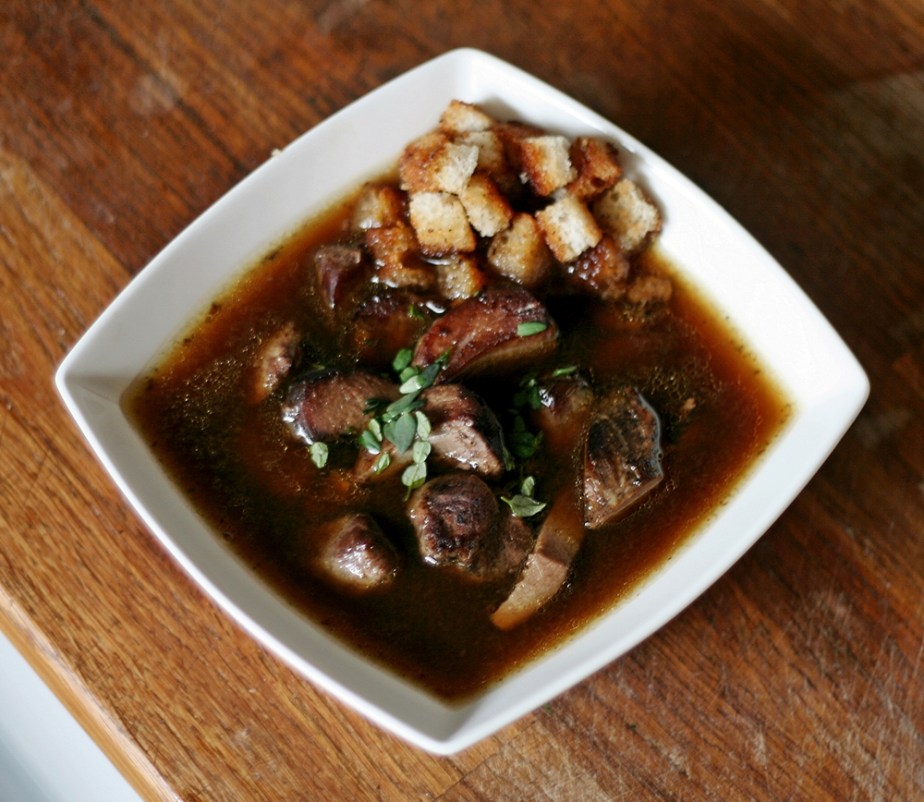
This black broth is made with venison. Venison is beautifully lean meat, which also means that it can be prone to toughness on the less prime cuts such as shoulder, or the ‘helpfully’ diced meat (that gives no hint as to which part of the animal it came from) available in packs in the supermarket.

Long, slow poaching in a flavoursome broth makes for fall-apart tender meat, perfect for a warming winter soup. This recipe uses a method gleaned from old manuscripts that is the opposite of what we do today, namely frying the meat after it has been cooked. I’ve used it with ragoos and fricassees and have been delighted with the added richness it gives both to the flavour of the meat and to the dish as a whole. The butter might seem extravagant, but it is a sumptuous
complement to the leanness of the venison.

A slow-cooker is ideal for this largely set-it-and-forget-it hearty soup, but you can also cook it on the stove top on a very low heat, or covered in the oven at 140°C/120°C fan/gas 1.

Black Broth

1kg venison shoulder, in one piece if possible, otherwise cut into large cubes.
3 slices wholemeal bread
3 onions
9 cloves
1 bunch parsley
1 bunch mixed herbs
1tbs peppercorns
1tsp salt
1.5 litres beef stock
50g unsalted butter
3-4tbs chopped, mixed herbs
gravy browning (optional)

2-3 slices of white bread, crusts removed, cut into 1cm cubes

marigold petals to garnish

  • Toast the bread as dark as possible without turning black.
  • Peel the onions and stick 3 cloves into each one.
  • Add all of the ingredients down to the stock to the slow cooker and cook on low for 8 hours.
  • Remove the meat from the cooking liquid and trim all fat, skin and connective tissue. Cut into suitably-sized pieces if not already cubed.
  • Strain the cooking liquid and discard the solids. Remove all fat from the broth, either with a separator jug or by chilling the liquid in the fridge and allowing the fat to solidify on top, then lifting off. Taste and decide if the broth requires any embellishment. You can improve the flavour of the broth, if necessary, with various flavouring sauces such as, but not limited to, mushroom ketchup, walnut ketchup, anchovy essence, Henderson’s Relish, Worcestershire Sauce, Marmite, Bovril, soy sauce.
  • Melt the butter in a large pan and add the pieces of cooked venison.
  • Braise the meat over a medium-low heat, turning often but carefully, to avoid breaking it apart further, until the meat is richly browned.
  • Return the meat to the broth and heat through. Add the chopped herbs and taste to check the seasoning. Add pepper, salt and more of the flavourings as required. If you’d like your broth darker, use a drop or two of gravy browning.
  • Add the cubed bread to the remaining butter and toss over medium heat until crisped and browned.
  • Serve sippets (for that is what you have just made) and marigold petals (if available) sprinkled into the broth.


¹ MS7851, Wellcome Library Collection. Various marks of ownership are written in the book, in a number of hands. ‘Elizabeth Browne 1697’, ‘Penelope Humphreys’, ‘Sarah Studman’, ‘D Milward’ and ‘Mary Dawes Jan 18 1791’.

Seafood Pottage

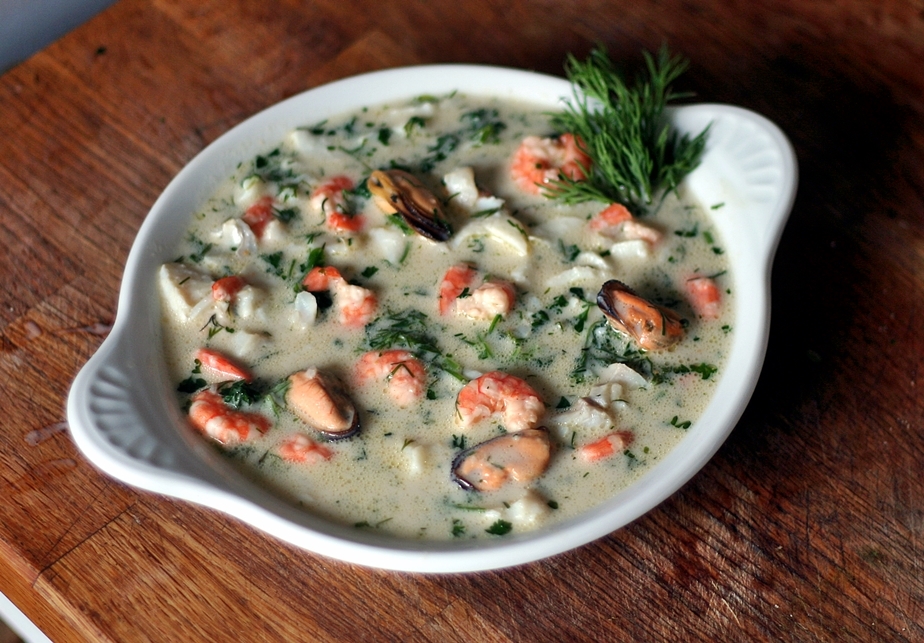
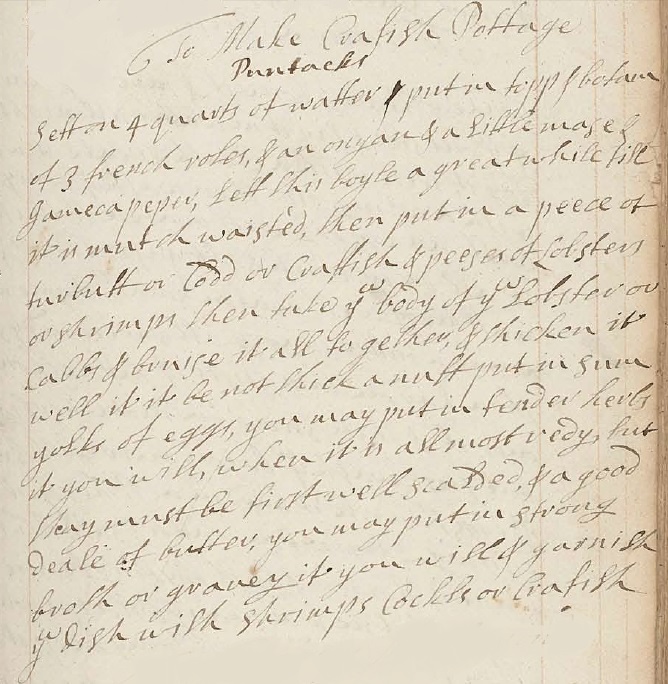
This recipe is an attempt to recreate a dish served at the legendary Pontack’s Head tavern in Abchurch Lane, which reigned supreme as London’s foremost eatery at the close of the seventeenth century.

It is listed in the Johnson Family Receipts manuscript as Crayfish Pottage, but the instructions give so much leeway in terms of ingredients, it’s more appropriate to call it a seafood pottage. It would appear that the Johnson Family, or whomever composed the recipes in the manuscript, was a great admirer of the fare at Pontack’s, as there are no fewer than four entries ascribed to that establishment. Whether they were frequent visitors or merely collected the receipts from others, it gives a glimpse into the  type of food served and enjoyed there by Pepys, Swift, Defoe and London’s society elite.

Although luxurious, with ready-prepared seafood and good quality fish stock, it is ready in mere moments.

Original Recipe
Source: MS3082, Wellcome Library Collection

Seafood Pottage

Serves 4

1 litre fish stock
250g soft white breadcrumbs
4 spring onions, finely chopped
½ tsp ground mace
½ tsp ground allspice
400g prepared crayfish tails, prawns, lobster, cockles, mussels, shrimp
1 handful fresh parsley
8 sprigs dill
2 large yolks
150ml double cream
salt and pepper to taste
Put the fish stock, breadcrumbs, onion, mace and allspice into a pan and simmer for 10 minutes
until slightly reduced.
Whisk the yolks with the cream and mix into the soup, stirring as the mixture thickens.
Add the prepared seafood and allow to warm through.
Strip the fresh herbs from the stalks, chop finely and stir into the soup.
Taste, and season with salt and pepper.
Serve with crusty bread and toast sippets.

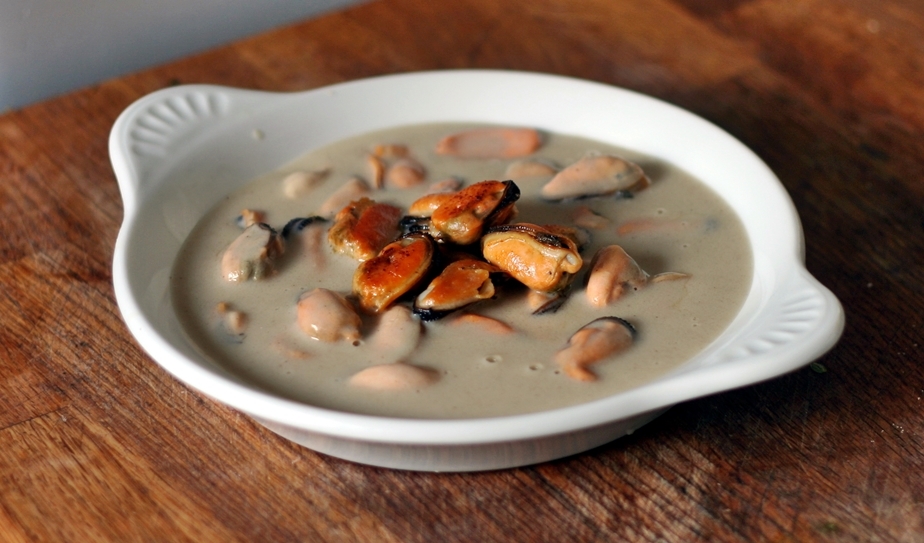
Mussel Pottage

A pottage is a thickened, substantial cross between a soup and a stew. I was drawn to this recipe by the lazy cook in me that is always looking for a simpler, easier way to achieve tasty food.

When this recipe was jotted down three hundred years ago, it would have been quite hard work to prepare: collecting the mussels, cleaning them, steaming them, straining the sand from the broth, etc.

Luckily for us, we have the luxury of buying what someone else has collected and cleaned, and also cooked. Whilst you can certainly buy fresh mussels in their shells and prepare them yourself, cooked mussels and prepared fish stock can bring this dish together in just minutes. I’ve been rather specific with the number of mussels, however you should feel free to increase this quantity with abandon, if so inclined.

Mussel Pottage

Serves 4

500ml fish stock
250ml water
4 slices of white bread, crusts removed
2 blades mace
½ tsp ground allspice
150ml cream
3 large yolks
1tbs anchovy sauce
32 cooked mussels
30g butter
2tbs chopped parsley to serve

  • Put the stock, water, bread, spices and anchovy sauce into a pan and bring to a boil.
  • Turn the heat down and allow to simmer for 10 minutes.
  • Remove from the heat, fish out the mace and purée with a stick blender.
  • Mix the cream, anchovy sauce and the yolks together and whisk into the soup.
  • Set aside 12 mussels for garnish and add the remainder to the soup. Warm gently.
  • When ready to serve, melt the butter in a pan and when hot, quickly toss the mussels set aside for garnish in the hot butter for about a minute, to heat through .
  • Serve garnished with the fried mussels and a sprinkle of chopped parsley.