Apple Bread

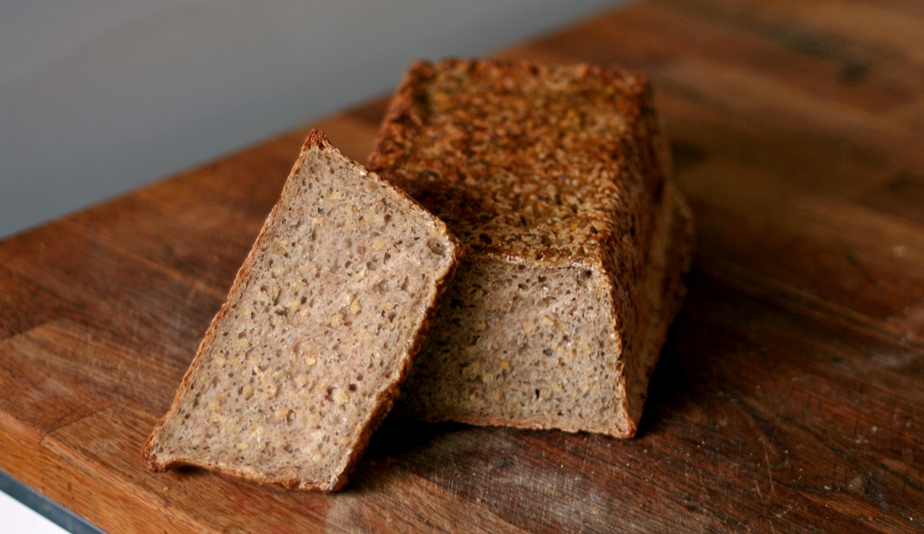
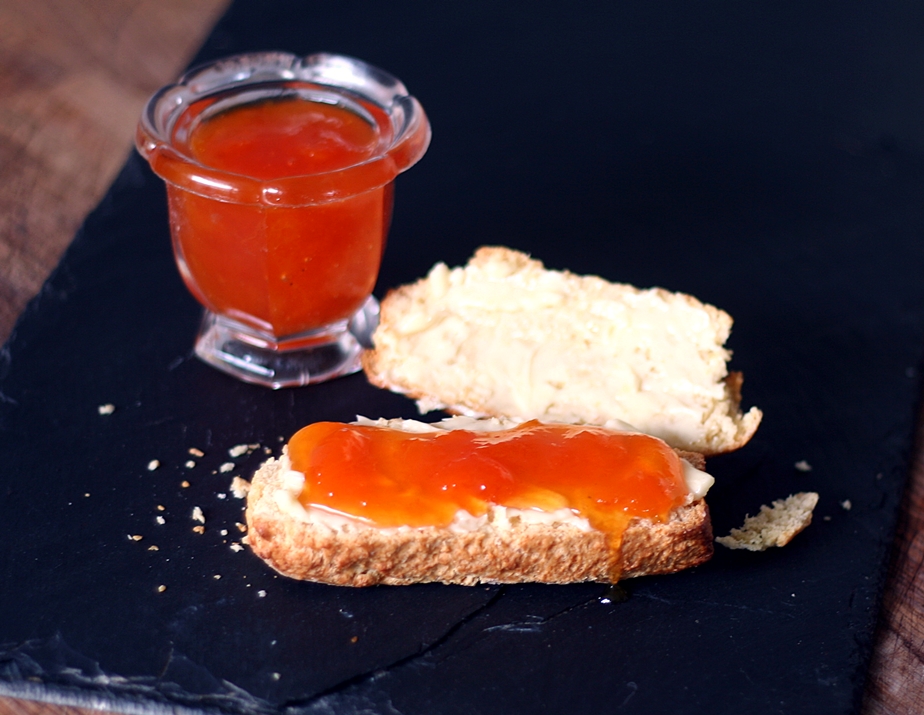
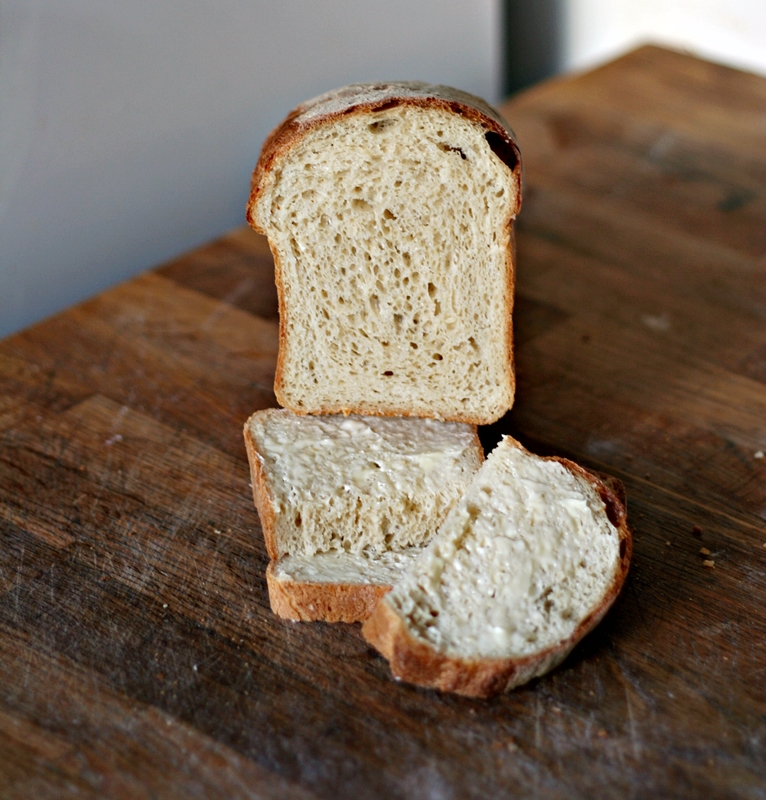
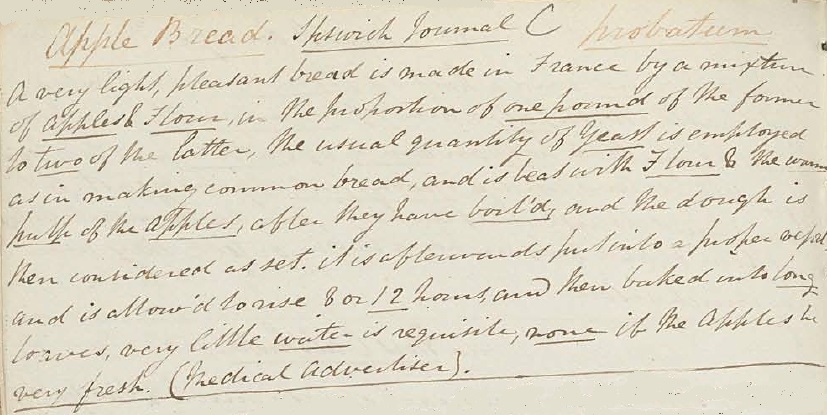
This recipe was copied from the Ipswich Journal into the manuscript book from a Norfolk household in the early 19th century. The manuscript was eventually purchased by the Wellcome Library and its contents digitised and made available online, which is where I discovered it. It was the simplicity of the recipe that appealed – just 3 ingredients: Flour, yeast, apples. I immediately mixed up a batch and was delighted with the results – a lovely open textured bread with a bite/chew similar to sourdough, but with a delicate, underlying sweetness which, when toasted, almost tasted like honey. It went brilliantly, un-buttered, with some strong cheddar and a crisp apple.

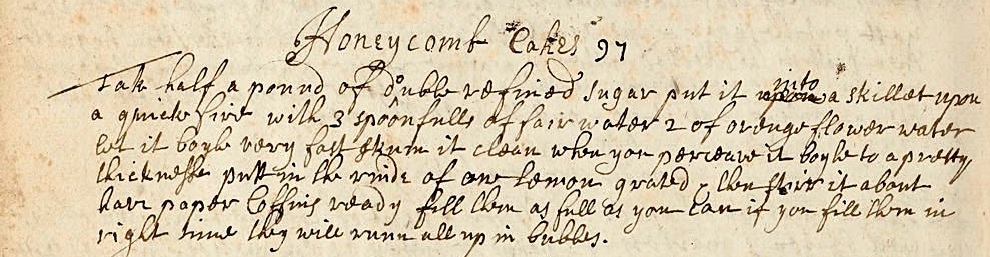
Original Recipe
Source: MS3082, Wellcome Library Collection

To continue the week of coincidences, I later found this recipe reprinted word for word in my 1950 copy of Farmhouse Fare, recipes sent in to and collected by Farmer’s Weekly magazine. Which means that someone else copied the same recipe from the Ipswich Advertiser and kept it alive in their family for 150 years to be revived in 1950. Utterly delightful!

It’s a regular in this household – I hope you enjoy it also.

Apple Bread

500g strong, white bread flour
1 sachet easy-blend yeast or 20g fresh yeast
4 Bramley Apples

  • Put the apples in a saucepan and cover with water.
  • Bring to the boil, turn down the heat and simmer for 15-20 minutes until the apples are soft and cooked. The skins might split, but as long as the water is just simmering, the apples should hold together – fast boiling water will only get you apple soup.
  • Lift the apples from the water (you might need some water later). Remove the skins and scrape the cooked apple flesh into a bowl.
  • Sieve the cooked apple to make a smooth puree. If using fresh yeast, you can crumble it into the puree and whisk until thoroughly mixed.
  • Put the flour and dry yeast into a bowl and stir to combine.
  • Add the apple puree gradually and stir to combine into a soft dough. You should need between 250-300g of apple puree. If you need more liquid, use some of the water the apples were cooked in.
  • If you have a mixer with a dough hook, work the dough for 10 minutes on the lowest speed. Otherwise, work it by hand, but be careful not to add too much flour in the kneading – you want to keep the dough nice and soft.
  • Put the dough in a bowl, cover and leave the mixture to double in size.
  • When sufficiently risen, tip the dough out of the bowl and knock back.
  • Shape into loaves and put into a 1kg greased loaf tin.
  • Cover lightly with a cloth and leave to rise for a further 30-45 minutes.
  • Preheat the oven to 200°C, 180°C Fan.
  • Bake for 30-40 minutes until golden brown and the base sounds hollow when tapped. If the bread appears cooked, but not sounding hollow, remove from the tin and return to the oven for 5-10 minutes to crisp up.
  • Cool completely on a wire rack before slicing.

Traditional Stuffing

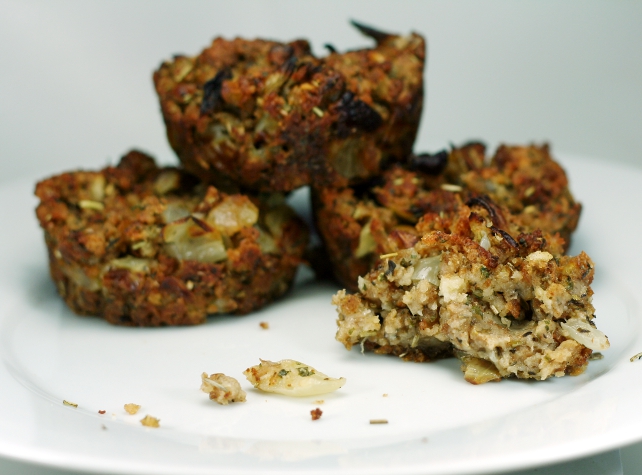
Here’s something that very often gets neglected next to the flashy stars of the Christmas meal – stuffing. If I could get just one of you this year to refrain from buying a cardboard packet and to try this instead, then I’ll be happy-clappy.

Traditional stuffing is so simple – basic, almost (breadcrumbs, onions, herbs, stock) – yet it can really add to and enhance a main meal more than ingredients costing ten times as much.

When it comes to the traditional roast meal, though – I have a problem with where it goes and how it usually gets served up.

I understand that, packed inside the poultry of your choice, it’s supposed to impart flavour, but what invariably gets dished up is a big glop of solid stodge to eat alongside some dried up old bird (and I’m not just referring to myself here).

In fact, the more I think about it, the more illogical it seems:

We calculate the cooking time for a lump of meat based on its weight, and filling it with stuffing obviously adds to that weight. If you cook a bird according to its ’empty’ weight, then the stuffing remains a thick lump of glop. If you calculate cooking time based on the ‘stuffed’ weight, by the time the stuffing is cooked through, the meat is dried out.

So I say: stuff stuffing the stuffing – cook it separately. That way both the meat and the stuffing can get cooked to perfection and everything is right in the world.

You can bake it in a big slab, or roll it into balls and let it cook around the outside of the meat. Personally, I like to cook it in a bun/ muffin tin, in individual portions: the outside gets crispy and crunchy, and the inside remains moist and juicy. Traditonally, stuffing contains suet – but I prefer to replace it with butter for two reasons: it means vegetarians can enjoy it as well (make sure you use vegetable stock), and it still tastes great when cold. Cold, congealed suet is not a good taste in anything. So today’s handy hint is: Avoid suet if you’d like to continue to enjoy your stuffing cold.

Traditional Stuffing

Makes 12 portions

2 onions
50g butter
225g breadcrumbs (4-5 slices)[1]
1 heaped tsp each of dried parsley, sage, thyme, oregano
1/2-1 tsp dried rosemary
salt & pepper
200ml stock
1 egg

  • Grease your muffin tin well.
  • Chop the onions and cook gently in the butter until softened and translucent.
  • Put all the other ingredients into a bowl.
  • Mix in the softened onions and any butter left in the pan.
  • The mixture should be moist enough to hold its shape when pressed together.
  • Spoon the mixture into the tin and press down gently. I think the crunchy bits on top are the best bits, so I use a fork to just rough up the surface.
  • Bake at 200°C, 180°C Fan for 45 minutes.

[1] Stale/dry breadcrumbs are fine – use a little extra stock if you think the mix is too dry.

Fat-free Mincemeat

This recipe is adapted from Hannah Glasse’s 1747 recipe for Mince Pies for Lent.

Nowadays, we traditionally make mincemeat far in advance of the festive season, so that it can mature in flavour. Both the sugar and the suet act as preservative and so when Christmas rolls around, you’ve got a jar of deliciously spicy sweetmeat and not a fizzing, fermenting jar of goo.

The downside of course is having to be organised enough to remember to make it far enough in advance, making enough for those unexpected baking moments (such as surprise visitors, or a last minute school bake sale contribution), and not making too much so you have storage problems. Quite apart from it not being suitable for either vegetarians or vegans.

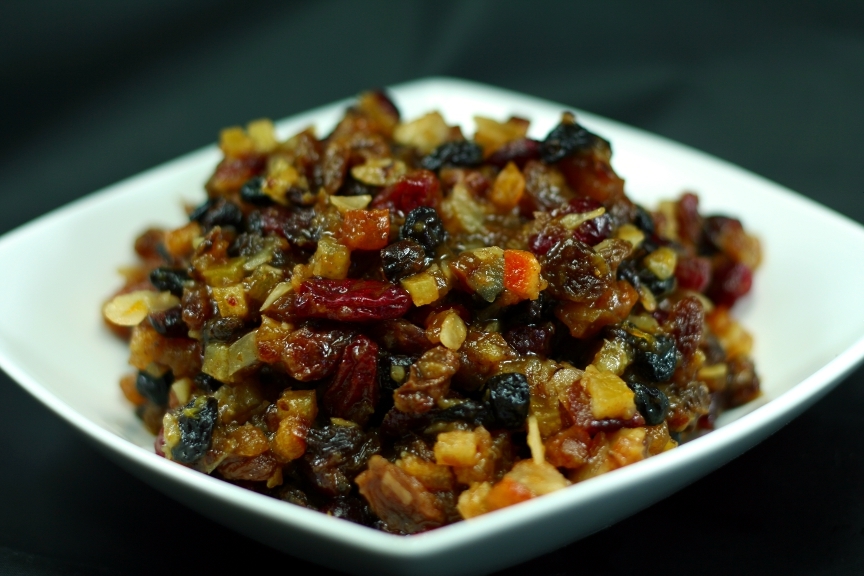
Here, hopefully, is a solution. No suet means it’s vegetarian and vegan. No added sugar means its more suited to people needing to control their sugar intake, for whatever reason – although there IS sugar in the candied peel, so this isn’t quite a sugar-free recipe. Best of all it doesn’t need maturing, it’s literally mix and go.

The mixture is gently warmed and the fruits absorb the sherry, brandy and fruit juices. The finely-chopped dates break down and bind everything together. The result is packed full of flavour and with a much cleaner and fresher taste. This mix makes just under 500g of ready-to-use mincemeat.

NB This will keep for up to a week in the fridge, but no longer. Cooked as mince pies and frozen – up to 3 months.

Fat-free Mincemeat

50g currants
50g raisins – crimson raisins look pretty
50g sultanas
50g dates – finely chopped
25g candied orange peel [1]
25g candied lemon peel [1]
25g candied grapefruit peel [1]
35g dried cranberries
25g flaked almonds – chopped
2tbs sherry
1tbs brandy
juice & grated rind of an orange
pinch of ground ginger
a grating of nutmeg,
pinch of ground cinnamon
pinch of mixed spice
pinch of ground cloves

60-100ml apple juice

  • Put the dried fruits into a small saucepan.
  • Cut the candied peel into small pieces with scissors and add to the pan with the spices. NB If you’re using your home-made candied peel that has been stored in syrup, then there’s no need to soften it in the saucepan – just stir it in with the nuts once the fruit has plumped.
  • Add the orange juice and zest, brandy, sherry and 60ml of apple juice.
  • Stir gently to combine and set pan over the lowest possible heat.
  • Cover and let the mixture stew gently until all the liquid has been absorbed.
  • If the fruit isn’t as plumped and juicy as you would like, add a little more apple juice.
  • The mixture should be moist, but with no liquid visible in the bottom
  • When you’re happy with the consistency, stir through the chopped, flaked almonds.

[1] If you’ve made some candied peel yourself, then these are pretty straightforward. If not, then use 75g of what you have/can get. Buy whole peel pieces if possible – they retain their flavour much better than chopped – and cut them just before use.


Candied Peel

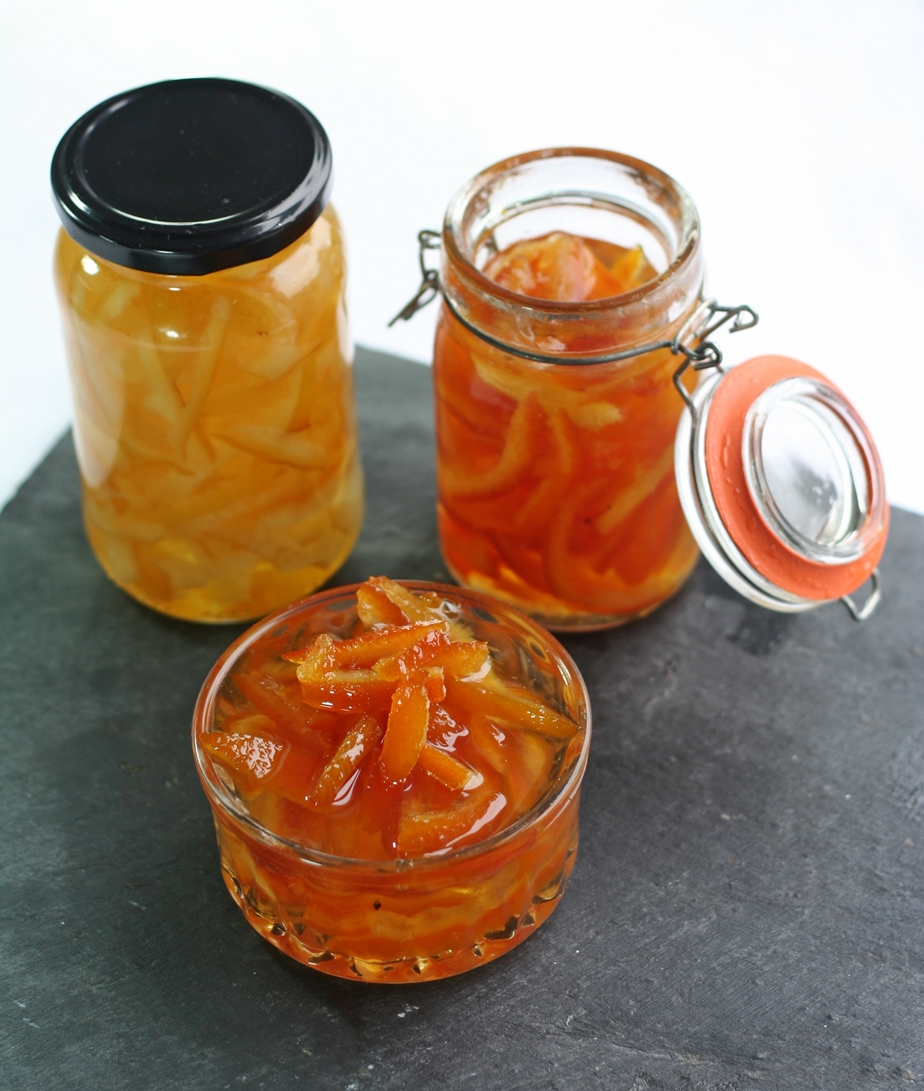
A forgotten art in British preserving is home-made candied peel. ‘But I can buy that!’ you shriek. Yes, I know. But if you’ve ever tasted fresh candied peel made with nothing more than sugar, peel and water – you’d understand. I used to hate store-bought candied peel, and avoided anything that included it, but home-made just blows it out of the water. The explosion of citrus flavour is amazing. The beauty of making it yourself is that you can candy any citrus peel you like, and not be limited to just orange and lemon. So here, for anyone who fancies having a go, is how to do it, gleaned from 17th century manuscript recipe books. It’s not difficult or complicated, but it is a bit repetitive. But make a decent amount at one time, and you won’t have to repeat it for a good few months. Oh – and it’ll make your house smell amazing.

How To Candy Peel

Citrus fruit of choice
Sugar
Water

  • Remove the skin from the fruit. Slice off the top and bottom (to make a flat surface to stand the fruit on) and then cut the peel from the sides of the fruit by slicing downwards. Keep as much of the pith as possible.
  • Scrape any flesh and membranes from the fruit rind. Don’t worry if you can’t get it all, it’ll become easier after the peel has been boiled. Leave the pith intact – it’s the pith absorbing the sugar that keeps the rind juicy and helps prevent it becoming hard.
  • Place the rind into a pan large enough to hold it plus an inch of water. Cover with clean water.
  • Bring water to a boil and boil for a minute or two then drain.
  • Rinse the peel thoroughly, and also scrub the sides of the saucepan thoroughly as well. Why? The bitterness of the peel comes from the citrus oil in the skin of the fruit. Bringing the water to the boil helps release this oil, but it then floats on the top of the water, coats the rind when the water is poured off, and also congeals onto the sides of the pan. If you don’t rinse the peel and scrub the pan well, you just end up basically boiling the peel in the bitter citrus oil, which kinda defeats the whole purpose of repeated boilings.
  • Repeat until the peels are semi translucent and very tender. This will greatly depend on the type and condition of the fruit itself, but as a rough guide, lemons = 4 times, oranges = 5 times, grapefruit = 6 times.
  • Leave in a colander to drain well.
  • While the peel is draining, make some sugar syrup: mix 1 part water to 2 parts sugar. 500ml water to 1kg sugar is straightforward, but might leave you with a lot of leftovers, if you’re not making much peel. Not very helpful I’m afraid, but to my mind, it is better to have a little extra syrup, than have to make more once you’ve added the peels because there isn’t enough. I usually guesstimate by eye – and use non-standard measures (i.e. large mug or jug) and just measure by volume.
  • Heat the sugar and water slowly until the sugar is dissolved, then bring to a boil and continue to heat until the mixture is clear.
  • Squeeze excess water from the peels by pressing them between several layers of kitchen roll – or I find that using a clean hand towel works best – they’re surprisingly soggy peels!
  • Scrape off any remaining flesh and membranes using the side of a teaspoon and cut the peels into 5mm strips.
  • Once the syrup is clear, drop in the drained peel. Make sure that there is enough syrup to allow all of the rinds to be submerged.
  • Bring syrup and rind to a boil then cover and put onto the lowest heat. Let it stew gently until the rinds become translucent and jewel-like (almost like coloured glass). Stir occasionally. This takes about an hour. Don’t be tempted to turn up the heat to speed things along, it’ll just harden the peel.
  • Store the candied peel in screw-top jars, making sure it’s completely covered by the syrup. This will keep it moist until required, and the high sugar content of the syrup will act as a preservative. When you need to use it in a recipe, rinse off the excess syrup and pat dry with a paper towel.
  • Any excess syrup can be bottled and saved to drizzle over cakes or desserts. It will have a wonderful flavour.

Coconut Gingerbread Cakes

Gingerbread is such a classic teatime treat – and I’m a huge fan of classics – it’s just that I don’t usually feel very inspired when I hear the word ‘gingerbread’. I think of a treacle-dark cake, rich, sticky and aromatic with ginger – sounds delicious, no? – but the main thing that springs to mind is something akin to a brick slab.

It probably goes back to the large, family bakes of my childhood, where the cake-of-the-week was kept wrapped in foil in a tin and slowly chiseled away at during the week until it was all gone. There wouldn’t be another cake until this cake had been eaten, and it used to lurk in the tin in all its brickiness, standing between me and any other baked treat. The chances were high that it would eventually be replaced with something equally heavy and fruity – but that new cake’s attraction would be, initially at any rate, mostly due to the fact that it wasn’t the gingerbread.

The image of heaviness and brick-like shape has lurked in my culinary memory ever since – which is a shame because what it SHOULD bring to mind is crisp winter nights, spiciness and fireworks, treacle-richness and bonfires. So I thought I should try and rehabilitate it, and bring it up to date. Ironically, I achieved this by referring to a recipe over 165 years old, from Miss Eliza Acton.

Heroines of Cooking: Elizabeth ‘Eliza’ Acton (1799 – 1859)

Originally a poet, Eliza Acton is considered by many to be the first to write a cookery book as we would recognise it today. Her Modern Cookery for Private Families (1845) was the first to separate a list of ingredients from the methodology, and was aimed specifically at small households. Additionally, the author’s observations on potential problems and recommendations for subtle variations were included, illustrating Eliza’s personal experience with the recipes, unlike many of her contemporaries and cookery authors that were to follow. It was an immediate success and remained in print for almost 60 years. She was to write only one other book The English Bread Book (1857), in which her strong views against the adulteration and processing of food would still be being echoed by Doris Grant almost a century later.

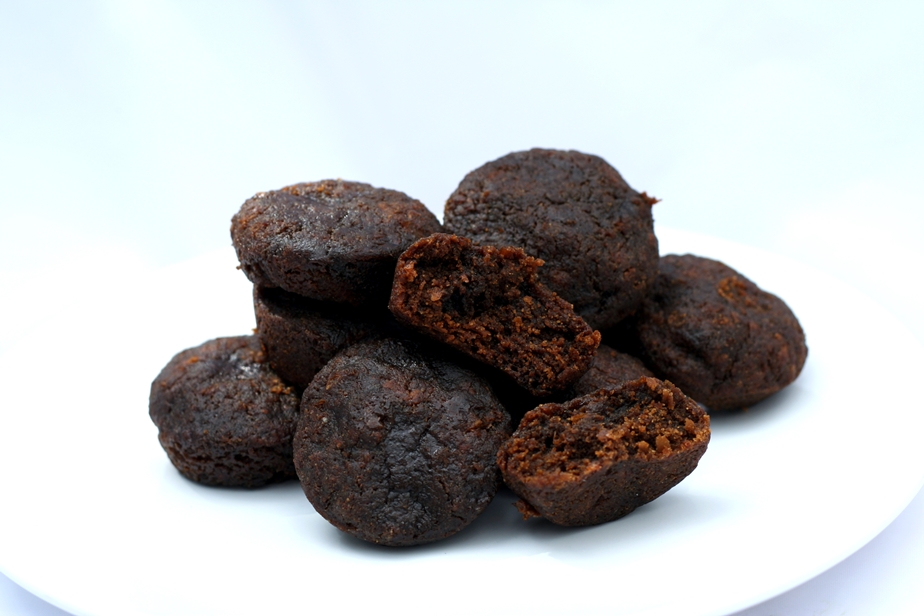
After several experimental baking batches, here is Eliza’s recipe for Coconut Gingerbread Cakes, scaled down to a manageable quantity. Baked in a mini muffin tin, the recipe makes approximately 24 bite -sized cakes with all the dark richness of traditional gingerbread, with the added coconut giving both a lighter texture and more complex flavour. Fresh coconut is a little time consuming to prepare, but very much worth the effort.

Coconut Gingerbread Cakes

Makes 24

75g plain flour
75g ground rice
2 tsp ground ginger
grated rind of 1 lemon
110g treacle
40g butter
40g dark brown soft sugar
80g fresh grated coconut

  • Mix flour, ground rice, ginger and lemon rind in a bowl and set aside.
  • Put the treacle, sugar and butter into a saucepan and heat gently until the butter is melted and the sugar dissolved. Remove from the heat.
  • Add the dry ingredients to the warm treacle mixture and stir to combined. Stir in the coconut and then set mixture aside to cool.
  • Heat oven to 120°C, 100°C Fan.
  • Divide cooled mixture into 20g pieces, roll into a ball and drop into greased mini-muffin cups.
  • Bake for 30 minutes. Cool on a wire rack.
  • Keeps very well in an airtight box/tin.

Banoffi Pie

I’d just like to take a moment to discuss a modern British classic pudding: Banoffi Pie.

Yes, Banoffi. Not Banoffee.

That’s just one of my little niggles regarding this dessert that have ultimately led to this post.

Done properly, to the original recipe, it is a classic, sophisticated and delicious dessert, worthy of a dinner party.

But it rarely IS done properly and, over the years, I’ve seen it churned out on television in worse and worse variations, until this past week when I saw an absolute shocker and so I was propelled into making this post just to set the record straight if nothing else.

I’m convinced that the fatty, over-sweetened mess that Banoffi Pie has evolved into, puts off a lot of people, which is a shame. Hopefully, if they can be persuaded to try it as it was originally conceived, they might just become fans.

I’ve mentioned in a previous post how Banoffi Pie came into being, and one of the co-creators has also published online the back-story as well as his original recipe.

Even though I am a fan of the original recipe, I’m going to change it a little.

I know, I know……I realise I’ve just spent three paragraphs banging on about people changing recipes, but in my head this is ALLOWED – because in the past I have actually eaten original recipe Banoffi Pie. Over the years I’ve developed a personal rule of first trying a recipe in it’s original form, out of respect to the original author. That done, you can tweak it how you like, but make it their way first. I’ve lost count of the times I’ve been pleasantly surprised with the results.

Once you’ve tried the original recipe too, you can pop back and we’ll carry on.

Back already? Excellent.

Before we begin, lets just have a quick whizz around the components, which gives me the opportunity to bang on about those too:

Pastry Base: Yes, contrary to popular belief, the original recipe called for a sweet, shortcrust pastry, which is actually ideal for this dessert. We’re going to draw a discrete veil over the crushed biscuit-and-butter and (my personal bête-noir) chocolate-biscuit-and-melted-chocolate bases, which push this dessert into being sickly. The filling is so rich and sweet, having the dry, crumbly pastry is a perfect foil. I actually have a copy of the original recipe published in the second book of recipes from the restaurant where it originated ( “The Deeper Secrets of The Hungry Monk” ) which just specified ‘shortcrust pastry’. This I interpreted as carte blanche to use whatever recipe I liked. What I have for you here is the original sweet cornflour pastry which I adapted to a savoury version for the Cheese and Potato Pies. It has that extra crispness that a regular all-butter pastry lacks.

Filling: I’ve seen some people get very precious about the caramel “I make it all by hand!” they cry, ladling in the butter and cream. However, these caramels tend to be rather runny, and to be blunt, the filling can be doing without all that fat. The original is much simpler and is obtained by simmering unopened tins of sweetened, condensed milk for an extended length of time. This can be done in a variety of ways, but my method of choice is in the slow cooker because you can leave it unattended, and it won’t boil dry. Cover the tins with water, set it on Low and leave it for 8 hours. You can simmer them longer, up to 12 hours, and the caramel will gradually become darker the longer it is left in the water. The caramel in the picture was taken out of the slow cooker after 8 hours. In the UK, the most well-known producer of milk products (Carnation) have recently started selling tins of caramel. These are great if you need a dessert at short notice, but I find the caramel isn’t quite as firm as when you make it yourself, as well as being, to my taste at least, a great deal sweeter. If convenience is what you’re after, I suggest simmering more than one tin at a time and keeping the home-made spares in the cupboard.

Banana: This addition/improvement transformed Blum’s Coffee Toffee Pie into Banoffi Pie. The banana is laid on top of the caramel and underneath the cream, NOT on the pastry base. This would make spreading the caramel very difficult, as the sliced banana would stick to the caramel and slide about. And no, they don’t go on top of the cream either, because they’ll just turn brown and become very off-putting. And if you DO put them on top of the cream and then throw chocolate on top to disguise the browning, you’re fooling no-one. One variation that meets with Ian Dowding’s approval is to replace the banana with a thickened apple puree, making an Appleoffi Pie. Made with sharp, cooking apples such as Bramleys, I can just imagine the delicious contrast in both flavour and texture, although I’d probably leave out the coffee from the whipped cream for this version.

Coffee Cream:  Yes, coffee cream – whipped cream flavoured with coffee. So often this is replaced with plain whipped cream, or even vanilla flavoured cream, to the dessert’s great detriment. And, contrary to Mr Dowding’s original, in my opinion the coffee cream should be unsweetened and strong to the point of bitterness. Using espresso coffee powder turns it into a fantastic counterpoint to all the sweetness in the caramel and bananas, as well as lifting the dessert into dinner-party status. Coffee can do that. It’s almost as if it’s status as a grown-up flavour, confers adult status on everything it touches.

Chocolate for sprinkling/garnish: Whoa, whoa, whoa there, Nellie!? Whaddya doin’? You can’t go introducing a new flavour and shoving it on top of the pie just because you feel like it! Coffee, banana and caramel flavours are plenty busy enough, thankyousoverymuch! If you must sprinkle anything, a light dusting of espresso coffee powder is all the garnish it needs.

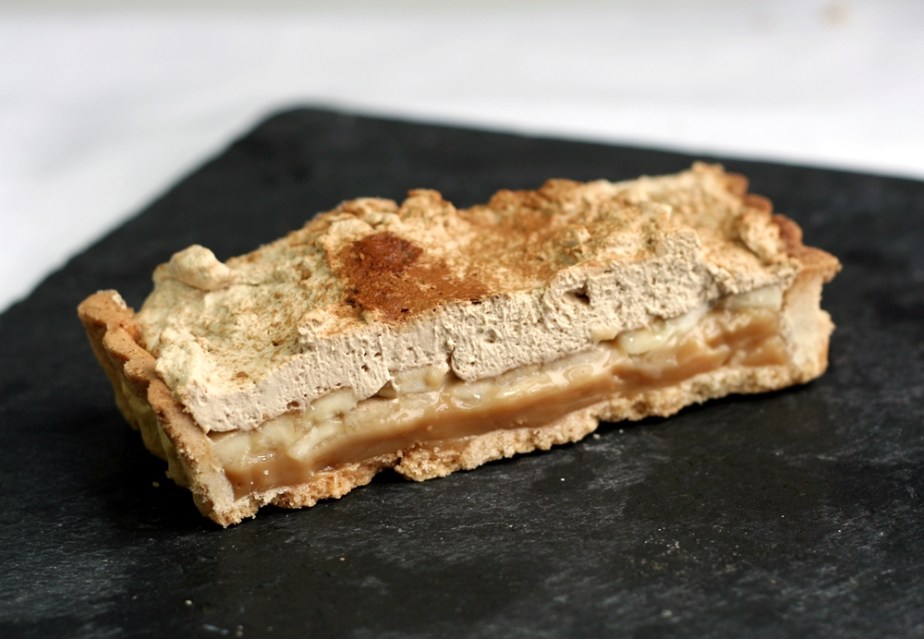
Baking Tin: You can make this dessert in any size and shape tin you like. A 20cm round tin, preferably with a loose bottom to help ease out the cooked pastry case, is traditional, but this time I used my loose-bottom rectangular flan tin (13cm x 35cm), which means the finished dessert can be neatly cut straight across in elegant, finger slices and the different layers are clean and clearly visible.

The Original(ish) Banoffi Pie

Pastry
60g cornflour
225g plain flour
140g butter
1 large egg
85g icing sugar
ice-cold water

  • Put all the ingredients into the bowl of a food processor and blitz until the mixture resembles breadcrumbs.
  • Gradually add the water, one tablespoon at a time, until the mixture comes together in a ball.
  • Knead smooth, then roll out thinly.
  • Line your chosen tart tin, easing the pastry into the corners/sides.
  • Leave the excess pastry overhanging the sides and chill in the fridge for 1 hour.
  • Preheat the oven to 200°C, 180°C Fan.
  • Remove the tin from the fridge and, now that the pastry has relaxed, trim the excess from the sides.
  • Prick the bottom of the tart tin with a fork.
  • Line the tin with baking parchment and weigh it down with baking beads/rice.
  • Bake for 12 minutes, then remove from the oven and take out the parchment and beans.
  • If the edges are already brown, cover them closely with foil and return the tart to the oven until fully baked (10-15 minutes).
  • Set aside to cool.

Filling
1 tin sweetened condensed milk turned to caramel, cooled

Unless you’re making a huge (30cm+) tart, then one tin is all you’ll need. Warmed carefully, it’ll spread a long way and a 1-2cm layer is rich enough for a treat without becoming sickly.

  • Open the cooled tin and tip into a small saucepan.
  • Warm the caramel gently until it becomes smooth and pourable.
  • Pour the warm caramel into the cooked pastry tart shell and spread it evenly over the base.
  • Lightly grease some clingfilm with butter and lay it closely over the caramel.
  • Chill until required.

To Assemble
300ml double cream
1tsp instant espresso powder + extra to sprinkle
2-3 bananas

  • Whisk the cream and coffee powder together until firm peaks.
  • Slice the bananas and lay a thin layer over the caramel.
  • Cover the bananas with the coffee cream. I like to just spoon it over, and keep it light and billowy, but if you prefer something more formal, you can pipe it. What you must do, is ensure that all the banana slices are completely covered. Just like the meringue on a lemon meringue pie, make sure the cream goes right to the edge of the tart, touching the edge of the pastry. Any banana left uncovered with start to discolour very quickly, but covered with the cream they remain delicately pale.
  • Dust the top lightly with espresso powder and chill until required.

Muffins

Bread muffins are quintessentially and traditionally British and have a very particular appearance – golden brown on their flat tops and bottoms, with a broad band of pale softness around the middle.  Recipes can be found at least as far as the mid 18th century, but there seems to be a lack of anything older. I suspect the reason for this is that muffins were traditionally made by bakers as opposed to the home cook, and therefore had no place in domestic cookery books. So – a professional baker might well have been the original source of Hannah Glasse’s muffin recipe.

Heroines of Cookery: Hannah Glasse (1708 – 1770)

Hannah Glasse is best known for her cookbook, The Art of Cookery Made Plain and Easy, first published in 1747 and constantly in print for almost 100 years – although her authorship was allegedly only definitively established in the 1930s. She wrote in a very no-nonsense manner, advocated the use of fresh, seasonal, inexpensive ingredients and made her opinions regarding pretentious and wasteful foreign cooks known in no uncertain terms:

“So much is the blind folly of this age, that they would rather be imposed on by a French booby than give encouragement to a good English cook.”

The Art of Cookery covers all aspects of food preparation in a straightforward and concise manner. Impressively, Hannah also includes chapters on preserving meats, bottling and pickling, tips on how to buy fresh produce at market and also includes a seasonal calendar of fruits and vegetables. Free digital copies of her famous book are available here and here.

I think Hannah must have been quite a character. Her recipe is entitled “To make muffins and oat cakes” – but in enthusing about the proper way to make muffins, she wanders off at a tangent and gets so distracted, that the oat cakes are never mentioned again. She even goes so far as to include instructions for building the cooking surface upon which you are supposed to do your muffin cooking. On one point, however, she is most clear: knives should not be used on muffins. Toast them whole and then tear them apart by hand, and be rewarded with pillowy-soft, honeycombed centre, but…

“…don’t touch them with a knife, either to spread or cut them open, if you do they will be as heavy as lead…”


Muffins

Makes 12-15 small muffins

420ml whole milk
50g butter
1 tsp salt
2 tbs granulated sugar
1 large egg
3 tbs potato flour [1]
400g strong white bread flour
1 sachet instant yeast
rice flour, for shaping (optional)[2]
semolina, for cooking (optional)

  • Cut the butter into small dice and add to the milk. Heat gently (microwave/saucepan) until the milk is warmed and the butter melted.
  • Put all ingredients except the semolina and the rice flour in the bowl of your stand mixer and knead slowly to combine. Continue kneading for 5 minutes.
  • If the dough is looking stretchy and shiny, then cover and leave to rise for 1 hour. If not, add more(3-4 tbs) flour and knead for another 5 minutes. Cover and leave to rise.
  • Tip out the dough and knock it back (i.e. pat it down to deflate).
  • Divide dough into 80-100g pieces and shape the dough into balls.
  • Heat your pan over a low heat. Do not add any grease or oil.
  •  When the whole pan is of an even heat, scatter semolina into the bottom of the pan if liked.
  • Use a fish slice/spatula to move the muffins into the pan turning them over as you do so.
  • Cook gently until the undersides are nicely browned – between 5-8 minutes – then use your spatula to turn over the muffins.
  • Cook the second side for a slightly shorter time. If you’ve made a test muffin, you can pull it apart to check the insides are fully cooked.
  • The semolina helps keep the muffins from sticking to the pan, but it does get very browned, so wipe the pan clean after every batch and add fresh semolina before the next batch.

[1] Available at health food stores, Holland & Barrett, Oriental food shops.
[2] I got this tip from Elizabeth David’s book English Bread and Yeast Cookery. The rice flour dries the surface of the muffins without making them sticky or leaving clumps, so the excess is easy to brush off. If unavailable, substitute with cornflour or just use regular flour.

Grant Loaf

If you’re going to bake your own bread, you could do worse than start with this one – it doesn’t require kneading, it only needs a very short, single rise, and you can have a batch of three loaves cooling on a rack in an hour and a half! The recipe has been around for almost 70 years – read on to find out more about it and its creator!

Heroines of Cooking: Doris Grant (1905-2003)

Tireless campaigner for healthy eating and the promotion of unadulterated foods, Doris Grant was a champion of fresh, natural ingredients and the minimal processing of food, and she maintained a running battle with major food companies in the UK for more than 60 years.

Almost crippled with arthritis in her youth, Doris found relief from her symptoms by following the food-combining diet of Dr. William Hay. With her health restored, Dr. Hay encouraged Doris to write her own book for the UK market, and thus began her publishing career. Alongside her many best-selling books, she is immortalised as the creator of The Grant Loaf.

Originally, The Grant Loaf was a mistake. While teaching herself to bake in the 1930s, it was several months before Doris realised she had not been kneading her bread dough.  It didn’t seem to have made much of a difference to the loaves, and was a great deal easier and quicker than the traditional method, so she included her ‘mistake’ in her 1944 book Your Daily Bread. Here, with only a few adjustments, is that original recipe.

The dough ends up a lot wetter than traditional dough – so wet in fact, that kneading would be impossible if it weren’t already unnecessary. The bread itself is firm without being brick-like, and has a wonderfully nutty flavour as well as making great toast. I bake it in our house as our everyday bread, including sandwiches and packed lunches.

This recipe makes three loaves for two reasons:

  • It uses a whole bag of flour at once – no messy half-bags to clutter up your cupboards and spill over everything.
  • It makes sense, as well as efficient use of the oven, to cook more than one loaf at a time and the additional loaves can easily be frozen for use later.

The Grant Loaf

1.5 kg (1 bag) stone-ground wholemeal bread flour
2 sachets rapid-rise yeast
1 litre + 300ml warm water
25g salt
25g muscovado sugar (or any brown sugar, or honey)

  • Put the flour into a large bowl and place in a gentle oven to warm. It doesn’t much matter if you don’t warm it, but it does speed up the rising.
  • Put the sugar and salt into a large jug and add half the water. Stir to dissolve.
  • Grease the bread tins using cooking spray or oil.
  • Mix the yeast into the warmed flour and pour in the sugar/salt mixture, then add the rest of the water.
  • Stir until the flour is fully mixed in. This is probably easiest to do using your hands, but using a utensil works well, also. Personally, I use a large two-pronged wooden fork from an otherwise unused set of salad servers, because the prongs move easily through the wet mix. I regularly manage to whip up a batch of this bread without touching the mix with my hands at all! Remember: you’re only mixing, not kneading – so as soon as all the flour is incorporated, stop. The dough will be much more moist than traditional bread dough – more like a fruit cake mix or thick, badly-made porridge.
  • Spoon the dough into the bread tins, making sure it’s evenly divided – each tin should be approximately ¾ full. If you want to measure by weight, it’s approximately 950g per tin.
  • Set the tins on a baking sheet somewhere warm to rise by about 1/3, until the dough is just above the top of the tins and nicely rounded. It should take no more than 30 minutes. If, like me, you’re lucky enough to have a double oven, then put the baking sheet onto the shelf in the top oven while the main oven heats up. NB Don’t put the tins onto the floor of the top oven – even if they’re on a baking sheet – it will get too hot. Otherwise, anywhere warm and draft-free will do.
  • Preheat the oven to 200C, 180C Fan.
  • Bake for 30 minutes, then turn the baking sheet 180° and bake for a further 20 minutes for a total of 50 minutes.
  • Remove the tins from the oven and tip out the bread. Arrange the loaves on a wire rack.
  • Put the loaves back into the oven for 5 minutes to crisp up the crust.
  • Cool on the wire rack.

Variations: This method can also be used with brown bread flour, for a slightly lighter loaf.

Roast Haunch of Venison

Mary Perrot, 1695

A haunch of venison is a glorious thing and very evocative of grand dining halls and long trestle tables of feasting lords and ladies. It’s also very straightforward to roast – you could simply follow the cooking times and temperatures for beef – but it is important to bear in mind that, venison is extremely lean in comparison, which means it can be prone to drying out if the heat is too harsh.

A great many of the old manuscript recipes I’ve read opt to slow-cook venison in wine and butter under a coarse paste of flour and water to keep all the moisture sealed within. However, I’ve selected this recipe because not only is it very straightforward, but you can also choose how elaborate you wish to make it: a simple, unadorned roast or embellished with a savoury herb stuffing.

I liked the two unusual details which address the potential problem of drying out your joint: brushing with beaten egg-white and then basting with cream. The egg-white seals the joint as it cooks and the cream contains just enough richness to keep the outsides moist, and then caramelise into a richly-flavoured sauce.

Roast Haunch of Venison

1 boneless haunch of venison
1 large egg-white
1 litre double cream

Stuffing
1 bunch mixed herbs – parsley, rosemary, thyme, winter savoury, pennyroyal, etc.
100g soft white breadcrumbs
50g fresh suet
5 anchovy fillets, rinsed and chopped finely
3 large yolks
salt
pepper

  • Mix the ingredients for the stuffing into a smooth paste and season with salt and pepper.
  • Unroll your venison and spread the stuffing mixture over the inside of the meat.
  • Re-roll your joint and tie firmly with butcher’ twine.
  • Weigh your stuffed joint and calculate the cooking time. If you like your venison medium-rare, then just 10 minutes per 500g is sufficient. For medium-well, you should calculate at 15 minutes for every 500g. For something inbetween, select something between these two times.
  • Whisk the egg-white and paint over the outside of the joint, making sure the whole surface is covered. The egg-white will cook quickly and form a protective seal, thereby helping the joint to retain moisture.
  • Put your joint onto a rack in a roasting tin. If you don’t have a meat rack, slice 2 or 3 onions in half and arrange, cut side down, in the middle of the tin. Arrange your joint on top of the onions.
  • Put your roasting tin into the oven and turn the heat to 200°C/180°C Fan, Gas Mark 6.
  • After 15 minutes, open the oven door and pour over the cream. Baste the joint every 15 minutes until done. If you have a thermometer, the internal temperature should range from 52°C (rare) to 60°C(medium).
  • Remove the joint and wrap in foil to rest for 20 minutes. Add a couple of tea towels or a hand towel for etra insulation if you think it might take longer to bring all the elements of your meal together.
  • Remove the onions, if using, and season the cream and meat juices left in the pan to make the sauce.

Ivory Cream

A delicate cream of fresh bananas and orange set in a traditional mould for a classic and timeless pudding.

This recipe was found in a book published in the town where I live, back in the 1930s. I was drawn to the unusual combination of fruits and was curious how these two strong flavours would work together. The answer is ‘very well’ and the delicate colour of the set dessert is a genuinely attractive pale ivory. If you have any vintage glass or ceramic jelly moulds, then this is the ideal dessert to show them off.

Ivory Cream

4 leaves gelatine
5 large bananas
5tsp icing sugar
250ml double cream
juice and zest of 1 orange
150ml fresh squeezed orange juice
150ml water

To serve: whipped cream and orange zest curls

  • Soak the gelatine in water.
  • Mix the orange juice and water and warm over a low heat.
  • Add the bloomed gelatine and stir until melted. Set aside to cool.
  • Peel and mash the bananas thoroughly. Add the orange zest and juice.
  • Whisk the cream until thick, then fold in the bananas.
  • When the gelatine mixture has cooled, whisk into the banana cream mixture.
  • Rinse your jelly moulds with cold water, leaving them wet inside, then pour in the mixture.
  • Cover lightly with plastic film and chill in the fridge until set.
  • To turn out: Dip the moulds in hot water for a few seconds, to melt the surface gelatine, then turn out onto your serving dish.
  • Serve with whipped cream and orange curls to garnish.