Plum Cannons

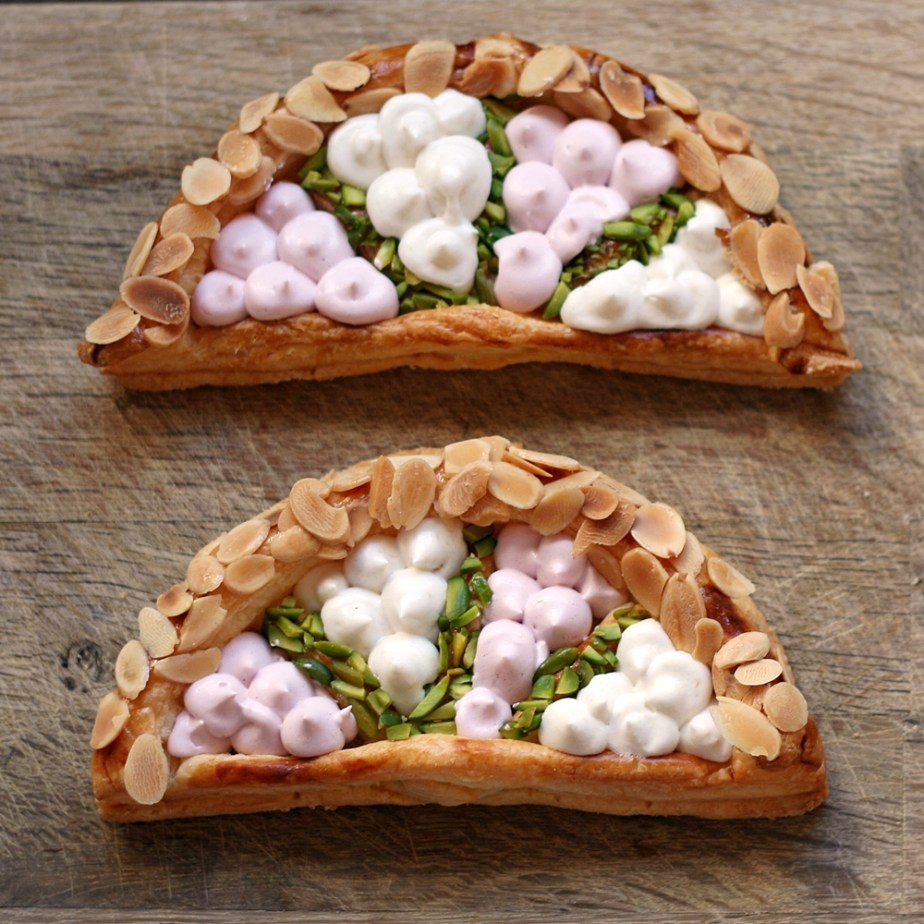
These eye-catching pastries are, essentially, a jam turnover, but with a little deft handling, they are transformed into an unusual and appealing shape.

Another hit from the team of Harris and Borella’s All About Pastries, they date from the turn of the nineteenth century.

The original recipe suggested Greengage conserve for the filling, but alas, my cupboard was as bare of this preserve as the supermarket shelves. I was more than slightly perturbed by this sad state of affairs: I had merely run out, but I would have settled for ‘store-bought’. Seeing as Greengages are a classic in preserves, I was disconcerted to find my local Sainsbury’s devoid of Greengage Conserve, despite internet assurances that they would have some.

Of course, any high-quality preserves can be substituted – I opted for mirabelle – the real pleasure comes from enjoying the combination of crisp pastry, crunchy sugar topping and sweet/sharp burst of fruit in the middle.

With a sheet of ready-rolled puff pastry, these treats come together very quickly – and will no-doubt disappear just as fast.

Plum Cannons

1 sheet ready-rolled puff pastry
Plum conserve
egg-white for glazing
caster sugar to sprinkle

  • Use a rolling pin to roll the pastry a little thinner, so it measures at least 24cm by 36cm
  • Cut the pastry into nine rectangles 12cm by 8cm.
  • Put a teaspoon of jam/conserve in the middle of each piece of pastry.
  • Damp the edges of the pastry and fold the ends inwards to cover, overlapping the pastry by at least 3cm.
  • Turn the pastries over, so the seal is underneath and trim the ends (the original long side) straight with a sharp knife.
  • Arrange on a cutting board and chill for at least 30 minutes until firm.
  • Heat the oven to 200°C, 180°C Fan.
  • Remove the chilled pastries from the fridge and, again with a sharp knife, cut a neat V-shape from each end.
  • Arrange the pastries on a lined baking sheet (the jam WILL run during baking, and cleaning baked-on jam from a metal baking sheet is not fun).
  • Brush the pastries with lightly-beaten egg-white and sprinkle with sugar.
  • Cut a small vent in the top to let out steam – I was a little heavy-handed with this batch and the slits opened too much. No-doubt yours will be the epitome of elegance.
  • Bake for 25-30 minutes, turning the baking sheet around after 15 minutes. NB This might seem a long baking time, but puff pastry needs a surprisingly long time to both puff up AND bake thoroughly. If you’re sceptical, before you remove the pastries from the oven, check underneath to see that they are golden brown. If you remove the pastries too early, they will sink as they cool and their layers disappear into stodge.
  • Cool on a wire rack and serve either warm or at room temperature.
  • Store in an airtight container and ‘refresh’ by crisping them in a low oven for 10 minutes.

Dutch Macaroons

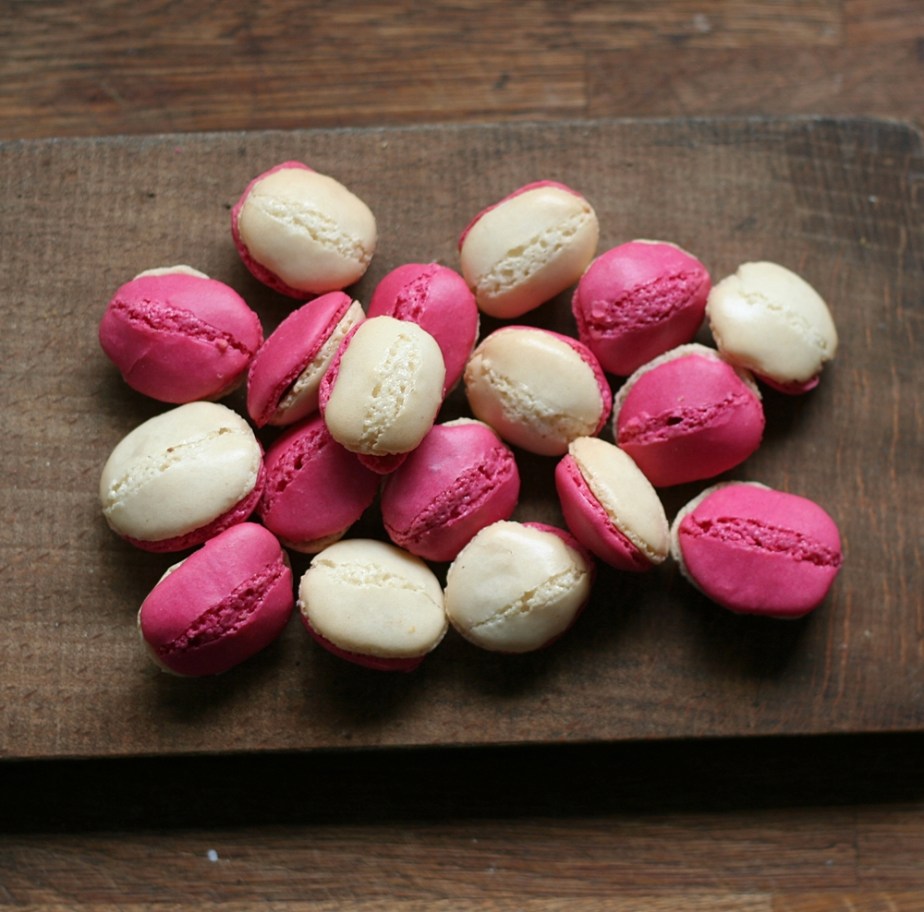
Macaroons have been a favourite British treat for centuries. Their form, shapes and flavours might have changed over the years, but they basically remain a mixture of sugar, ground nuts and egg white.

These colourful specimens come from Harris & Borella’s All About Biscuits (c1900), a commercial handbook for the Victorian/Edwardian baker. Unlike the modern preoccupation with a relatively small number of shapes made from a seemingly standard recipe, this book boasts over fifty different macaroon recipes, many of which can be further varied in terms of both colour and flavour and thereby increasing the variety close to a hundred. I think we are missing out on enjoying so much variety by focusing on inconsequentialities such as getting the perfect ‘foot’ on a plain, round macaron – as if that impacts how it tastes. I plan on returning to this chapter in this book on a regular basis, so  stay tuned for more macaroon delights!

These miniature biscuits are just three centimetres in length and about two wide, and the two complimentary flavours are sandwiched together to give a tiny but elegant treat. They aren’t actually sandwiched with anything – their innate stickiness when removed from the baking parchment is enough to join them together, meaning the flavours can be savoured without additional distraction.

There’s nothing stopping you from having a filling, of course – seedless raspberry jam or redcurrant jelly for a burst of sharpness, a white or dark chocolate ganache for richness – but it would be like gilding the lily.

These macaroons get their distinctive form by allowing them to dry a little after piping, then just before baking, cutting through the paper-thin skin that has formed, into the moist mixture beneath. This forces the biscuits to expand in this one place during baking as the egg-white cooks. Whilst each one may vary slightly in the degree to which it expands, there’s much greater uniformity and less likelihood of lop-sidedness. The result is a batch where all the biscuits are much more similar, yet still retaining an organic, freestyle quality. The effect is very striking – much more preferable to the regimented uniformity of the modern, frequently machine-made style – and yet so simple to achieve. The original instructions suggest a sharp knife for this task, but I recommend using a baker’s lame (lah-may) or a single razor blade, in order to get a perfectly clean and sharp incision.

Dutch Macaroons

This is, to a large extent, a proportional recipe, so you can scale it up or down to your requirements. It calls for two parts sugar to one part ground almonds, with one egg-white for every 150g of almond/sugar mixture.

100g ground almonds
200g caster sugar
sufficient egg-whites to mix (about 80ml/2 large)
vanilla extract
raspberry flavouring
claret food colouring

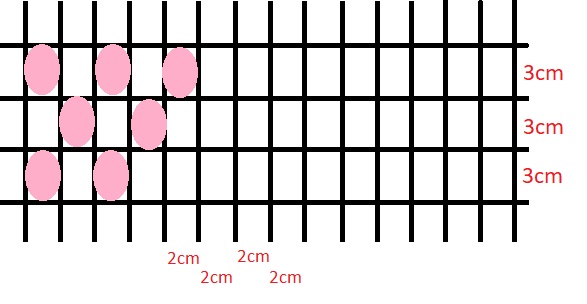
  • Cut a piece of baking parchment to fit your baking sheet, and mark up a grid as below, of dimensions 2cm by 3cm. Turn the parchment over (so your macaroons won’t pick up any marks from the pen/pencil) and lay onto your baking sheet. Have ready two piping bags fitted with a 5mm plain nozzle. If you have disposable bags, you can just snip the end to 5mm.
  • Parchment mark-up
  • Select two mixing bowls, one of which will be used over simmering water. The other bowl will need to be heated with hot water until required.
  • Set a pan of water to heat to a simmer.
  • Put the sugar and almonds into one of the bowls and gradually whisk in sufficient egg white to make a mixture that  will run slightly.
  • Put the pan over the simmering water and whisk vigorously, either using a balloon whisk or with an electric whisk until the mixture is just hot enough for a finger to bear.
  • Remove the bowl from the heat.
  • Empty and dry the second bowl and pour half of the mixture into it.
  • Add vanilla flavouring to one mixture, and raspberry flavouring to the other, together with enough colouring to make a rich magenta (the colour will fade a little during baking.
  • Pour the mixtures into separate piping bags and pipe oval macaroons 2cm by 3cm in alternate squares in your grid.
  • Set aside until a thin sin has formed. The original recipe suggested overnight, but if this is inconvenient, a workaround would be to set your oven to 170°C/150°C Fan for one minute, then turn it off and put the baking sheet into the just-warm oven. Check after 1 hour, and if the skin hasn’t formed, repeat and leave for another hour.
  • When ready to bake, remove the baking sheet from the oven and heat it to 170°C, 150°C Fan.
  • Using a lame/razor blade, slice through the skin of each macaroon vertially down the centre.
  • Bake for ten minutes, turning the baking heet around after five minutes to ensure even colouring.
  • Allow to cool on the sheet.
  • When cold, wet the work surface and slide the baking parchment onto it. After a few minutes the macaroons should lift off easily and you can sandwich them together with one macaroon of each colour. If you’re using fillings, you might like to join the same colours together.  Go wild.

Old Fashioned Cheesecakes

These cheesecake recipes come from a favourite book – All About Pastries, from the All About… Confectionery Series by H.G.Harris & S.P Borella (circa 1900). The recipes are all for commercial quantities, but I’ve become quite adept at scaling them down to more manageable batches.

They were simpler times back then, and ‘cheesecakes’ weren’t always made of the cream cheese that is so widespread today. Much as the term ‘pudding’ originally described a texture, thus accounting for its use to describe both savoury black/white puddings, and sweet Kentish pudding pies, ‘cheesecake’ was used to describe a soft and light texture in a pastry case.

Before refrigeration, cheese curds weren’t available year round, especially as cows were sometime slaughtered in the winter when food sources were scarce. So with typical ingenuity, recipes were developed to achieve the same delicious morsel using other ingredients. Ground almonds were popular, and in commercial bakeries, cake, biscuit and bread crumbs have all been employed to produce a tender tartlet filling.

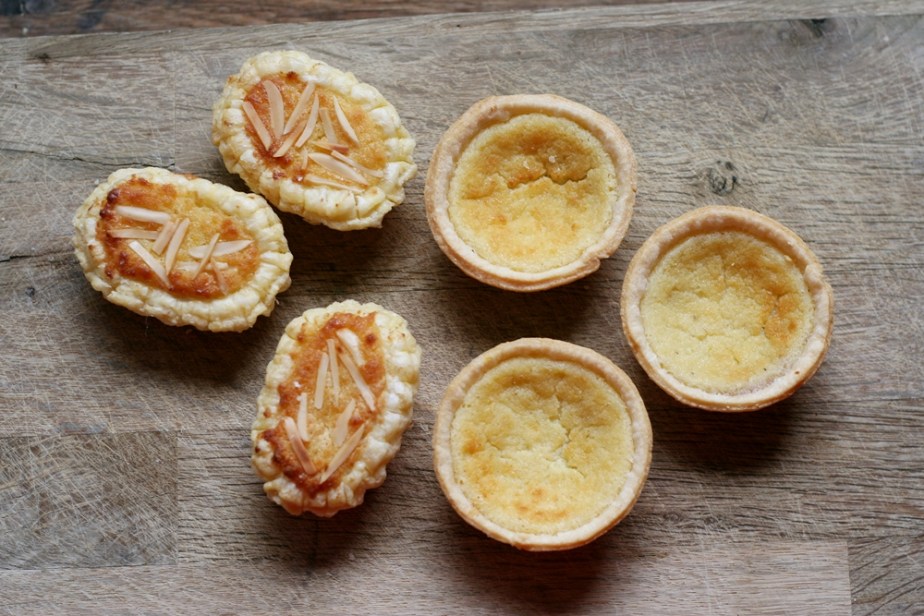
These two cheesecakes provide a nice comparison, because they also illustrate how one’s choice of pastry can affect the overall success of a recipe.

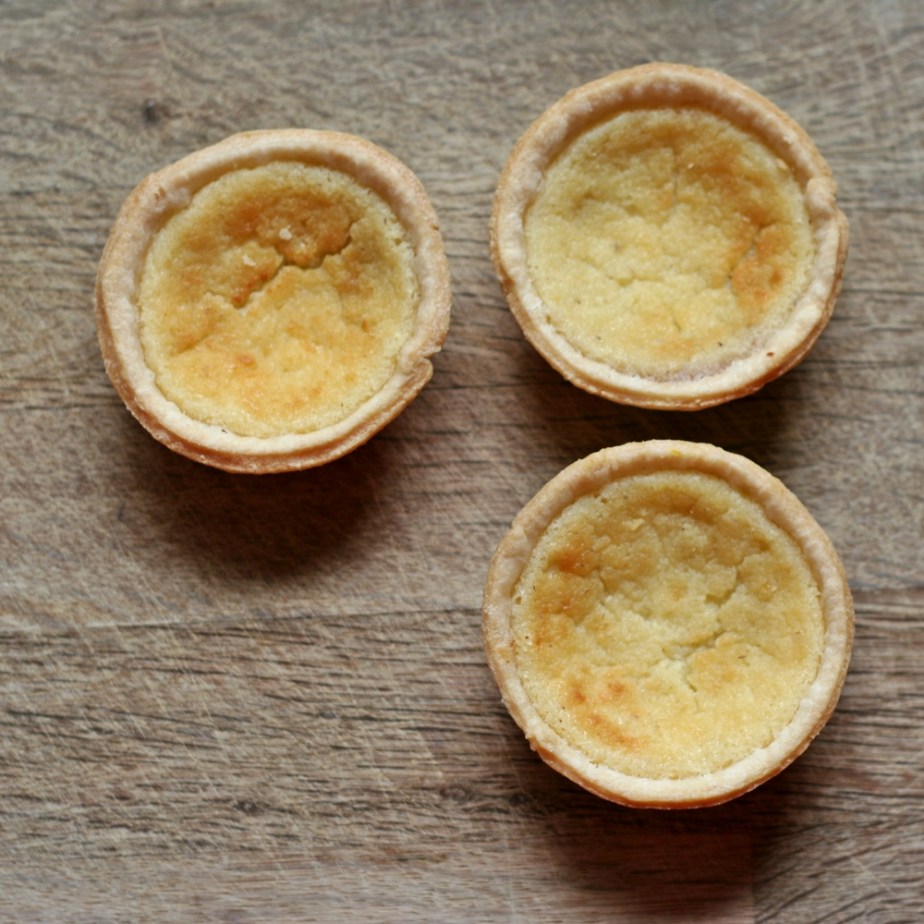
In the photograph above, the cheesecakes on the left are made with sieved cooked potato. The tartlets on the right are made with curd cheese. The cheesecakes on the left are made with buttery puff pastry, while the ones on the right are made with a very dry and crisp cornflour shortcrust. This is the combination of filling and pastry recommended in the book, but for science I decided also to swap them round, and bake the potato filling in shortcrust and the curd filling in puff pastry. It was not a success. Or rather, it was successful in confirming my belief that contrast is everything.

  • When the filling is rich, use a plain, unsweetened pastry.
  • When the filling is humble, use a rich, butter pastry.

This rule is of mutual benefit, because of the contrast between the two. The pastry adds a texture as well as a flavour contrast to the filling. Baking the rich filling with the butter pastry just made for a finished tartlet that was both heavy and overly greasy. Baking the potato filling with the crisp shortcrust made for a disappointing dry and desiccated bite. Bear this need for contrast in mind as you create your own pastry/filling combinations.

Potato Cheesecakes

Potato Cheesecakes

If you don’t have any maraschino, you could use a little lemon or orange zest, or almond/vanilla instead.

Potato Filling
75g cooked, sieved floury potato
75g unsalted butter – softened
1tsp maraschino liqueur
60g ground almonds
60g caster sugar
1 large egg
1 large yolk

  • Press the potato through a sieve. This is easiest when the potato is still warm.
  • Add the butter and maraschino and beat together until light and fluffy.
  • Whisk the egg and the yolk together, then whisk into the potato mixture.
  • Whisk in the ground almonds.
  • Add the sugar and just stir it enough to combine.
  • Transfer to a container, cover and chill for at least 30 minutes.

To assemble
2 sheets ready rolled puff pastry, all-butter if available
raspberry jam
a few slivered almonds to decorate
small fluted tartlet tins approx. 5cm in diameter

  • Grease the tartlet tins.
  • Unroll the pastry and cut into rectangles the approximate size of your tins.
  • Line the tins with the pastry, making sure to press it firmly into the fluted sides.
  • Using the ball of your thumb, press the base of the tart thin, thereby easing the edges of the pastry up the sides of the tin. If it rises above the top edge, that’s fine.
  • Chill the lined tins in the fridge for at least 30 minutes, to relax the pastry.
  • When the filling and pastry are thoroughly chilled, remove from the fridge.
  • Trim the pastry flush with the top edge of the tartlet tins using a sharp knife.
  • Put half a teaspoon of jam into the bottom of each tart case
  • Fill the tartlets 2/3 full with the potato filling , making sure it is spread to the sides of the pastry (to prevent the jam from bubbling up/through).
  • Scatter a few slivers of almond over the top.
  • Heat the oven to 210°C/190°C Fan.
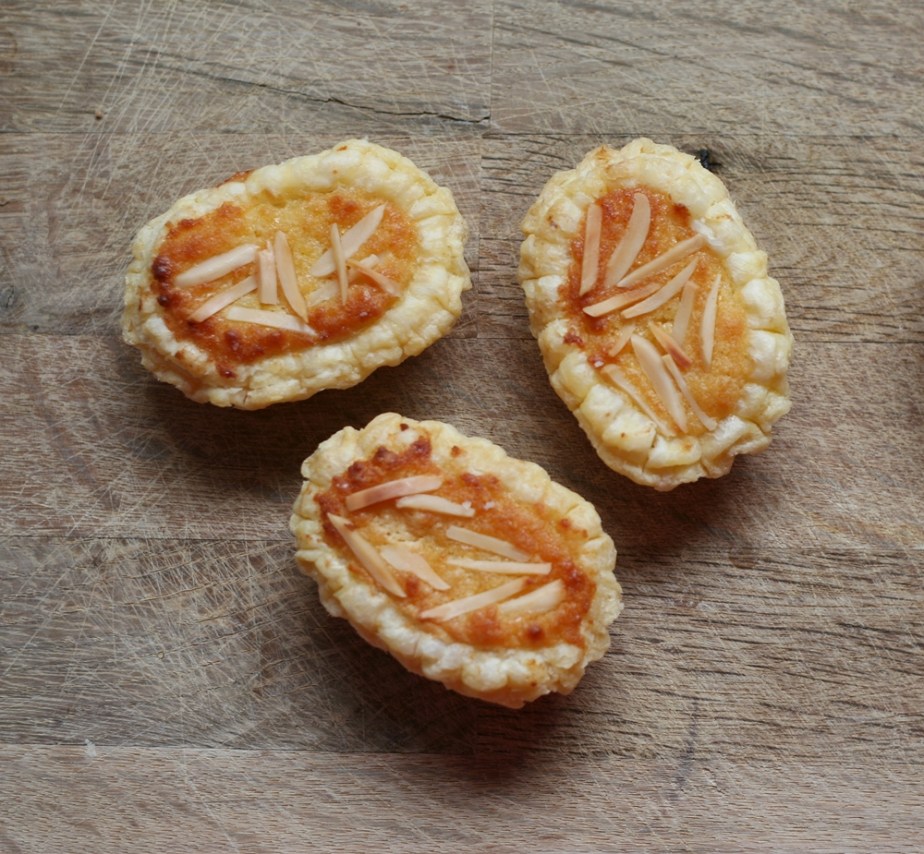
  • Bake until the pastry is cooked and the filling puffed and browned. This will take 15-20 minutes. You need to judge how cooked you want your pastry to be. In the picture above, the pastry is baked, but not browned and the filling a delicate colour. Longer baking will brown the pastry, but the filling will also darken considerably, unless you cover them. Given the delicate nature of the filling, I think the lighter colour on the pastry is more suitable, but it’s only a personal preference.
  • Allow to cool in the tins for 10 minutes before removing to a wire rack.
  • Serve at room temperature.

Curd Cheesecakes

Curd Cheesecakes

Pastry
225g plain flour
60g cornflour
140g unsalted butter
ice cold water

  • Put the flours and butter into the bowl of a food processor and blitz until the mixture resembles breadcrumbs.
  • With the machine running, gradually add the cold water a tablespoon at a time until the mixture comes together in a ball.
  • Tip the mixture onto a floured surface, knead smooth then wrap in clingfilm and chill for 30 minutes.
  • Grease some tartlet or cupcake tins.
  • Remove the pastry from the fridge and roll out to a thickness of 4-5mm.
  • Cut out circles using a pastry cutter the same diameter as your tin indentations. Turn them over (so the side rolled by the rolling-pin is against the metal of the tin) and smooth into the sides of the tins.
  • Using your thumb, press the pastry on the base of the tins thin. This motion will ease the edge of the pastry to the top of the tins.
  • Chill the tin in the fridge while the filling is mixed.

Curd Filling
150g curd cheese, well drained
75g unsalted butter, softened
50g caster sugar
1 large egg
zest of 1/2-1 lemon, according to taste
1/4 nutmeg, grated

  • Sieve the curd. Don’t skip this step, thinking that it is soft enough. Forcing the curd through a sieve gives it an incredible lightness which allows it to combine smoothly and easily with the other ingredients. Since there will be some loss in the process,  the actual amount required for the recipe is 115g.
  • Whisk the butter and sugar together until light and creamy.
  • Add the egg and whisk in thoroughly.
  • Add the flavourings, then lightly stir in the curd.
  • Chill until required.

To Assemble
raspberry jam
small fluted tartlet tins approx. 5cm in diameter

  • Put half a teaspoon of jam into the bottom of each tart case
  • Half fill the tartlets with the curd filling , making sure it is spread to the sides of the pastry with no gap (to prevent the jam from bubbling up/through).
  • Heat the oven to 200°C/180°C Fan.
  • Bake until the pastry is cooked and crisp and the filling puffed – 15-20 minutes. The filling will lose its puff as it cools. This is normal.
  • Allow to cool in the tins for a few minutes before transferring to a wire rack to cool completely.
  • Serve at room temperature.

Lancashire Butter Pie

The Lancashire Butter Pie is a regional, traditional pie specific to western Lancashire, especially the area around Preston, and has also been known as Friday Pie and Catholic Pie.

Preston has traditionally had a strong Catholic presence. In Tudor times, it was resistant – and at times downright hostile – to the Reformation. In 1583 the bishop of Chester denounced it as having a people ‘most obstinate and contemptuous’ of the Elizabethan laws on religion.

Since it was forbidden for Catholics to eat meat on Fridays, this pie, having only three simple ingredients, was ideally suited to the pious abstaining from their usual rich fare. And it does make for a good ‘story’.

However, my curiosity over the fact that it is the butter that gives the dish its name, rather than the potatoes and the onions led me to do some digging around into the pie’s history. My thoughts were that, although butter is commonplace for us now, it must have been regarded as a delicious treat in poorer times.

The modern incarnation of Butter Pie is alleged to owe much to the British Butter board, although I can find no verification for this. What I did find was what could be an ancestor of the modern recipe, in an account of the desperately poor existence of the cotton weavers of Lancashire, dating from 1827.

Joseph Greenwood, a worthy man of independent spirit, who has never troubled his parish, 60 years of age, with a wife and six children, lives at Bridge Inn, two miles and a half from Todmorden, on the Burnley road. He has five looms, and has wound and wove in his family, on an average, every week for the last four weeks, 16 pieces, each 30 yards of super calico, 28 west, at 9d, which gets 12s. per week. This sum is to support eight persons, pay rent, fire, clothes, candles to work by, shuttles, repair looms, &c. yet he will not run into debt. This family’s mode of living is as follows: they purchase a quantity of oatmeal, make gruel of oatmeal, salt, and water only, which serves for breakfast and supper; for dinner they bake a small quantity of the meal into a cake, and buy a little blue milk, as they call it, at ½d. per quart, and sup the milk along with the cake, but this is a luxury they cannot have every day. By way of change they sometimes buy wheaten flour to make the porridge, but with that they cannot afford to have the milk. Butter, cheese, and flesh meat, weavers never think of, unless now and then they purchase two ounces or a quarter of a pound of butter: or one or two pennyworth of suet, or odd bits of interior meat, to make a potatoe pie. The mode of making this pie is as follows: the potatoes are washed and cut into, slices, placed in a dish and sprinkled with salt, then filled up with water, the bits of suet are mixed with the potatoes, and the whole is covered with a thin crust, and if they cannot raise the suet or butter, the pie is made without them.[1]

Porridge morning and evening, oatcakes and skimmed milk for lunch. Having to choose between skimmed milk or wheat flour. Potato Pie as a treat. It’s a sobering thought. And little wonder that the tale of it being a dish of abstinence is the more popular, or at least, easier on the conscience. In this modern age, we are sometimes a bit too blasé about food and shameless with food waste. The story behind Butter Pie makes me, at least, be grateful for the abundance we have. This pie was a treat. IS a treat. No matter the humble ingredients.

So, if I haven’t plunged you irretrievably into a pit of despair, let’s talk ingredients!

This pie is deliciously savoury and ‘toothsome’ as Victorians were wont to say – ridiculously so, given the simplicity of its ingredients. Even with such a short list, you can vary the mix to produce delicately nuanced and finely-tuned combinations whilst still respecting the original.

My absolute favourite potato is the Pink Fir Apple, a fingerling-type potato with such a delicious flavour, I eat them as they are – no butter, no salt – they’re that good. In terms of texture, they sit perfectly between floury and waxy, relieving me of having to choose between these two different types of tuber. They aren’t very easy to find, alas. Many people have a specific preference, and will deign to eat only that one type. I, however, believe that there are times when one is more suited to a recipe than the other, and in this recipe you can celebrate both types according to the season. In spring and summer, use waxy new potatoes and spring onions or chives for freshness. In autumn and winter, big slices of soft, floury King Edward or Wilja potatoes with delicately softened brown onions turn this into an unctuous and comforting dish.

Whichever style you choose, the pastry should provide contrast against which the filling can really shine. Now you could be forgiven for thinking that with such a buttery filling, a rich buttery puff pastry would be the way to go, and you would be perfectly within your rights to try it, but it would not be the best option. It’s just too rich. Everything gets lost. My recommendation is for a cornflour, all butter, shortcrust pastry. It bakes incredibly crisp and the presence of the cornflour makes it a dry crispness – something not usually achievable with an all-butter pastry. And this unassuming, plain pastry is the perfect background for the soft, buttery filling to shine. It’s all about contrasts, of textures as well as flavours. You need the plainness of the pastry to really enjoy the rich-tasting filling.
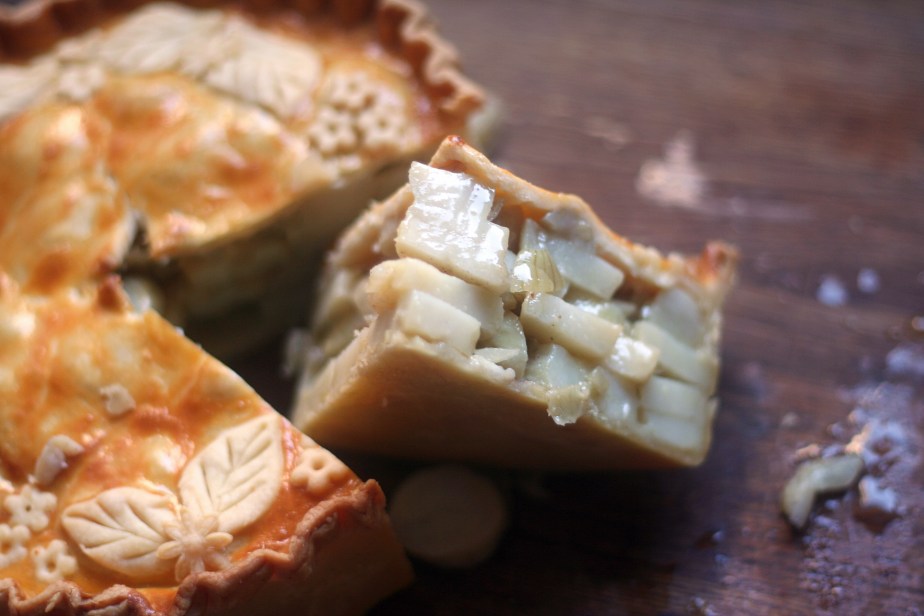
Butter Pie Slice

Lancashire Butter Pie

The choice of potato is entirely up to you. I used Anya potatoes this time. The quantity of butter in the filling is restrained: you can also dot more over the potato layers if you’re feeling indulgent.

Pastry
225g plain flour
60g cornflour
140g unsalted butter
ice cold water

  • Put the flours and butter into the bowl of a food processor and blitz until the mixture resembles breadcrumbs.
  • With the machine running, gradually add the cold water a tablespoon at a time until the mixture comes together in a ball.
  • Tip the mixture onto a floured surface, knead smooth then wrap in clingfilm and chill for 30 minutes.
  • Remove the pastry from the fridge and cut off two thirds. Put the remaining third back into the fridge.
  • Roll this piece out to a thickness of 4-5mm and use it to line a greased 18cm pie tin, loose-bottomed for preference, making sure there is enough pastry overlapping the sides of the tin to allow for joining the lid.
  • Chill the pastry while you prepare the filling.

Filling
750g potatoes
120g unsalted butter
2 medium onions
salt and ground white pepper

1 egg yolk for glazing

  • Peel the potatoes and cut into 1cm slices.
  • Boil or steam (preferred) until tender. Spread out on a clean cloth to cool/dry.
  • Chop the onions finely.
  • Melt the butter in a pan and add the onions.
  • Cook gently over a low heat until softened. Do not allow them to take any colour.
  • Spread a thin layer of buttery onions over the base of the pastry and season with pepper and salt. Cover with a layer of potato slices, cutting them if necessary to fill any gaps.
  • Repeat until the pie is filled, remembering to season each layer of onions. Pour any remaining butter over the top.
  • Roll out the remaining pastry to make a lid.
  • Damp the edges of the pastry and lay the lid on top. Trim to leave a border of 1cm.
  • Crimp the pastry edges between finger and thumb. Gently press the crimped edge inwards until it is standing vertical.
  • Mix the yolk with 1-2tsp cold water, and glaze the pastry lid thoroughly using a brush.
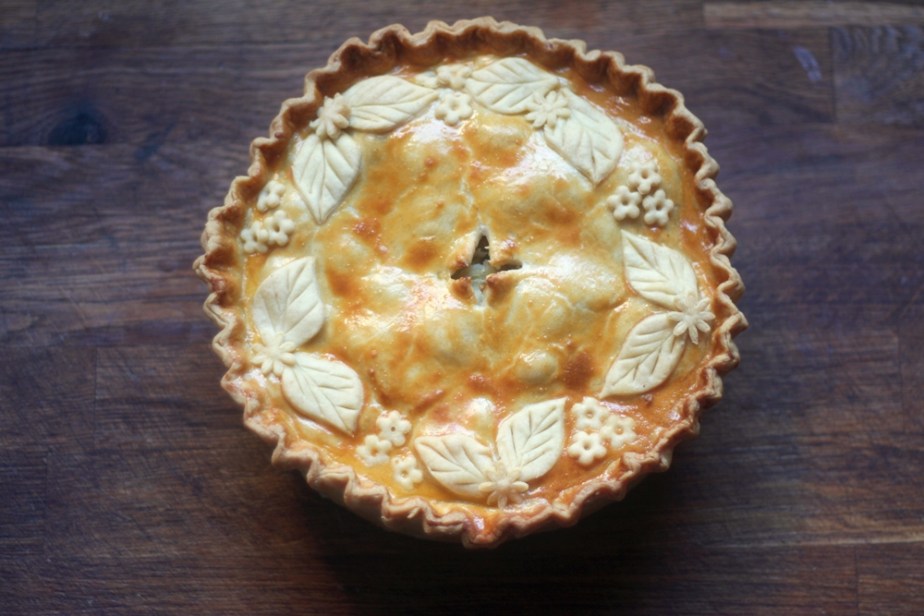
  • Cut out some decorations from the offcuts of pastry and arrange on top of the glaze. Leaving the decorations unglazed will keep them from taking on too much colour in the oven, which means they will stand out more when baked. Cut a steam vent in the centre of the lid.
  • Chill the pie in the fridge while the oven heats up.
  • Heat the oven to 200°C, 180°C Fan.
  • Bake the pie for 40-45 minutes, turning it around after 20 minutes to ensure even browning.
  • Allow to cool for at least 10 minutes before turning out and serving.
  • Also delicious cold.

[1] Niles’ National Register, Volume 32,  1827, p118

Apple Snow

This recipe is more usually served in the late summer and autumn months, but I’ve chosen it now because the weather outside today has carpeted the garden with a thick layer of snow.

This is a classic dessert whose provenance stretches back centuries. Although the name ‘Apple Snow’ is the one more usually found in modern recipe books, it can also be found under the name Apple Fluff, Apple Souffle, Apple Puff and this version, Apple Cream Without Cream.

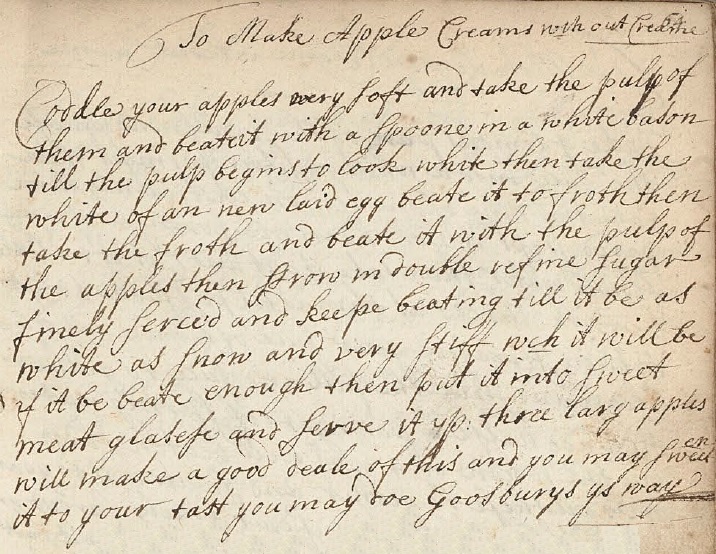
This last was found in a manuscript from the 17th century, held by The Wellcome Library. The manuscript has been attributed to the splendidly named Mrs Deborah Haddock, who sounds as if she should be the twinkly-eyed star of stories set in a small, quaint fishing village.

It is elegant in its simplicity, requiring only apple pulp, an egg-white and a little sugar. It is also, thanks to modern kitchen gadgetry, prepared incredibly swiftly, requiring less than ten minutes to come together before serving, once the initial preparation has been completed.

Apple Cream Without Cream, aka apple Snow, c1675, MS7892, Wellcome Library Collection

Choice of Fruit

This recipe can be made with any apple you have to hand, either keeping a purity of flavour with a single variety, or mixing and matching in a clearing-out-the-fruit-bowl, waste-not-want-not kind of way.

One of the manuscript recipes I read recommended green apples as being the best, but failed to elaborate any identifying characteristics beyond colour. I prefer to use Bramley apples, for the pale insides and sharpness of taste. Other varieties you might like to try include Worcester Pearmains, which have dazzlingly white flesh that tastes faintly of lemon and rough-skinned Russets that have an almost nutty flavour.

Alternatively, you could follow the recommendation in the recipe above and try this with gooseberries.

Apple Snow

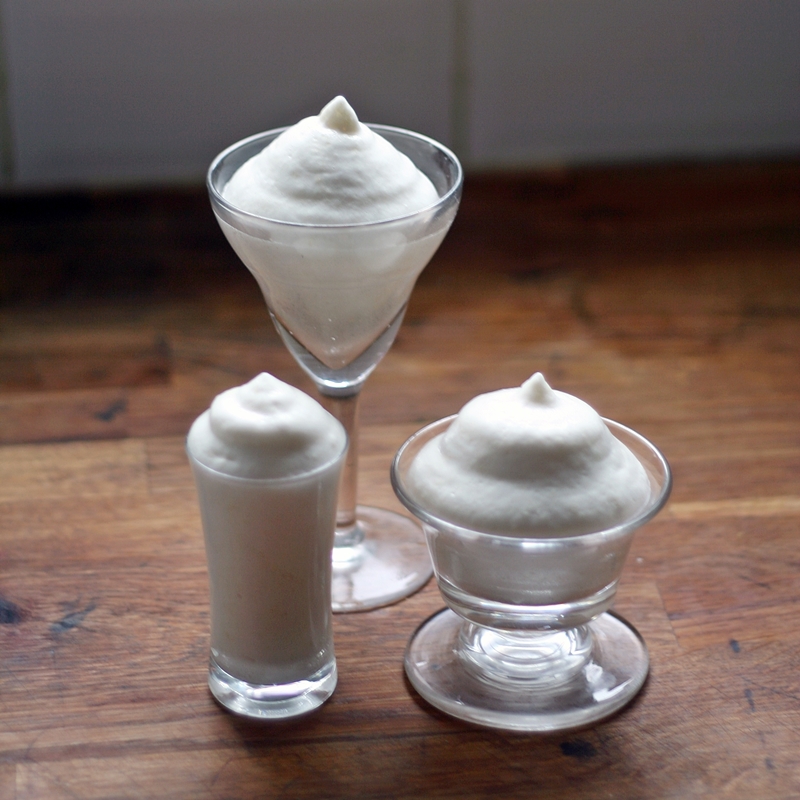
This recipe tweaks the original slightly with additions found in other versions. In terms of quantity, it will make a visually impressive amount, but is so light and delicate, a full glass is still only a relatively small amount. It will hold its shape for two hours or so, but can be mounded in more impressive heights if served immediately after preparation.

Serves 4 – 8

5 Bramley apples, or apple of your choice.
juice of 1 lemon
2tbs cream sherry (optional)
4tbs caster sugar
1 large egg-white

  • Peel, core and chop the apples finely. Toss them in the lemon juice as you go, to prevent them from discolouring.
  • Add the apple and lemon juice to a saucepan with the sherry, if using.
  • Cover and cook over medium-low heat until the apples soften and turn to froth.
  • Mash the apples to a pulp, then sieve to remove all lumps. Chill until required.
  • Whisk the egg-white until it will stand in soft peaks. Set aside.
  • Put 250ml chilled apple pulp into a bowl and whisk on High for 2-3 minutes until pale and fluffy.
  • Add the whisked egg-white and continue whisking, adding in the sugar one spoonful at a time.
  • After 2-3 minutes the mixture will have both increased in volume and become dazzlingly white.
  • Taste and whisk in more sugar if needed.
  • Spoon or pipe into glasses and serve with some crisp biscuits on the side.
  • If you have apple pulp spare, you could spoon a little of it into the glasses before adding the apple snow.

Marmalade

It’s that time of year, when Seville oranges are in the shops and marmalade is the name of the game.

For the competitively-minded, the Marmalade Awards are an annual competition to find the best marmalades across a number of categories. Whatever your forte  –  plain Seville, dark and chunky, boozy – or even if you are a complete novice, there’s an opportunity to enter and get feedback on your jar from those doyennes of home-produce, the Womens Institute.

Each jar is tasted and scored out of twenty. Less-than-perfect specimens are given hand-written feedback on where improvements can be made. High-scoring jars get certificates. It’s great fun.

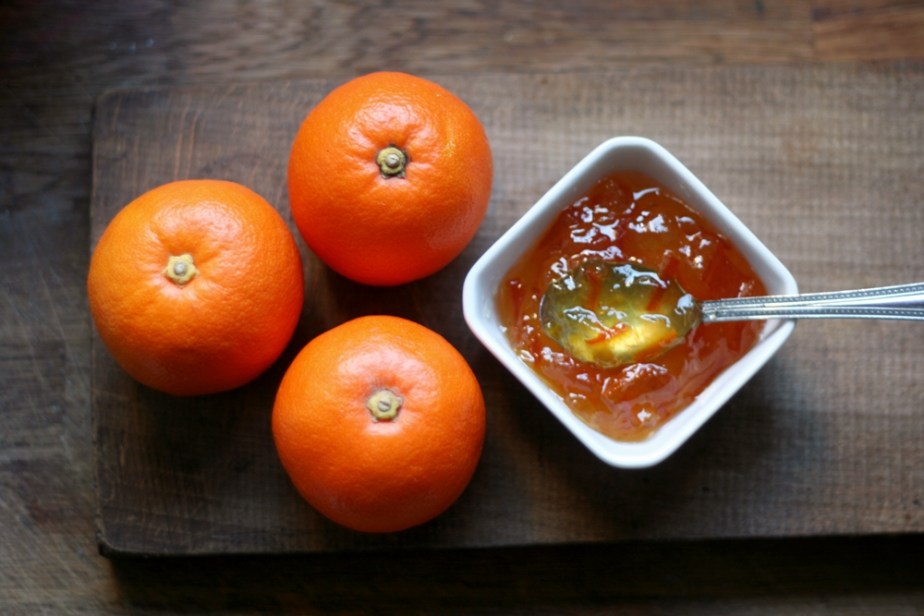
I’ve entered for a number of years, some more successful than others – and have garnered a range of Gold, Silver and Bronze awards. The recipes here have both won Gold for me over the years and are ideal for the novice marmalade maker as they are small batch recipes, one making four and the other just two x 450g jars.

Both of these recipes were found in handwritten recipe books, one from the middle of the 19th century and the other from the late 17th century.

Dundee Marmalade

1850

This marmalade is simplicity itself: boil the oranges, chop, then simmer with sugar for 30 minutes. I’ve made only one adjustment to the original recipe, which is to change the water the oranges are boiled in, in order to remove the harshness of the oil contained in the skins. If this sounds like too much hassle, then by all means use the same water all the way through – the result will be on the feisty side!

Top Tip: The cooked oranges will freeze excellently, so if you like this recipe, or have limited storage space for jars, cook a large number of fruit and then freeze until required. The recipe can be easily scaled, so you can use just a couple of oranges to make one large jar at a time.

Seville oranges
granulated sugar

  • Put the oranges into a pan with enough water to cover them. They will float to begin with, but gradually become heavier as they absorb moisture.
  • Bring the pan to a boil, then turn the heat down and simmer.
  • After 25 minutes, bring a second pan of water to a simmer.
  • Transfer the oranges to the second pan and continue simmering.
  • Discard the first lot of cooking water and scrub the saucepan. The bitter orange oil will have gathered on the sides of the pan. Fill the pan with fresh water and bring to a simmer.
  • Repeat the above until the oranges have been simmered for 2 hours – 3 changes of water.
  • Lift out the oranges and set aside to drain and cool.
  • When cooled enough to handle, cut the oranges in half and remove only the pips.
  • Chop the rest of the fruit as liked. I prefer to slice it by hand into strips and then into thin shreds with a sharp knife.
  • Weigh the fruit and for every 450g, put 600ml of water and 900g granulated sugar into a clean pan.
  • Heat the sugar and water gently, stirring occasionally, until all the sugar is dissolved.
  • Add the chopped peel and pulp and bring to a gentle boil.
  • Cook, stirring occasionally, until it reaches setting point of 105°C. For 450g of fruit, this will take about 30 minutes. Smaller or larger quantities of fruit will require slight adjustment of this time.
  • Pour into clean, warmed jars and seal whilst hot.
  • Clean the jars and label once cold.

Bridget Hyde’s Very Good Marmalade

1680

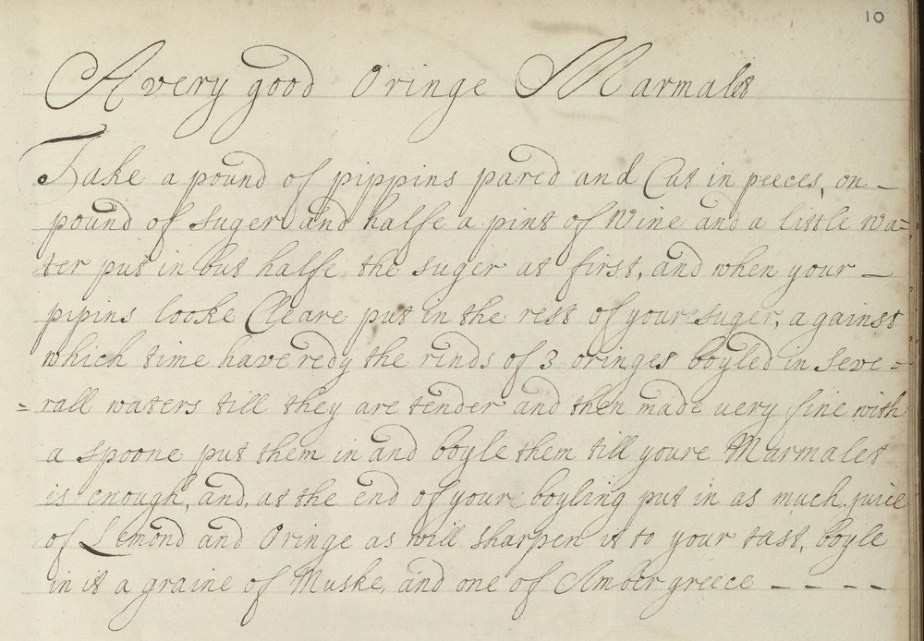
Bridget Hyde's Marmalade recipe
Bridget Hyde’s Marmalade recipe, circa 1680, MS2990, Wellcome Library Collection

This recipe is unusual in that it uses the setting qualities of the pectin in green apples and the luxury of wine to create a light and brightly-flavoured, shred marmalade. It is very straightforward to follow the recipe as written, but equally easy to use some of the fruit cooked in the previous recipe, so the recipe below will follow this adaptation. Even without the original musk and ambergris perfuming the result, this is a delicious and delicate marmalade. Any sweet, dessert white wine can be used, however for my Gold-winning entrant in the Marmalade Awards I sought out some Muscat de Frontignan, whose richly perfumed aromas of citrus and honey perfectly complements the fruit in this marmalade. Reflecting the high cost of the ingredients of the time, this recipe makes just two jars per batch.

225g granulated sugar
300ml sweet dessert white wine, Muscat de Frontignan for something really special
150ml water
450g green apples – Granny Smith or Bramley
3 Seville oranges – cooked as above
225g granulated sugar
1 lemon – optional
1 sweet orange – optional

  • Put the first portion of sugar, the white wine and water into a saucepan.
  • Chop the apples into 2cm pieces and add to the pan also, cores, seeds and all.
  • Cut the Sevilles in half and use a teaspoon to scrape out all of the flesh, membranes and seeds. Add this to the saucepan as well.
  • Simmer the contents of the saucepan gently over medium low heat until the apple pieces become translucent.
  • While the apples are simmering, slice the cooked peel into thin shreds.
  • When the apples are translucent, strain the liquid of the pan through a sieve, pressing down on the solids to extract all of the liquid.
  • Rinse the pan and return it to the heat with the wine syrup.
  • Add the remaining sugar and stir until dissolved
  • Add the shredded peel and simmer until it reaches setting point of 105°C, which will take around 20-30 minutes.
  • Taste and adjust the finished flavour to your own liking by adding some freshly-squeezed lemon and/or orange juice.
  • Pour into clean, warmed jars and seal whilst hot.
  • Clean and label once cold.

Chutney

I’m going to open this post with a statement:

“There is nothing that can transform a platter of cold meats and/or cheeses more easily than chutney.”

Me, just now.

Bold? Possibly, but with justification. Every chutney, from the lowest of the  low-shelf, supermarket budget jars to the very best of hand-crafted and home-made pots contains a tantalising mix of sweet, salty, sour and spice.

Originating in India, the word was initially translated as  ‘salad’ but was later refined into:

“CHUTNEE, a condiment, compounded of sweets and acids. Strips of ripe fruit, raisins, spices, sour herbs, cayenne, lemon juice, &c, are the ordinary ingredients pounded and boiled together, and then bottled for use. Chutnee is much eaten in India with curries, stews, &c.”¹

Modern recipes are bulky, favouring a consistency closer to marmalade, but early anglicised recipes are much more of a sauce. These three recipes date from the nineteenth century and November is a perfect time to make them, in order to spice up your Christmas table or to give as gifts that can be enjoyed immediately upon unwrapping.

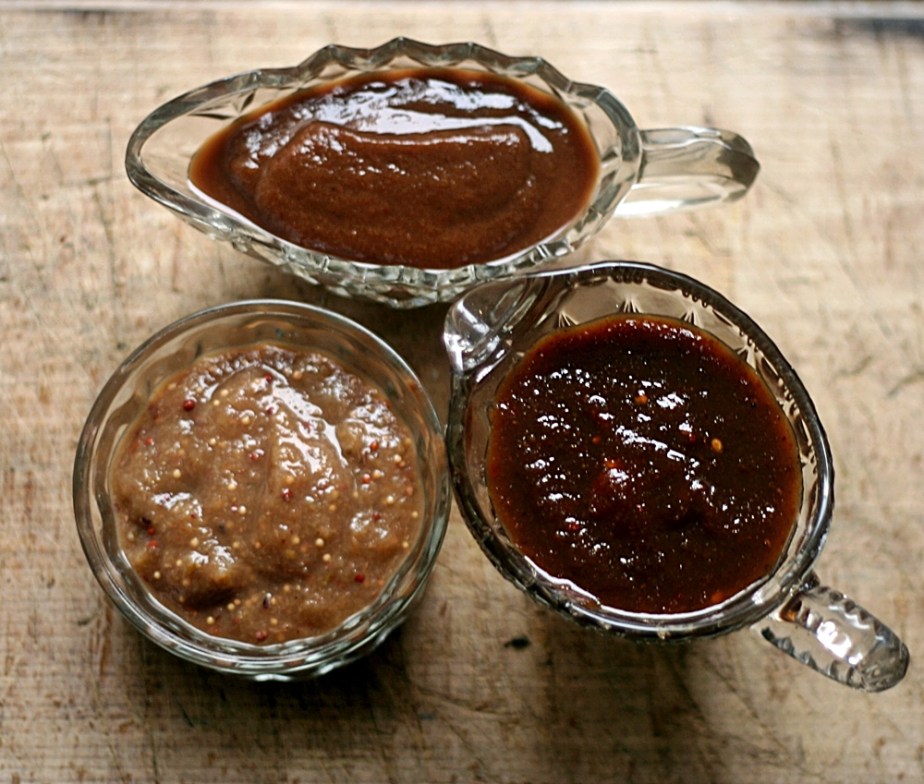
The three recipes I have selected are:

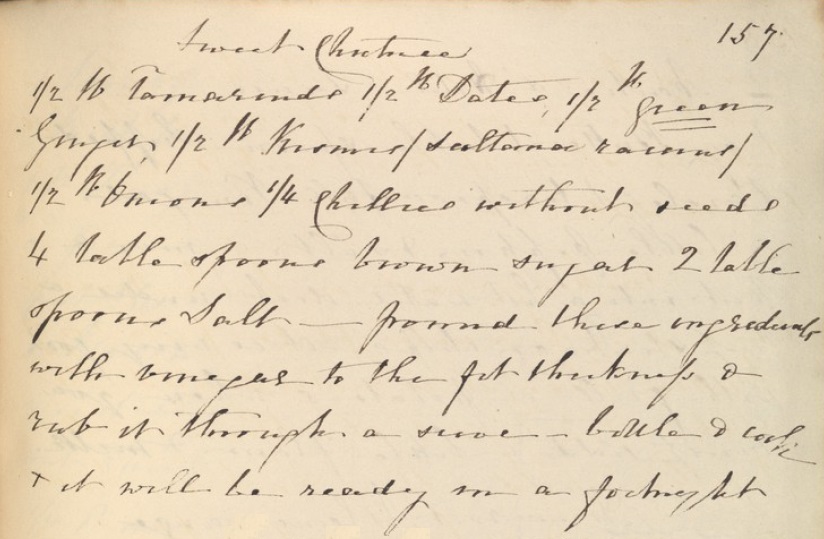
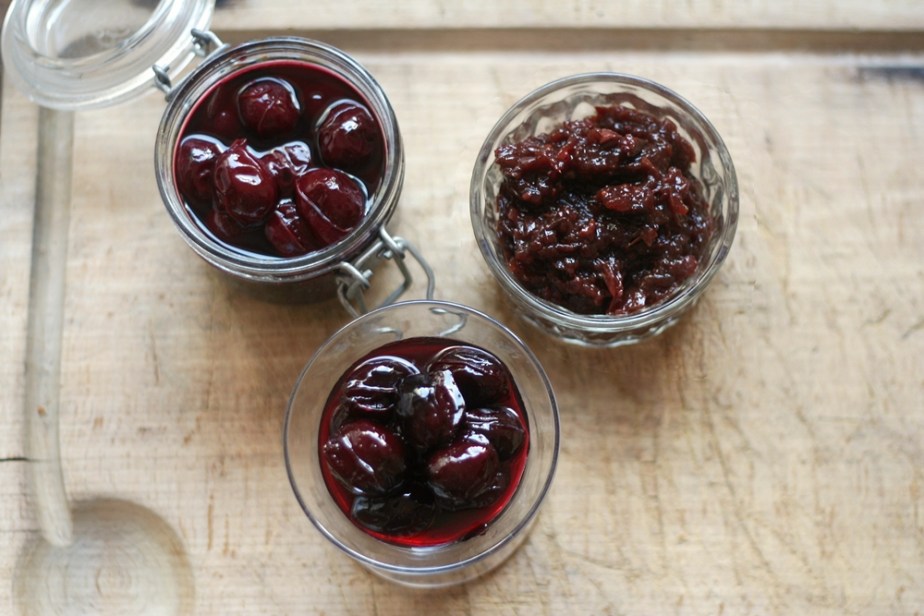
  • Sweet Chutney (top): Similar in flavour and texture to a modern Brown Sauce, but with much more of a spicy, tangy kick. It is the only one of the three that recommends waiting before enjoying, a grand total of 2 weeks.
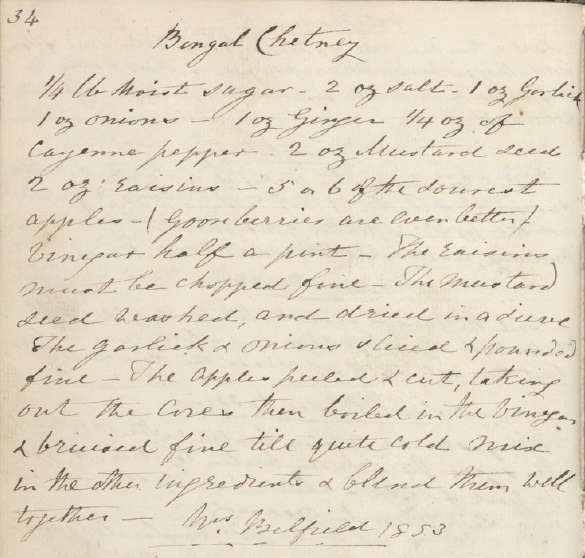
  • Mrs Belfield’s Bengal Chutney (front left): unusually pale and interesting, this chutney uses sour fruit, gooseberries if you have them in the freezer (I did) or sour apples instead. It’s sharp and tangy with just a hint of mustardy fire.
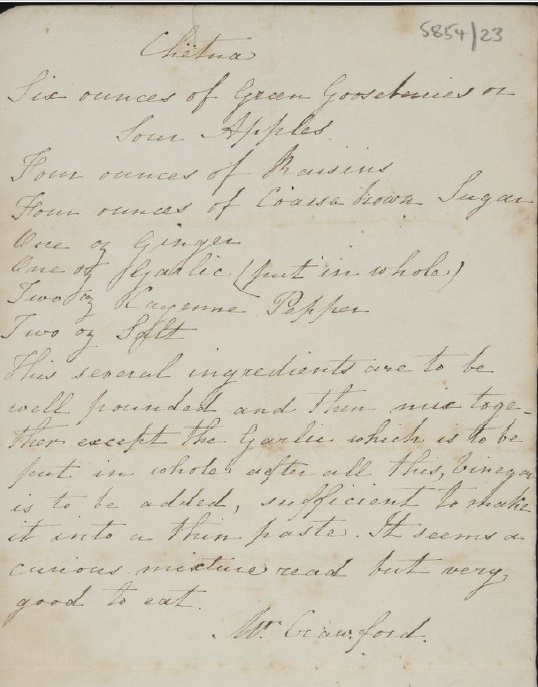
  • Mr Crawford’s Chetna (front right): my personal favourite. It wakes up your tastebuds with salty, sour, spiciness but doesn’t blow your head off with fire. Goes great with everything.  I’ve even used it as a salad dressing. A taste sensation.

I love all three of these recipes because not only do they offer a delicious taste of times past, they’re eminently practical in that they neither take forever to make nor do they result in vast quantities. Perfect for individual use with 1 or 2 spares in the cupboard to spare, or plenty for half a dozen gift jars.

Sweet Chutney

225g tamarind pulp
225g dates
225g fresh ginger
225g sultanas
225g onions
115g fresh chillies without seeds
4tbs dark muscovado sugar
2tbs salt

malt vinegar

  • Put all of the ingredients into a food processor and blitz until finely chopped.
  • Transfer all to a blender and add sufficient malt vinegar to make a pourable sauce.
  • Rub through a fine sieve – or not, your choice.
  • Pour into sterilised glass bottles and seal.
  • The sauce will be ready in a fortnight.
Sweet Chutney MS1846, Wellcome Library Collection, c1850-1875

Mrs Belfield’s Bengal Chutney

600g green gooseberries or 800g Bramley apples
300ml malt vinegar
115g soft brown sugar
56g salt
30g garlic
30g onions
30g fresh ginger
7g cayenne pepper
50g mustard seed – washed and dried
50g raisins – chopped fine

  • If using apples, peel and remove the cores. Chop.
  • Add the fruit to a pan with the vinegar and simmer until soft. Set aside to cool.
  • Put the cold fruit pulp and vinegar into a blender with the sugar, salt, garlic, onions, ginger, pepper and raisins and puree smooth.
  • Stir through the mustard seeds and bottle in sterilised jars or bottles.
Mrs Belfield’s Bengal Chutney, 1853, MS7733, Wellcome Library Collection.

Mr Crawford’s Chetna

170g green gooseberries or sour apple (peeled, cored and chopped)
115g raisins
115g dark muscovado sugar
30g fresh ginger
30g fresh garlic – peeled & left whole²
56g cayenne pepper OR 1 tsp dried red pepper flakes
56g salt

malt vinegar

  • Put all of the ingredients except the garlic into a food processor and chop finely.
  • Add sufficient malt vinegar to make a pourable sauce.
  • Add the garlic cloves and pot in sterilised glass jars.
Mr Crawford’s Chetna, 19thC, MS5854, Wellcome Library Collection

¹ The oriental interpreter and treasury of East India knowledge, 1848, Stocqueler, J. H. (1800-1885), C.Cox, London, p63.

² When I first made this, the garlic I had was quite large, so I sliced each clove in half. This made the garlic flavour stronger than if the cloves had been left whole, but not overpoweringly so. I decided to keep this modification for my own use, but the recipe above is the original.

Damson Preserves

Here’s a trio of preserves that champion one of my favourite sorts of food – free stuff!

Damsons grow wild in the hedgerows and along the canal banks and lanes of Herefordshire, Worcestershire and Shropshire, and the only cost is your time to pick them. They are tart, wild plums, about the size and shape of a large grape, with a soft, hazy-blue bloom to the skin. NB The size/shape is key to identifying true damsons – if the fruit is round and apple-shaped, it is a different wild plum known as a bullace.

I had an especially impressive haul of damsons this year, from three difference sources, so aside from the obligatory Damson Gin, I had enough to make batches of the above preserves for the first time, the recipes for which I have had bookmarked for years. Whatever your toothsome preference, there should be something for everyone here.

If you’re unable to find damsons, then all of these recipes will work with any kind of small, tart plums.

Damson Conserve

MS1795
From MS1795, circa 1685, Wellcome Library Collection

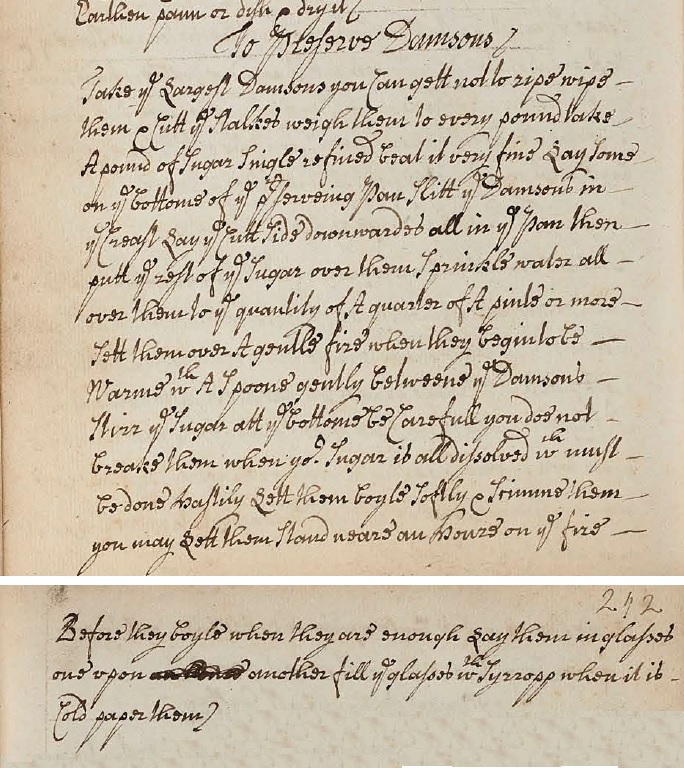
First up is the oldest of the three recipes, found in a household manuscript book at the Wellcome Library. Sadly for those of us interested in people as much as recipes, it is anonymous,  and dates from around 1685. It caught my eye because of the slightly unusual method it employs. Usually, the vigorous boiling in the making of damson jam renders the delicate fruit into a pulp, but the method in this recipe is strikingly similar to that employed by the modern queen of jam-making, la fée des confitures, Christine Ferber. Sugar is used to both draw out the juices of the fruit, and to infuse the delicate flesh, so that it can all the better withstand the cooking process. The result is beautifully whole damsons in a richly flavoured syrup.

You can make any quantity you like, by scaling up the recipe to suit the quantity of fruit you have. I have altered the recipe slightly, based on my experience of working with Madam Ferber’s recipes.

1lb damsons
1lb granulated sugar
120ml water

  • Remove the stalks and with a sharp knife, cut the skin of the damsons around “in the crease” as the recipe puts it.
  • Sprinkle a layer of sugar in a pan and set the damsons into the sugar, to draw out the juice.
  • Sprinkle the remainder of sugar over the top.
  • Pour over the water.
  • Cover and leave overnight.
  • Next day, heat very gently until the sugar has melted.
  • Lift the fruit out of the syrup and bring it to a boil.
  • Return the fruit to the now hot syrup and allow to steep overnight.
  • On Day 3, lift the fruit out of the syrup and bring it to a boil again.
  • Return the fruit and simmer for 5 minutes.
  • Transfer to warmed pots and seal while hot.

Miss Milward’s Pickled Damsons

19th century

Alison Uttley’s fictionalised autobiographical book The Country Child was one of my favourites growing up, and it remains so to this day. The book details her childhood growing up on a Derbyshire farm in the late nineteenth century – I highly recommend it.

Ms Uttley came across her mother’s recipe book whilst researching Country Hoard, and in response to encouragement from her published, produced Recipes from an Old Farmhouse in 1966. This recipe was made in vast quantities, to ensure there was a ready supply for the many mouths fed at the farm.

Almost equally sweet and sharp, they are equally good served alongside cold meats and cheeses, as spooned over ice cream.

You can halve or even quarter this recipe if liked.

3.2kg damsons
1.8kg white, granulated sugar
2 x 5cm cinnamon sticks
20g whole cloves
malt vinegar to cover

  • Layer the damsons and sugar in a casserole.
  • Add the spices and vinegar enough to just submerge the fruit, and cover with a lid.
  • Place in the oven and turn the heat to 120°C, 100°C Fan.
  • Bake gently for 1 hour to draw out the juices.
  • Set aside to cool.
  • When cold, drain the fruit from the syrup.
  • Heat the syrup until boiling, then pour over the fruit and allow to stand until the next day.
  • Repeat this draining/boiling each day for the next 7 days (for a total of 8 days).
  • Allow the damsons to stand in the syrupy pickle for seven  more days.
  • Spoon the damsons into warmed pots, boil the syrup and pour over the fruit.
  • Seal at once.
  • Cherries may also be pickled in this way.

Mrs Musson’s Baroda Chutney

This recipe, from Melton Mowbray in Leicestershire, won first prize in the Farmer and Stockbreeder Competition in 1950, and it is my new, favourite chutney. It can be found in a delightful little book entitled “Cook it the Farmhouse Way” by Barbara Wilcox. A digitised copy of the book can be borrowed for 2 weeks from The Internet Archive – click here.

The damsons give it a beautiful, rich colour, and the chutney can be eaten immediately. It is fantastic with both cold meats and cheeses.

1.35kg apples – peeled and cored
1.35kg marrow – peeled and chopped roughly
1.35kg tomatoes
900g damsons, counted
1.125kg onions – peeled
225g shallots
170g garlic
140g salt
1tsp dried chilli flakes
900g sugar
115g mustard seed – yellow or black
50g fresh ginger – sliced thin
15g whole cloves
1.7 litres malt vinegar

  • Chop the apples, marrow, tomatoes, onions, shallots and garlic. You can do this by hand or, as I did, by pulsing them 2 or 3 times in a food processor. You want  your resulting chutney to be fine enough to spread in a sandwich without any unseemly large pieces.
  • Put into a large bowl with the damsons, salt, chillies and sugar.
  • Mix thoroughly, then cover with cling film and leave overnight.
  • The next day, tie the spices and the sliced ginger in a muslin bag and add to the vegetables, together with the vinegar.
  • Mix thoroughly then pour everything into a preserving pan.
  • Bring slowly to the boil, stirring frequently, then turn the heat down and simmer until no excess moisture is visible – 4-6 hours – stirring regularly. Alternatively, you can cook this, uncovered, in a slow cooker. It requires less stirring, although the cooking time then increases to about 10 hours.
  • Remove the muslin bag of spices and fish out the damsons stones (optional – but you might want to write a reminder on the label if you keep them in). If you counted your damsons before cooking, you can easily keep track of how many stones you need to retrieve.
  • Pot and seal at once.

Wholemeal Oat Bread

For a number of years, my favourite brown bread has been the Grant Loaf, partly due to the almost ridiculously easy method of preparation, and partly due to its deliciousness, especially when either freshly baked, or lightly toasted.

However, even the most ardent of fans will admit that it is not a light loaf. It has certain brick-like qualities not limited solely to its shape. So the discovery of this loaf, which not only uses wholemeal flour, but adds oatmeal to it as well, and which results in a light and airy loaf, is a bit of a revelation. You’d think that mixing heavy, stoneground wholemeal with heavy oatmeal would be a recipe for a loaf of leaden qualities, but no – it’s almost as if these two ‘wrongs’ make a ‘right’. Fickle as I am, this is now my new favourite wholemeal loaf.

Like the Grant Loaf, it also takes advantage of the initial vigorousness of the yeast by being proofed only for two short intervals, making it much quicker than traditional bread.

The second difference is the shape in which it is baked. The recipe’s author, Sir Henry Thompson, was most famous for his expertise in the fields of medicine and surgery. However, as a recognised polymath, he was also knowledgeable in a number of other areas, including nutrition, exemplified by his book “Food and Feeding” (1879) in which he noted (on the subject of wholemeal flour)

it does not readily produce light agreeable bread when made in the form of ordinary loaves : a solid mass of this meal being a bad conductor of heat, will have a hard flinty crust if baked sufficiently to cook the interior ; or it will have a soft dough-like interior, if the baking is checked when the crust is properly done. Consequently the form of a flat cake, resembling that of the ordinary tea-cake, is preferable, since it admits of the right amount of heat operating equally throughout the mass.

4th Edition, p40.

The first edition of Sir Henry’s book suggested a mixture of wholemeal flour and fine flour. Later editions changed this to a recommendation of oatmeal – fine if using baking powder and medium if using yeast. I’ve tried both combinations and much refer the yeast version, as the baking powder version seemed to develop a sour taste quite quickly, although that might have been due to me using Sir Henry’s own version of baking powder which reversed the proportions we use nowadays, i.e. 1 part cream of tartar to 2 parts bicarbonate of soda.

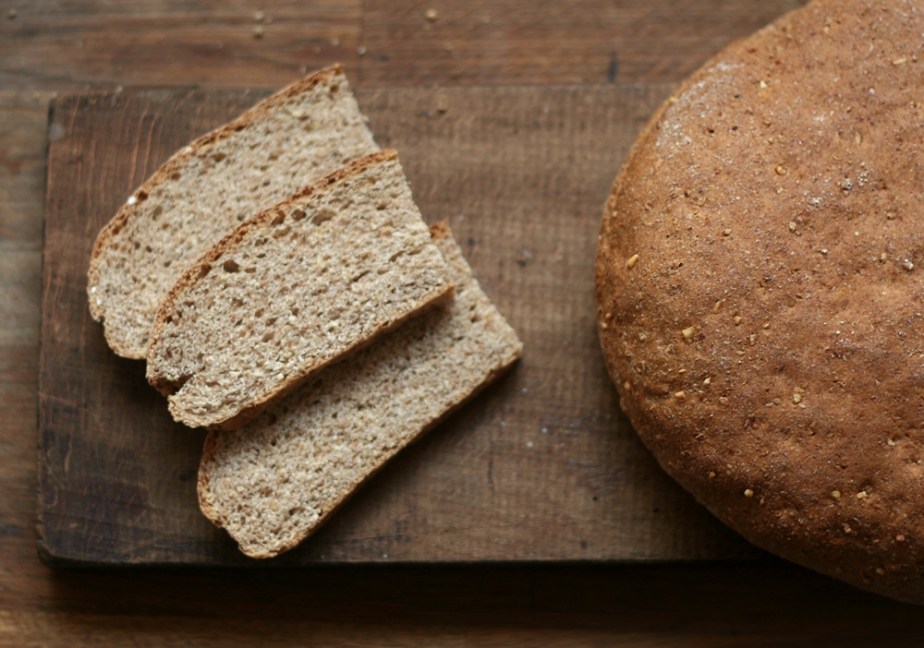
This recipe can be baked in two Victoria Sandwich tins and produces deliciously airy bread, ideal for sandwiches. You can cut slices across the loaf, as in the photo, or cut it into quarters for a simpler, but less elegant, wedge.

You can make this bread with ordinary wholemeal flour, but bread flour gives the better result. If you’d like to try the baking powder version, the quantity recommended for this recipe is 15g.

You can download a free copy of Sir Henry’s book, “Food and Feeding” (4th edition) here.

Wholemeal Oat Bread

450g stoneground wholemeal bread flour
115g medium oatmeal
20g fresh yeast or 1 sachet fast action yeast
5g salt
30g unsalted butter
400ml-ish half milk, half water, warmed

  • Put all the ingredients into a bowl and knead together for 10 minutes on slow using a dough hook, or by hand.
  • If using a dough hook, at the end of the 10 minutes, switch the speed to High for 2 minutes to bring the dough into a ball.
  • Allow to rise for 20 minutes.
  • Divide the dough in half, and mould each piece into a ball.
  • Press the dough into two greased, Victoria sandwich tins (20cm diameter).
  • Set to rise for another 20 minutes.
  • Preheat the oven to 220°C, 200°C Fan. Depending on how quickly your oven heats, you might want to do this as you set the bread for its second rise, or after it has been rising 10 minutes.
  • Bake for 15 minutes, then turn the heat down by 20 degrees and bake for a further 15 minutes.
  • To crisp up the bottom crust, tip the bread out of the tins and return the loaves to the oven to bake for a final 5 minutes.
  • Cool on a wire rack.

Shaping Meringues

I have a bit of a love/hate relationship with meringues. On the one hand they are extremely simple to make, with just two ingredients, but on the other, for the most part, they are almost universally blobby. Not such a defect, you might think, but it doesn’t help the elegance of a dish when one’s natural inclination is to the rustic.

So armed with one of my favourite baking books, I decided to experiment with trying to impose some order on these feather-light and versatile confections.

There are three basic types of meringue, which have come to be identified as French, Italian and Swiss, based mostly on how the sugar is treated in the mixing.

French meringue is the classic, with the egg-whites being whipped to soft peaks, before caster sugar is gradually added, then whisked to stiff peaks. This is a versatile meringue in that you can bake it by itself in blobs and nests an kisses or use it to top sweet-filled pies and tarts. However, it is not stable and will, over time, deflate back into a liquid. It needs to be baked after whisking.

Italian meringue has become very popular in recent times, due to its longer ‘shelf-life’ for want of a better word. The egg-whites are whisked together with a hot sugar syrup which cooks them enough to prevent them deflating once cold. Italian meringue can be folded into mousses and ice-creams to provide lightness and creaminess, can be piped directly onto cakes and pies and toasted either in the oven or with a blow-torch. It can also have butter whipped into it to make an indulgent filling/icing for cakes large and small.

Swiss Meringue is a method that falls roughly between that of French and Italian. The sugar and unwhipped egg-whites are stirred over simmering water until the sugar has dissolved, then they are removed from the heat and whisked vigorously until cool. This method makes for a firm, dazzlingly-white meringue that holds its shape exceptionally well, especially when piped with a patterned nozzle, which makes it the perfect meringue to use for adding a little more form and structure to your desserts.

This recipe comes from the Victorian baking book, “All about Biscuits” by H.G.Harris & S.P.Borella (c1900) and is listed only as a meringue mixture (one of many throughtout the book). It calls for caster sugar and the whites of eggs  to be whisked to a temperature of 66°C. Comparing this method with recipes available online, it is interesting to note that the ratio of sugar to egg-whites in modern mixtures varies, as does the temperature to which the mixture should be heated, from equal quantities by weight of sugar and egg-whites up to double the sugar to egg-whites, and in temperature from ‘until the sugar is dissolved’ as high as 80°C.

This recipe is a diplomatic middle-ground, but you should experiment to find the mixture that works best for you. What you do with the meringue after it is made, is really the main focus of this post, and my initial experiments are included below.  Most modern recipes stop after the mixing stage and either suggest the meringue be used as-is on top of pies and cakes, or that butter is whipped into the meringue to create a buttercream. Detailed below is a third option: that of baking the meringue dry to enjoy as they are or for use in other recipes. I hope to be able to add to the photographs as I discover additional suitable designs.

Use of silicone moulds

Meringue Shapes
Meringues shaped in silicone moulds

Use of flexible silicone moulds are the simplest way to give your meringues a professional look. Smooth the meringue into clean moulds, trying to ensure there are no air-pockets trapped between the mixture and the surface of the mould. The drawback of this approach is the length of time the meringues take to dry. The best method I have found, is to cook them at a slightly higher temperature initially (80°C), until the visible surface is cooked and firm, then gently ease them from the mould and allow them to dry overnight in an extremely low oven (mine will actually go as low as 30°C). They will be perfectly dry, dazzlingly white and will keep for days in an airtight container.

Meringues shaped in silicone moulds can be hollowed out to shorten baking time and provide room for a surprise filling

If you hollow out the meringue shapes, as seen above, not only does this reduce the drying time, but you can then use this for a hidden filling underneath, or turn the meringue the other way up and use it as a bowl for a moist and creamy filling: Eton Mess becomes Eton Tidy in an instant!

Use of piping tips

Spooned into a piping bag fitted with a shaped piping tip, Swiss Meringue is fantastic for creating shapes and designs with crisp details that hold their shape whilst baking. A few simple examples are listed below.

Meringue Ruffles made using the ‘leaf’ piping tip
Meringue Batons and Shells piped using an open star tip.
Meringue Feathers piped using an open star tip.
Meringue Swirls piped using an open star tip.
Meringue Fleur de Lys and Hearts piped using an open star tip.

Swiss Meringue

450g caster sugar
300g egg-whites

  • Put the egg-whites and sugar into a clean, dry bowl and set it on top of a pan of simmering water.
  • Be sure that the bowl doesn’t touch the surface of the water.
  • Gently stir the ingredients together until the sugar is dissolved and the temperature has reached 66°C.
  • Remove the bowl from the pan and whisk the contents briskly until the mixture is cold, firm, billowy and dazzlingly white.
  • Pipe onto parchment-lined baking sheets or into silicone moulds as you see fit.

To bake

The whiter you wish your meringues, the lower the temperature they need to bake, or rather, dry out. The shape will also dictate how long they require in the oven.

  • Preheat the oven to 100°C, 80°C Fan.
  • Bake for 1-2 hours, depending on shape, until set and firm. If you’re using silicone moulds, now would be the time to ease the meringues from the moulds.
  • Reduce oven temperature to 50°C, 40°C Fan and allow meringues to dry out.
  • Once cooled, store in an airtight container until required.