Slapan

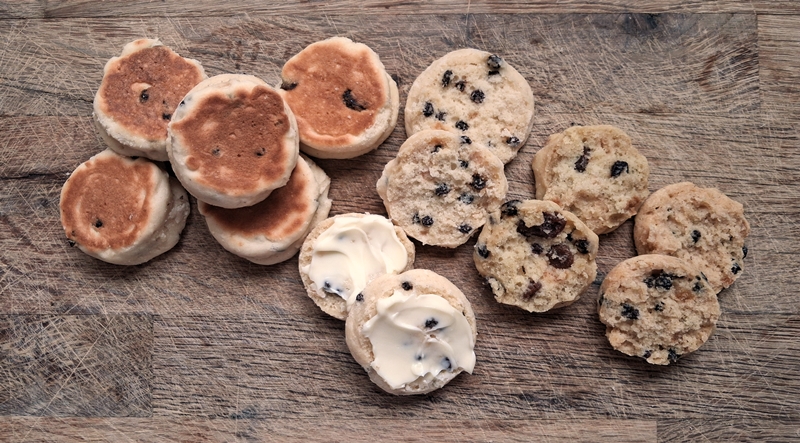
I’ve been reading a lot of bakestone recipes lately, and, spoiler alert, if you like Welsh Cakes, then this recipe is about to become your new favourite.

This recipe comes from a small but delightful mid-20th century recipe book. “Croeso Cymreig: A Welsh Welcome”, originally published by the Wales Gas Board in the 1950s (mine is from 1957). I’ve seen a couple of editions on the second hand market (AbeBooks) for about £20, but more modern editions seem available for as little as £3. These newer editions are published by Gwasg Dinefwr Press or John Jones Press under the title “Recipes from Wales – 113 Traditional Welsh Recipes”. Alternatively, you can view a copy online for free at Archive.com

One of the reasons why I like this book is that it includes several variations of the same recipe. Some of them have different cooking methods too, for example, there are three Teisen Lap (‘moist cake’) recipes that can be cooked in an oven, in a Dutch oven in front of the fire, or on a griddle.

Slapan originates in North Wales. The book contains two Slapan recipes – ordinary Slapan, and Slapan Sir Fon (Anglesey Slapan). The difference between the two seems to be that Slapan is made with mixed fruit, and Slapan Sir Fon is made with currants only. Doing some more reading, I found a third version – Slapan Dafydd (Saint David’s Slapan) – which is made with sultanas only.

There are subtle variations in both the liquid used (milk/buttermilk) and leavening agents (baking powder, bicarbonate of soda, and also a little of both), but essentially it is the same method for all: rub the butter into the flour, add the rest of the ingredients and bring together into a soft dough with the eggs and liquid. Spoonfuls of the dough are then cooked on a bakestone, turning halfway through. An important aspect of the appeal of these teatime dainties is the speed with which they can be brought to the table – not much more than 30 minutes from start to finish. Perfect for when company drops by unexpectedly.

Taste

So what are they like to eat? Really delicious, actually. I mentioned above that Slapan are similar to Welsh Cakes, and they are, but without any of the spicing of the latter. Also in contrast, they are very light. With all the love in the world, even Welsh Cake devotees must admit they’re decidedly firm in texture. The texture of Slapan is much closer to a scone, or a muffin, but decadently rich with butter. They are not overly sweet, the dried fruit contributing a lot, so there is relatively little sugar added. Slapan are best served warm from the pan, split and generously buttered. Crisp outsides give way to a soft, cake-like centre, and with lashings of delicious butter melting inside, it’s a surprisingly rich treat.

Equipment

You don’t need a bakestone to cook your Slapan, a non-stick pan and a heat source with serve just fine. Slapan are baked, not fried, so there is no need to grease the pan. The traditional method is to spoon the mixture onto the bakestone using two spoons, but I found my small ice-cream scoop² much easier to use, in addition to making small, delightful 2-bite Slapan.

Slapan

Each batch makes approximately 12 Slapan. If you’re using gluten-free flour, then you may need to add extra flour (see note below).

120g plain flour/gluten-free flour³
60g chilled butter – cubed
20g sugar (caster or soft brown)
¼ tsp salt
scant ½ tsp baking powder
30-50g mixed dried fruit/currants/sultanas
1 large egg
2-ish tbs milk

  • Put a non-stick pan onto a medium (number 5 on my 1-9 electric hob) heat and let it come to temperature while you mix up the dough. if you’re using gluten-free  flour, you should delay this until the mixture half-rested.
  • Put the flour, butter, sugar, salt and baking powder into the bowl of a food processor and blitz until the mixture resembles breadcrumbs.
  • Crack the egg into a mixing bowl and add milk for a total of 90ml of liquid. Whisk together well (I use a stick blender), then add the flour mixture and dried fruit.
  • Fold together until the mixture forms a smooth-ish dough. The consistency should be like that of a fruit cake, or mashed potatoes. Definitely too soft to roll out.
  • Using a small ice-cream scoop, or two spoons, drop the dough into the now hot pan. Drop them around the edge, rather than the middle, so that they don’t scorch. Cooking them all at once will make it tricky to turn over, so do two batches of six or seven.
  • Bake for 5 minutes. A light crust will form on the bottom of each heap.
  • Using two cocktail sticks, carefully turn each Slapan over.
  • Bake for a further 3-4 minutes until the underside is as browned as the top.
  • Cool on a wire rack.
  • Split, butter and serve warm.

Bonus Recipe: Christmas Slapan

Here’s my own take on a Slapan variation, seen top right in the photo – with the addition of candied peel, mixed spice and a splash of booze. Much quicker to rustle up than mince pies.

120g plain flour/gluten-free flour³
60g chilled butter – cubed
20g soft brown sugar
¼ tsp salt
scant ½ tsp baking powder
½ tsp mixed spice
15g candied lemon and orange peel, finely chopped
15g dried cranberries or barberries
20g dried currants
1 large egg
1 tbs brandy
1 tbs cream sherry/madeira

  • Method as above.

¹ You need to sign up to be able to borrow books, but it is free, no strings attached.

² A small ice-cream scoop of 4cm diameter, roughly 30ml volume.

³ I’ve made this recipe with two different gluten-free flours. Schar’s Baking/Patisserie flour (red bag) contains a thickener (guar gum), and so the recipe took the same quantity of flour as regular flour. Dove’s Farm Freee gluten-free flour contains no thickener, and they recommend adding xantham gum when using. I didn’t have any, so I ended up adding more flour (60g in 2 batches of 30g) and allowed it to sit a while (20 minutes) to allow the excess liquid to be absorbed.

Nankaties

Something a little different for you this week, dear Reader, and something of a surprise, perhaps.

These are Nantakies: Indian shortbread biscuits that are still enjoyed today, mainly at Christmastime.

This particular recipe comes from a book printed in 1887 in Bombay (Mumbai) at the height of the British rule in India. It is one of many Indian cookery books in English that I have collected over the years and is freely available to download at The Internet Archive.

What first drew me to this shortbread recipe was the small number of ingredients when compared to modern recipes. Also, following on from my earlier shortbread investigations, I was curious to know how using 100% ‘rolong’ (semolina) as the flour ingredient would affect the taste and texture.

Initially, testing this recipe went poorly, because I used coarse semolina. Switching to finely ground semolina (found in my local orange supermarket under the brand name Natco) was a great improvement. It was still too sweet for my tastes, so I tinkered a little with the ratios and switched out regular butter for more appropriate clarified ghee.

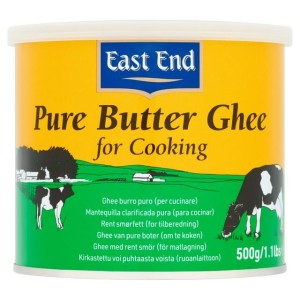
In the UK, ghee can be found in supermarkets and smaller shops in distinctive green and gold tins. Once opened, they don’t require refrigeration and can be stored in a drawer/cupboard. However, I must impress upon you that not all tins of ghee are the same. The very best brand, in my humble opinion, is East End.

Opening this brand especially, releases an almost perfumed aroma that immediately sends you to a more exotic and fragrant place. I have not had the same experience with other tins of ghee – purchase them at your peril!

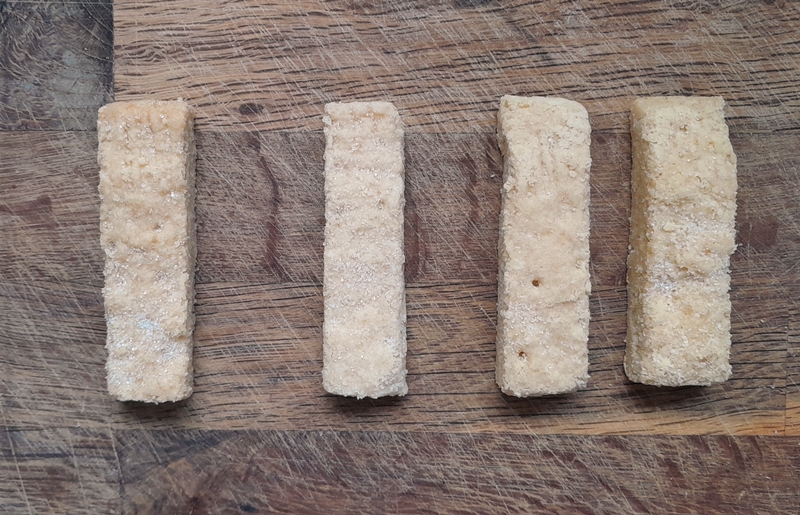
The result of the tweaks and changes made for  a wonderfully aromatic and decadent shortbread bite, needing no further flavouring. However, if you’d like to add a hint of cardamom or rosewater, I think it would be a delicious variation. The golden colour from the ghee remained during baking in the cool oven and I have added a gold dragee to the top of each one as an exotic but restrained decoration.

You will have noticed that there are two shades of biscuit in the above photograph. Spurred on by my success with the tweaked original, I also made a gluten-free version using ground rice instead of semolina, and accented the biscuits with a silver dragee. I used up most of my ground rice in doing so and when I went to buy more I was disappointed to find that my local shops no-longer stock ground rice as a matter of course: perhaps it’s viewed as old-fashioned. I would have thought it would be readily available, given its usefulness in gluten-free baking, but there are numerous shops online that stock it, so all it requires is a little forward planning.

I wanted small, neat biscuits and having persevered with hand rolling various sizes, I eventually found the perfect ‘mould’ in my tablespoon measuring spoon. It was a little fiddly to form the biscuits one by one, but well worth it in the end result.

Nankaties – 1887, Mumbai

Makes 12-20 biscuits, depending on size.

150g finely-ground semolina or ground rice if gluten-free
75g ghee
35g icing sugar

gold/silver dragees for decoration

  • Heat the oven to 150°C, 130°C Fan if baking the biscuits immediately. Otherwise, heat the oven just before removing the chilled biscuits from the fridge.
  • Put the ingredients into a food processor and blitz until the mixture resembles breadcrumbs. It will have a texture of damp sand, and will hold together when pressed.
  • Tip out the mixture and shape your biscuits – either by hand rolling or by pressing it into a mould. If you choose the measuring tablespoon method mentioned above, I found it useful to use some plastic wrap/cling film to line the spoon, which made it very easy to remove the moulded biscuits without damaging them. Be sure to pack the mixture firmly in order for it to keep its shape during baking.
  • Arrange your biscuits on a baking sheet lined with parchment or a silpat mat.
  • Add the dragee decoration if using.
  • You can chill the biscuits in the fridge for 30 minutes before baking, if liked. It can help retain a neat shape, although I should point out that the biscuits in the photo above were not chilled before baking. If you want especially crisp edges to your biscuits, you can always neaten them once cold with a microblade grater.
  • Bake for 30-40 minutes until crisp. The colour won’t really change, due to the low temperature.
  • WARNING: the biscuits will be extremely delicate when hot. Leave them to cool on the baking sheet/tin until completely cold before moving them.
  • Store in an airtight tin.

Shortbread Variations

This week’s recipe subject came about, as it increasingly does of late, with a casual thought when looking for something else.

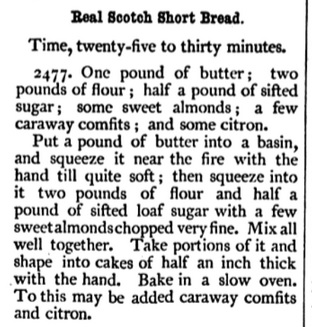
Behold this recipe from Mary Jewry, editor of Warne’s Model Cookery and Housekeeping Book (1868). The first thing that caught my eye, and got me thinking, was the proportions of the ingredients. Nowadays, a proportion of 1:2:3 (of sugar, butter and flour) is touted by many as traditional, but here was a proportion of 1:2:4. Also of interest was the addition of ground almonds to add texture, whereas modern purist recipes staunchly abide by the ‘rule of three’ (i.e. no additions, especially not caraway comfits and citron). Lastly, there was the cooking temperature – a slow oven – which is different to the short sharp bake at high temperature in use today.

I resolved to put these variations to the test, but then the addition of the almonds got me thinking some more: what else has been added to traditional shortbread, and to what end? The answer turned out to be: quite a bit. I ended up baking twelve batches of 1:2:4 shortbread, each with a different ingredient making up 1/4 of the flour component, and performing a giant taste test to see which was, for me, the ultimate combination. And here’s a key point: it’s all down to personal taste. What I might find delightful, others may find not to their taste. I’m hoping that by presenting a wide range of options, you too may find your ultimate shortbread recipe.

Here are the choices I made:

  • Sugar: I chose to use soft light brown. This was to give a more rounded flavour to the shortbread. White caster (superfine) sugar is sweet, but only that – rather one note.
  • Butter: unsalted, but with a small quantity of salt added. I had made some shortbread recently, and used salted butter, and the shortbread was delicious, but the finishing lick of saltiness might be an acquired taste. I tried another batch with unsalted butter, and this proved less popular, so for the run of test batches I resolved to split the difference and use unsalted butter, with just a quarter teaspoon of salt.
  • Flour: regular, unbranded white plain flour. After baking a control batch using 100% flour, the remaining batches each had 1 part of the flour component as a different ingredient. These comprised: ground almonds, rice flour, ground rice, cornflour, ground almonds, semolina, fine cornmeal and coarse cornmeal (caveat: I was unable to find any coarse cornmeal, and used polenta instead).

The Results

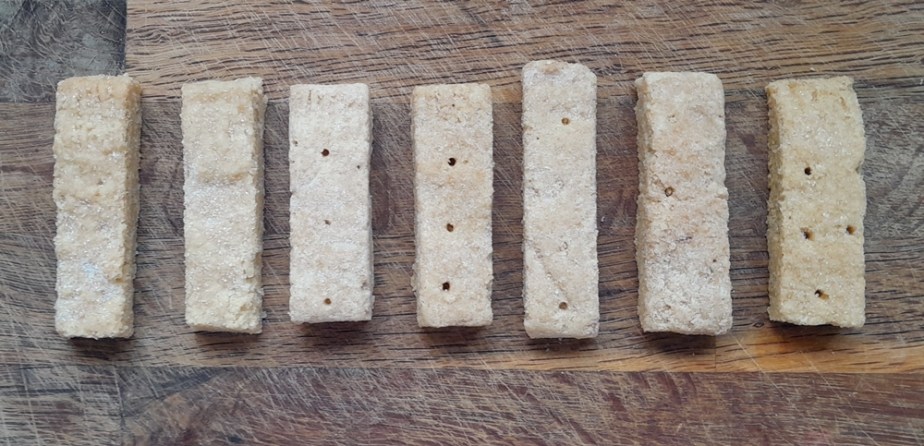
There are several outcomes from this mammoth bake and taste test. (Top image, Shortbread Variations: From the left, classic (butter, sugar, flour), then baked with: cornflour, rice flour, semolina, ground rice, ground almonds, polenta).

  • The ‘flours’ – these can be divided into two groups, the powders and the granules. Both affect the texture of the finished shortbread.
    • The powders include cornflour, rice flour, fine cornmeal (and possibly by extension, arrowroot, potato starch). The effects of using these powder-fine flours is to make the texture of the shortbread crisp and ‘melt in the mouth’.
    • The granules include ground almonds, ground rice, semolina, coarse cornmeal, polenta. The  effects of using these granules is to make the shortbread both crisp and crumbly. They create a thin, outside ‘crust’ and inside deliciously friable and crumbly. Ground almonds obviously bring a nuttiness to the cooked shortbread, which, if it’s your favourite, could be intensified by using ground hazelnuts. The polenta/cornmeal versions also baked to a gorgeous golden colour.
  • The long, slow baking allows the shortbread to cook though thoroughly. Sometimes I have had shortbread where the outsides are cooked, but the insides moist, dense and almost doughy. This method of cooking eliminates that.
  • To further improve the texture of the shortbread, it was returned to the oven to cool, to ensure all moisture is eliminated. The shortbread should not be stored until completely cold.
  • A number of gluten-free batches were made, although fewer that those using regular flour. I have always had good results by substituting Doves Farm gluten-free flour on a 1-for-1 basis, and so it proved here. NB Gluten-free shortbread is extremely delicate when freshly baked, and will need a very careful approach (see below). However, if my advice is followed, once cooled they will be much more sturdy.

Gluten-free shortbread variations: classic, ground rice, fine cornmeal, polenta

To summarise: All the shortbread versions were delicious, and unless you line them up side by side like I did, it is unlikely that you would be able to rate one over another, It’s really almost splitting hairs to rank them – everyone’s personal taste is different – so I won’t. One observation of mine, which you are free to discard, is that, for my tastes, the shortbreads were a little sweet, so in my perfect recipe (below), I reduced the amount of sugar to just 45g – it’s practically health food! With the sprinkling of sugar on the top, it made for the perfect amount of sweetness.

People with gluten sensitivity: At the risk of stating the obvious, almost all of the flours can be enjoyed – rice flour, corn flour, ground rice, fine corn meal, coarse cornmeal/polenta, ground almonds, ground hazelnuts – and as already mentioned, probably arrowroot and potato starch as well. A gentle reminder that the one exception is semolina. SEMOLINA is made from durum wheat and is NOT GLUTEN-FREE.

The Recipe

60g soft brown sugar
120g unsalted butter, chilled
180g plain flour – or gluten-free flour
60g your choice of additional flour
¼ tsp salt
a little caster sugar for sprinkling

  • Line a small baking tin (18cm x 25cm) with baking parchment. Leave extra parchment overlapping the sides, to assist in moving the baked shortbread.
  • Heat the oven to 160°C, 140°C Fan.
  • Cut the butter into cubes and add to the bowl of a food processor fitted with a blade.
  • Add the remaining ingredients to the butter and pulse briefly until the mixture resembles breadcrumbs.
  • Tip the mixture onto the parchment, and press into an even layer.
  • Use a round skewer to poke holes all over the surface of the slab of shortbread.
  • Use the tines of a fork to mark the shortbread along the long edges of the tin.
  • Bake the shortbread for 30 minutes, turning the tin around after 15 minutes to ensure even baking.
  • Once the shortbread is baked, there are additional steps you need to take in order to make your shortbread the very best,
    • Remove the shortbread from the oven. Keep the oven on.
    • Sprinkle the surface of the shortbread with a little caster sugar.
    • Using a very thin bladed knife or (ideally, in my opinion, a metal dough scraper), cut the shortbread into pieces. I cut mine lengthwise in half, then across into fingers 3cm wide.
    • Allow to cool in the tin for 15 minutes.
    • Gently slide the parchment out of the tin and onto a baking sheet. Smooth out the parchment.
    • Using the dough scraper (or palette knife turned sideways), ease the shortbread pieces apart to leave a 5mm gap in-between. You want to gently push them apart, not try and slide anything underneath, because the shortbread will break. NB The gluten-free shortbread will be EXTREMELY delicate, take extra care at this point.
    • Return the shortbread to the oven, switch the oven off and leave to cool until both oven and shortbread are completely cold. I baked most batches in the evening and let the shortbread cool overnight. If baking during the day, it will take between 3-4 hours.
    • When completely cold, transfer the shortbread to an airtight container to store.

Bonus

On a personal level, I discovered that I much preferred the gluten-free shortbread made with the grains, specifically cornmeal, the texture being surprisingly moreish. I think the natural sweetness of maize and the greatness of the flavour when pairing with butter is a significant contribution. To this end, I decided to make one more batch, with cornmeal, and some raw butter (made from unpasteurised milk). In the 19th century all butter was raw butter, so I reasoned that this would be even more authentic (I had brought some raw butter back from France this summer). To cut a long, rambling story short – it was amazing. If you have the opportunity to get your hands on some raw butter made from unpasteurized milk, do it, and then make shortbread. It’s sublime. It is possible to get raw butter in the UK, but it is more expensive than regular, and in the current cost of living crunch, it might not be your number one priority. However, if you fancy treating yourself, then Sainsbury’s stocks Isigny Sainte-Mère salted raw butter, whilst Ocado has both salted and unsalted (doux).

My Perfect Shortbread

45g soft brown sugar
120g raw butter made from unpasteurized milk, chilled
180g plain white gluten-free flour
60g coarse cornmeal
¼ tsp salt
a little caster sugar for sprinkling

Make and bake as above.

Vegan Lemon Curd

This is a recipe from May Byron’s Rations Book (1918). Rationing during the WW2 is well known, but it was also introduced during the last year of the first world war. Confession time: I’ve changed the title of this recipe from the original. The original recipe is for Lemon Curd Without Eggs, which would have been a concern back then through food rationing. In this day and age, it is mainly be a dietary choice, so I have opted for the (nowadays) clearer and more succinct term, ‘vegan.’

It also has a lot of other things going for it, like being fat free, dairy-free, gluten-free and coconut-free. There are lots of vegan lemon curd recipes out there, but the vast majority seem to employ some kind of fat and many of them also include coconut cream to give body to the finished result and turmeric for colour.

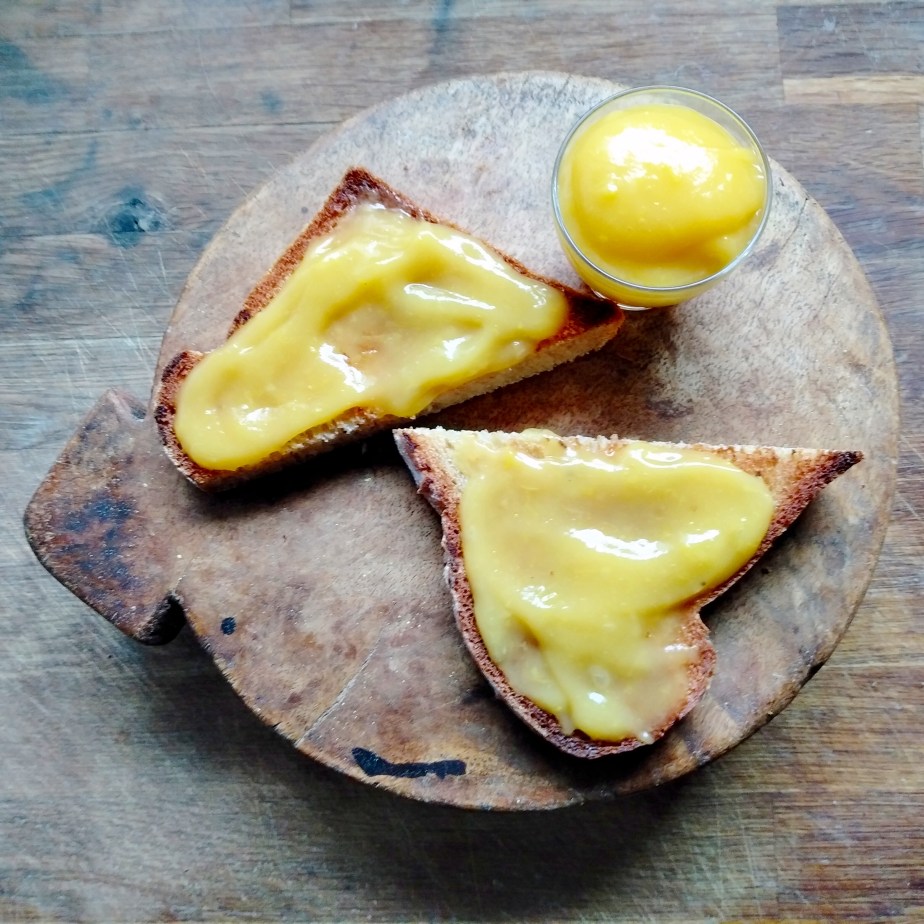
This recipe has none of that, because the main ingredient in this recipe is swede. Yes, swede the vegetable. Also known as rutabaga, or ‘neeps’ if you’re in Scotland (shortened from Swedish Turnips, in case you were wondering). A mild-flavoured root vegetable, it adds body and also colour to the lemon curd. A little sugar, lemon-zest and juice and a gentle thickening with arrowroot, and you have a gloriously golden preserve to spread on your toast, fill your cakes and tarts and drizzle over ice-cream.

It doesn’t have to be arrowroot – although I do like the quick and ‘gentle’ set it has, and it’s ability to go clear when it’s setting qualities have ‘activated’. When cold, its not as firm/rubbery as other thickening agents. You could alternatively use cornflour, tapioca flour, sago, ground rice, etc. These last two were also in the original, but the sago needs to be soaked overnight and then cooked until translucent, and the ground rice made for a slight graininess, all of which takes away the spontenaiety. More cooking might have addressed the texture issue, but any prolonged cooking you run the risk of losing the fresh lemon flavour of the juice and zest.

And the flavour is the best thing about this recipe. It’s bright and fresh without any cloying richness from butter or eggs. It’s practically health-food!

This method could also be used for other citrus/fruit curds.

Vegan Lemon Curd

Makes about 250ml.

225g swede – peeled and diced small
85g caster sugar
zest and juice of 2 lemons
pinch of salt
15g arrowroot

  • Simmer the swede in boiling water until tender (15-20 minutes).
  • Drain and return to the warm pan. Turn off the heat and allow the excess moisture from the swede to evaporate.
  • Puree the swede. Because it is a small amount, it can be done in a spice grinder or small liquidiser. It is important for the texture to use something with offset blades – that is, blades pointing in different directions – to ensure a smooth puree. A food processor, with it’s flat blades spinning in just one plane, won’t chop things finely enough. Spare a thought for May Byron’s original readers, who had to press the cooked swede through a sieve.
  • Add some lemon juice to make the pureeing easier.
  • Return the puree to the cleaned pan and add any remaining lemon juice, the zest, the sugar and the salt.
  • Mix the arrowroot with a tablespoon of cold water and pour into the pan.
  • Heat gently, stirring, until thickened (4-5 minutes) and you can no-longer see the whiteness of the arrowroot mixture.
  • Pour into a clean jar and store in the fridge.


Dutch Macaroons

Macaroons have been a favourite British treat for centuries. Their form, shapes and flavours might have changed over the years, but they basically remain a mixture of sugar, ground nuts and egg white.

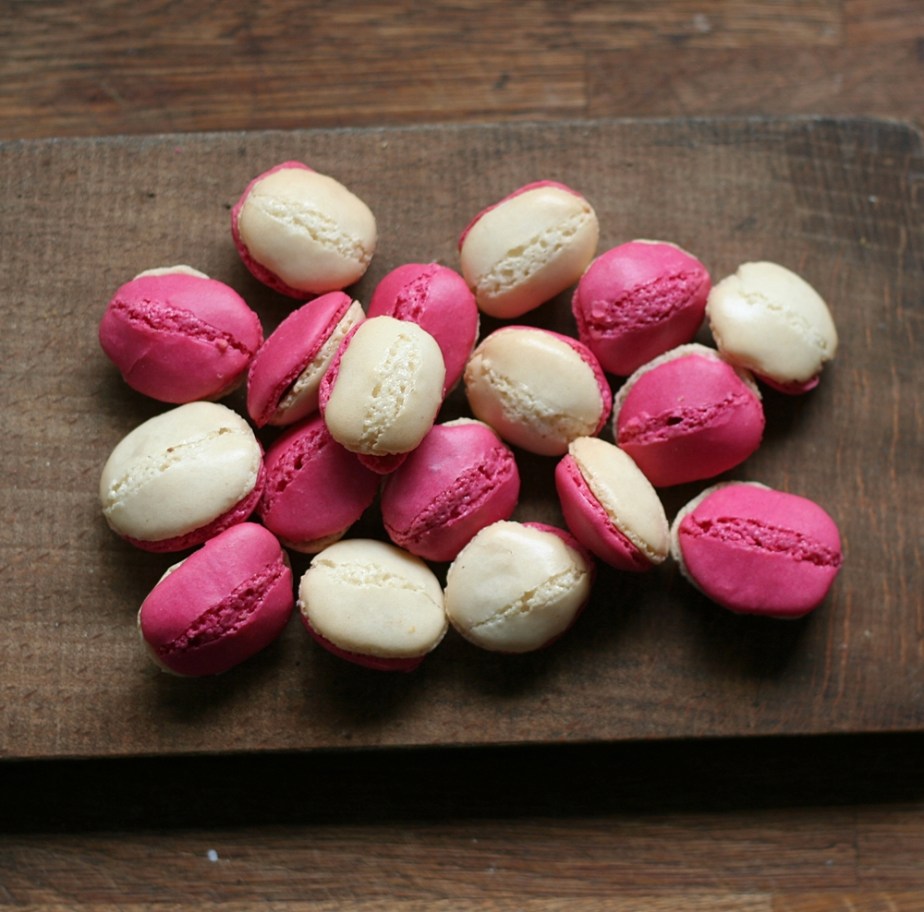
These colourful specimens come from Harris & Borella’s All About Biscuits (c1900), a commercial handbook for the Victorian/Edwardian baker. Unlike the modern preoccupation with a relatively small number of shapes made from a seemingly standard recipe, this book boasts over fifty different macaroon recipes, many of which can be further varied in terms of both colour and flavour and thereby increasing the variety close to a hundred. I think we are missing out on enjoying so much variety by focusing on inconsequentialities such as getting the perfect ‘foot’ on a plain, round macaron – as if that impacts how it tastes. I plan on returning to this chapter in this book on a regular basis, so  stay tuned for more macaroon delights!

These miniature biscuits are just three centimetres in length and about two wide, and the two complimentary flavours are sandwiched together to give a tiny but elegant treat. They aren’t actually sandwiched with anything – their innate stickiness when removed from the baking parchment is enough to join them together, meaning the flavours can be savoured without additional distraction.

There’s nothing stopping you from having a filling, of course – seedless raspberry jam or redcurrant jelly for a burst of sharpness, a white or dark chocolate ganache for richness – but it would be like gilding the lily.

These macaroons get their distinctive form by allowing them to dry a little after piping, then just before baking, cutting through the paper-thin skin that has formed, into the moist mixture beneath. This forces the biscuits to expand in this one place during baking as the egg-white cooks. Whilst each one may vary slightly in the degree to which it expands, there’s much greater uniformity and less likelihood of lop-sidedness. The result is a batch where all the biscuits are much more similar, yet still retaining an organic, freestyle quality. The effect is very striking – much more preferable to the regimented uniformity of the modern, frequently machine-made style – and yet so simple to achieve. The original instructions suggest a sharp knife for this task, but I recommend using a baker’s lame (lah-may) or a single razor blade, in order to get a perfectly clean and sharp incision.

Dutch Macaroons

This is, to a large extent, a proportional recipe, so you can scale it up or down to your requirements. It calls for two parts sugar to one part ground almonds, with one egg-white for every 150g of almond/sugar mixture.

100g ground almonds
200g caster sugar
sufficient egg-whites to mix (about 80ml/2 large)
vanilla extract
raspberry flavouring
claret food colouring

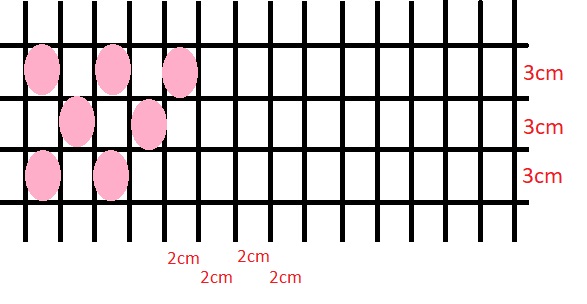
  • Cut a piece of baking parchment to fit your baking sheet, and mark up a grid as below, of dimensions 2cm by 3cm. Turn the parchment over (so your macaroons won’t pick up any marks from the pen/pencil) and lay onto your baking sheet. Have ready two piping bags fitted with a 5mm plain nozzle. If you have disposable bags, you can just snip the end to 5mm.
  • Parchment mark-up
  • Select two mixing bowls, one of which will be used over simmering water. The other bowl will need to be heated with hot water until required.
  • Set a pan of water to heat to a simmer.
  • Put the sugar and almonds into one of the bowls and gradually whisk in sufficient egg white to make a mixture that  will run slightly.
  • Put the pan over the simmering water and whisk vigorously, either using a balloon whisk or with an electric whisk until the mixture is just hot enough for a finger to bear.
  • Remove the bowl from the heat.
  • Empty and dry the second bowl and pour half of the mixture into it.
  • Add vanilla flavouring to one mixture, and raspberry flavouring to the other, together with enough colouring to make a rich magenta (the colour will fade a little during baking.
  • Pour the mixtures into separate piping bags and pipe oval macaroons 2cm by 3cm in alternate squares in your grid.
  • Set aside until a thin sin has formed. The original recipe suggested overnight, but if this is inconvenient, a workaround would be to set your oven to 170°C/150°C Fan for one minute, then turn it off and put the baking sheet into the just-warm oven. Check after 1 hour, and if the skin hasn’t formed, repeat and leave for another hour.
  • When ready to bake, remove the baking sheet from the oven and heat it to 170°C, 150°C Fan.
  • Using a lame/razor blade, slice through the skin of each macaroon vertially down the centre.
  • Bake for ten minutes, turning the baking heet around after five minutes to ensure even colouring.
  • Allow to cool on the sheet.
  • When cold, wet the work surface and slide the baking parchment onto it. After a few minutes the macaroons should lift off easily and you can sandwich them together with one macaroon of each colour. If you’re using fillings, you might like to join the same colours together.  Go wild.

Cornflake Tart

A trip down my own personal memory lane this week, with a classic of the school dinner repertoire, Cornflake Tart.

In the 1970s and 1980s, long before the advent of the dreaded turkey twizzler, my mother was a supervisor of a kitchen that cooked dinners for seven schools in the local area, including the one I attended, so I am perhaps more familiar than most with the full range of tasty, economical and wholesome home-cooking-style meals of that era.

Whilst some dishes (spamspamspamspam) left me cold and some serving decisions (tinned tomatoes + cheese tart always = soggy tomato-juice pastry) lacking in thought, the desserts were almost (I’m looking at you, semolina-and-red-jam-blob) universally adored.

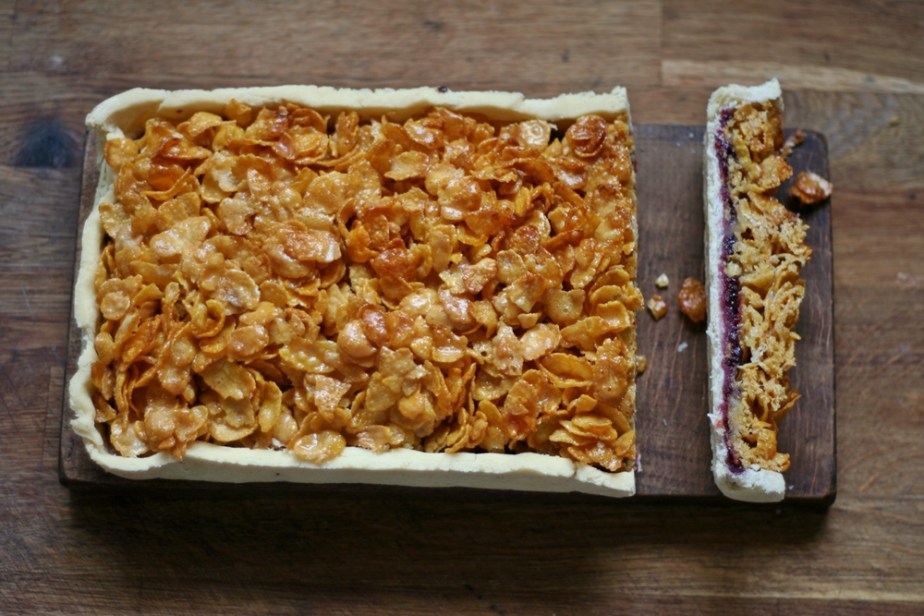
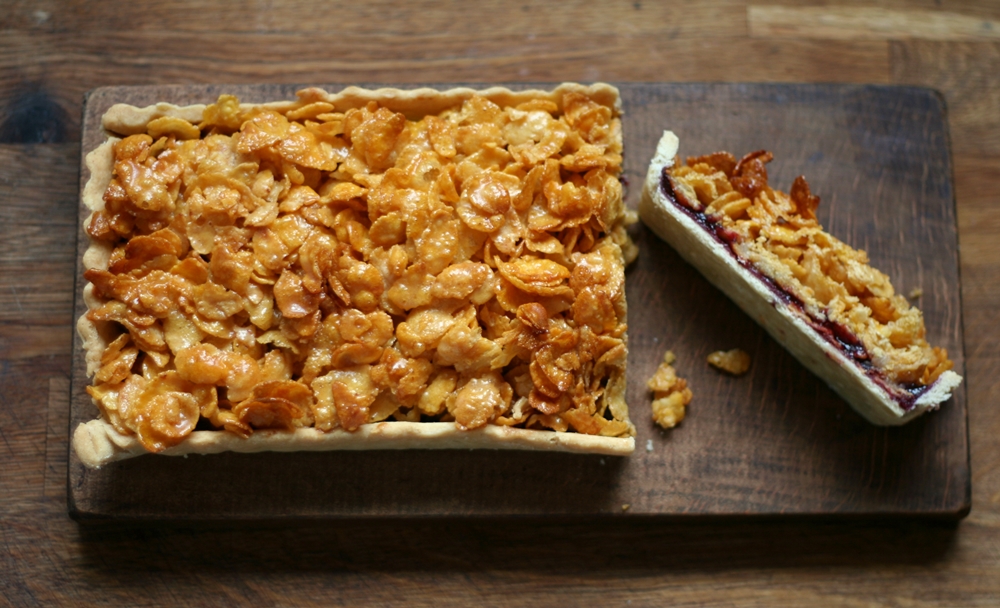
I’ve written before about Gypsy Tart and Butterscotch Tart, and today we have to join them, the classic, even iconic, Cornflake Tart. I also want to take a few moments to discuss ingredients because, when they are this few in number, they can make or break a dish. By the same token, just because ingredients are humble, doesn’t mean that you should treat them carelessly, and that paying attention to the small details with the same care that more expensive ingredients might warrant, can reap rewards just as great with only a fraction of the cost.

Cornflake Tart has four main ingredients: shortcrust pastry, jam, cornflakes and caramel.

  • Shortcrust pastry. You can use any recipe you like, even buy ready-made if time is short, but I would like to strongly recommend my cornflour shortcrust for this particular tart, for a number of reasons. Regular shortcrust usually uses half butter and half lard as the fat in order to give the best texture and flavour, but this prevents it being enjoyed by vegetarians. My cornflour shortcrust is made with all butter, making it vegetarian-friendly, and the cornflour adds the crispness. You can make delicious gluten-free pastry by substituting Doves Farm gluten-free flour for the regular flour. I actually prefer the pastry in this recipe to be gluten-free, as the crumbly texture is fantastic against the sharp jam and sweet, crunchy cornflakes.
  • Jam. You can use any kind of jam you have to hand, and strawberry seems to be a popular choice, but I recommend something sharp, to contrast with the sweetness of the caramelised cornflakes. Raspberry is good, as is blackberry (see photos), blackcurrant, cranberry, redcurrant, apricot or even apple butter. Also, it should be smooth and free from lumps, so warm and sieve/puree it before spreading onto the cooked pastry. This way you get the benefit of all the flavour and none of the distractions.
  • Cornflakes. Surprisingly, regular cornflakes aren’t gluten-free, due to the barley malt used as a flavouring. On the plus side, gluten-free cornflakes are both available and practically indistinguishable from their mainstream counterparts.
  • Caramel. I say caramel, but the addition of butter to the mixture pushes the sticky, golden glue that holds this tart together more towards a butterscotch than a true caramel. You can emphasize this even more by using soft brown or light muscovado sugar. Whatever sugar you choose, it is important to warm it slowly with the other ingredients until fully dissolved, so that the shine on your finished tart isn’t spoiled by visible sugar crystals.

Cornflake Tart

These quantities are sufficient for a medium-sized tart that will serve anything between 1 and 10 people, depending on appetite.

Pastry
225g plain flour or Doves Farm gluten-free flour
60g cornflour
140g unsalted butter
ice-cold water to mix

Filling
200g sharp jam, warmed and sieved/pureed
60g butter – salted or not, your choice
60g sugar – caster or granulated
60g golden syrup
110g cornflakes – regular or gluten-free

  • Make the pastry: Put the flours and butter into the bowl of a food processor and blitz until the mixture resembles breadcrumbs.
  • With the machine running, gradually add the cold water a tablespoon at a time until the mixture comes together in a ball.
  • Tip the mixture onto a floured surface and knead smooth.
  • Roll out thinly (5mm) and line a tart or flan tin lined with parchment. For the gluten-free pastry, roll it out onto parchment cut to size, then lift into the tin and shape the corners/edges with your fingertips.
  • Cover with cling-film and chill in the freezer for 20 minutes.
  • Preheat the oven to 200°C, 180°C Fan.
  • Remove the pastry from the freezer and prick the base with a fork to prevent blistering.
  • Line the pastry with baking parchment and rice/baking beads.
  • Bake for 15 minutes. Remove parchment and rice and bake for a further 5-10  minutes until pale but cooked.
  • While the pastry is baking, make the caramel syrup.
  • Put the sugar, butter and syrup into a small pan and heat gently, whilst stirring, until the sugar has dissolved. Pour the cornflakes into a large bowl.
  • Allow the sugar mixture to simmer gently for 5 minutes then pour over the cornflakes and toss thoroughly to coat.
  • When the pastry is baked, spread the warm jam over the base of the tart and add the cornflakes. Spread the cornflakes evenly over the tart and press lightly but not enough to crush the cereal.
  • Return the tart to the oven for 10 minutes to ‘set’ the topping.
  • Allow to cool in the tin.
  • Slice the cold tart into portions with a sharp knife and store in an airtight container.

Bonus recipe – Gluten-free Scones

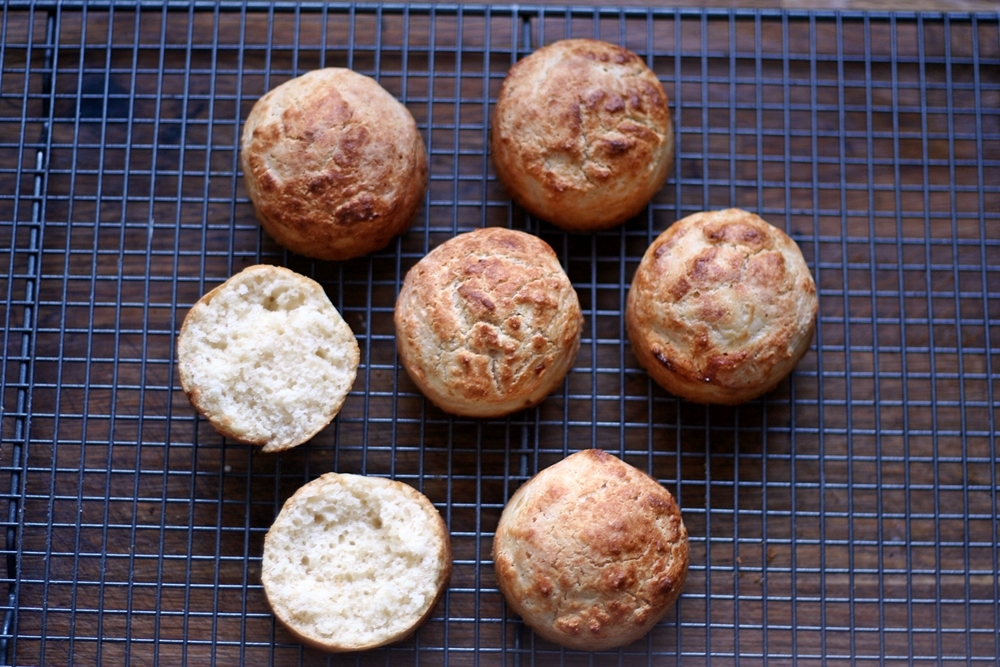
Switching out regular flour for Doves Farm gluten-free flour for pastry isn’t the only easy substitution you can make. Deliciously light and airy scones are just as easily made, using Mrs McNab’s 19th century recipe from Great British Bakes.

GF Scones

One slight variation to the method is that, due to the lack of gluten, there is a tendency for the dough to spread during baking. So to keep your gluten-free scones neat and for maximum lift, bake them in baking rings. If you don’t have baking rings, then do as I do and use the tins from small cans of mushy peas.

225g Doves Farm plain flour
1tsp cream of tartar
½tsp bicarbonate of soda
½tsp salt
30g unsalted butter
1 large egg
80ml plain yogurt
80ml whole milk

milk to glaze

  • Preheat the oven to 220°C, 200°C Fan.
  • Grease 8 small baking rings/tins and line with parchment paper. Arrange the tins on a parchment-lined baking sheet.
  • Put the flour, cream of tartar, bicarbonate of soda, salt, butter and egg into the bowl of a food processor and blitz until the mixture resembles breadcrumbs.
  • Tip the mixture into a bowl.
  • Mix together the yogurt and milk.
  • Gradually stir the liquid into the dry ingredients. You might not need it all, but the mixture should be soft and moist rather than dry.
  • Divide the mixture between the tins. Each one should have about 55g of dough.
  • Brush the tops with milk and bake for 15 minutes, turning the baking sheet around after 10 minutes to ensure even baking.
  • When baked, if the tops are a little pale, if possible, switch the oven to top heat with fan, remove the rings/tins and brown the scones for 3-4 minutes. If your oven doesn’t have this function, then brown lightly under a grill but don’t leave them too long or they will burn.
  • Cool on a wire rack.

Sea Foam Fudge

This is another fantastic textured fudge recipe, but in a whole different way to the Condensed Milk Fudge.

It is made with whisked egg-whites and a hot sugar syrup, beaten to grain the sugar. The result is a dazzlingly white, almost marshmallow appearance. The magic, however, happens when you take a bite. Just like it’s namesake, Sea Foam Fudge melts away like a whisper.

It is positively ethereal. Which is why it needs a jolly great handful of cranberries, apricots and a few chopped nuts for zing and colour and a bit of texture. Some Yuletide flotsam, to be carried into your mouth on a cushion of sea foam, if you will. Or not. I tend to get a bit carried away with my extended metaphors.

ANYHOO….

In the US I believe this is called Divinity and lacks the fruit,  but also veers dangerously (for my not-very-sweet-tooth) towards the soft and nougat-y.

As with meringues, this will absorb moisture if left uncovered, so pack into a ziplock bag for personal indulgence, or shiny, crackly cellophane if gifting as presents.

This comes from a delightful book in my collection – Sweet-Making For All by Helen Jerome, originally published in 1924. Just as with Ms Nell Heaton, I have great confidence in Ms Jerome’s recipes, which are always clear and straightforward. If you come across any of their books, I can highly recommend them.

Sea Foam

450g white granulated sugar
60g golden syrup or glucose[1]
180ml water
2 large egg whites
50g chopped nuts – pistachios are colourful, almonds keep things pale
50g chopped dried apricots
50g chopped cranberries – dried or candied

1tsp vanilla extract or 1tbs rum

  • Line a 20cm square tin with baking parchment.
  • Put the sugar, syrup and water into a pan and heat gently until the sugar is dissolved.
  • Bring to a boil and continue to heat until the syrup reaches 130°C. Do not stir.
  • When the temperature of the syrup reaches 120°C, start whisking the egg-whites until stiff. The temperature of the sugar syrup will rise relatively quickly, so keep an eye on each. Or get a glamorous assistant to help.
  • Still whisking, pour the hot syrup slowly into the whisked egg-whites, as if making Italian meringue, and continue beating until the mixture begins to thicken and lose its gloss. Add the flavouring whilst whisking.
  • When the mixture has lost its high sheen and thickened slightly add the fruit and nuts and continue beating until the mixture has thickened further and becomes cloud-like. NB This might happen suddenly, so be prepared.
  • Smooth your Sea Foam into the tin. Alternatively, roll lightly into logs about 2cm in diameter Try not to squash out the air you’ve just whisked in as you do so. Wearing latex gloves or dusting your hands with cornflour, or both – will help.
  • Cover lightly and allow to cool completely. If you can enclose your tin in a large ziplock bag to protect from humidity, so much the better.
  • When cold, cut into squares and/or dip into tempered chocolate. Store in an airtight container.

[1] The glucose will keep the fudge startlingly white, the golden syrup will add a very pale golden hue.

Snow Cake

An unusual and simple cake, with the bonus of being gluten-free!

As I was perusing one of my several vintage baking books, I came across this recipe – not in any specific allergy-related book or even chapter of a book. No, it was just included with a bunch of other recipes in a book aimed at the commercial baker, dating from the early 20th century. I have scaled the recipe down from the originally huge quantities, but otherwise, it is unchanged.

This cake is made using potato flour. IMPORTANT: Potato flour is made from RAW potatoes and is a bright white and very fine powder, with no discernible taste. It is NOT dehydrated cooked potato, which is coarse, yellowish and tastes of potato. That makes mashed potatoes when reconstituted and will add a similar texture to your cake. Readers in the US: use potato starch flour.

At first, I thought the cake got its name from it colour, because, as you can see from the photo, it is indeed a very pale cake. However, after tasting the cake, I’m now of the opinion that its name comes from its texture. It has the same quality of settled snow, in that there is a thin ‘crust’ on the top and soft, friable, almost powder-like substance underneath. The cake dissolves in the mouth – but in a different way to, say, Melting Moments. It’s incredibly light and tender and is best enjoyed simply, where it can really shine.

That said, the cream that I have teamed with it is pretty awesome itself. It is a variation of the filling I used for the mille-feuilles in the final of The Great British Bake Off. The mixture of sweetened cream cheese and whipped double cream is given a firmer set by the addition of gelatine, which helps to hold in the moisture and makes for a very luscious, rich, creamy and mousse-like texture. Just to continue the frozen theme, it’s like the very best soft-serve ice-cream, without the cold.

I’ve brightened the filling with some Apricot Jam, but any other sharp jam would also work well.

I bought the potato flour at Holland & Barrett.

Snow Cake

112g unsalted butter – softened
112g caster sugar
2 large eggs
zest of 1 lemon
2 level tsp baking powder
225g potato flour

  • Preheat the oven to 170°C, 150°C Fan.
  • Grease and line the base of a 20cm diameter, tall cake tin – not a sandwich tin. The high sides will help shield the cake from the direct heat of the oven and keep it from becoming over-coloured.
  • Beat the butter and sugar together until light and fluffy – 5-10 minutes.
  • Add the eggs one at a time, beating well each time.
  • Add the remaining ingredients and beat thoroughly – a good 5-10 minutes. Ordinarily, you’d run the risk of over-beating a cake mixture, which would develop the gluten in the flour, leading to a tough cake. Since the potato flour has no gluten, there’s no need to worry about this. You want to try and get as much air into the mixture as possible to make for a light texture in the cooked cake.
  • Turn the mixture into the prepared tin and smooth the surface.
  • Bake for 20 minutes, then turn the tin 180 degrees and bake for a further 10-15 minutes, for a total of 30-35 minutes. When you turn the cake after 20 minutes, slip a sheet of baking parchment over the top of the tin to keep the colour from getting too dark.
  • When cooked, remove from the oven and let rest for 10 minutes, then remove from the tin and cool on a wire rack.

Luscious Cream Filling

50ml double cream
50g caster sugar
2 leaves gelatine

1tsp vanilla extract
150g cream cheese,  room temperature
250ml double cream

  • Soak the leaves of gelatine in cold water for 15 minutes.
  • Warm the double cream and caster sugar until the sugar is dissolved.
  • Shake off the excess water from the gelatine and add to the pan.
  • Stir until the gelatine has melted, then remove from the heat and set aside.
  • Once the mixture has cooled a little, pour it into a bowl and add the remaining ingredients.
  • Whip the mixture until the cream has thickened and it is soft and pillowy.

To Assemble

Even though this is a light sponge cake, the weight of the top half will be too heavy initially, to avoid squidging (technical term) the cream out of the sides of the cake. Therefore, I strongly recommend using the following method to assemble your cake.

200g apricot jam – warmed and pureed

  • Using cocktail sticks, mark the midpoint of the cooled cake around the edge and cut it horizontally.
  • Spread the cut side of each cake half with apricot jam.
  • Put the bottom half of the cake back into the tin in which it was baked.
  • Slip a band of parchment or food-grade acetate around the inside of the tin, between the cake and the inside of the tin.
  • Smooth or pipe the cream filling over the bottom of the cake, making sure it reaches the edges of the cake.
  • Place the other half on top and press gently.
  • Cover with cling-film and chill for 2-3 hours, until the gelatine in the cream has set.
  • Remove from the fridge and allow to come to room temperature.
  • Remove the cake from the tin and gently peel the parchment/acetate from around the filling.
  • Smooth with a knife if necessary.
  • Dust with icing sugar to serve.